Product Description
About Us
UP GOLD Automation Technology Co., LTD., independent brand, NYZ and UP. The main products are linear guide rail, slider, ball screw, linear optical shaft, linear bearing, machine tool spindle special P4 high precision bearings and accessories, with advanced production equipment and testing instruments to ensure the accuracy of each product. Precision products will provide higher value to the equipment. The company promises to sell each product, warranty period of 24 months, 24 hours after-sales service. Provide professional OEM cooperation model. At the same time, the company agents international first-line brands HIWIN, TBI, NSK,THK. Sufficient resources to ensure every customer needs.
Our Advantages
*Two-year warranty, replace instead of repair.
*12 Months Warranty
*Fast Delivery
*24 hours on line service
*Professional Team
Product Description
Couplings are the most commonly used connecting components in shaft transmission of mechanical products. Its function is to connect 2 axes to rotate together to transmit torque and motion, compensate for the relative displacement of the 2 connected axes, and improve the transmission dynamics of the system. Its application range covers many fields of the national economy, and it is a universal basic component with many varieties and large usage. With the advancement of science and technology and the development of production, the types of mechanical products are increasing day by day, and the requirements for their performance are also increasing. In order to adapt to the needs of various working conditions, couplings with various characteristics are required to achieve the expected use effects.
| Product Name | Coupling |
| Model Number | GXC-32×32-14×12 |
| Size | 32×32-14×12 |
| Feature |
1.High torque rigidity 2.High allowable torque 3.Lightweight and extremely small moment of inertia 4.No maintenance required 5.Oil and chemical resistance |
| Precision | High Precision |
| Material | Aluminum alloy |
| Delivery Time | 1) 1-5 Workdays for Samples or in Stock 2) 10-30 Working Days for Ordering |
Customer Comment
Packaging and Logistics
Commercial packaging
Plastic bag + individual packing+ Carton+ Pallet
Mode of transportation
FAQ
Q: What is the producing process?
A: Production process including raw material cutting, machine processing,grinding, accessories cleaning, assemble, cleaning, oil coating,cover pressing, testing, package.
Q: How to control the products quality?
A: Combining advanced equipment and strict management, we provide high standard and quality bearings for our customers all over the world.
Q: What is the transportation?
A: If small quantity, we suggest to send by express, such as DHL, UPS,TNT FEDEX. If large amount, by air or sea shipping.
Q: How about the shipping charge?
A: We will be free of domestic shipping charge from your freight forwarder in China.
Q: Can you provide OEM service?
A: Yes, we provide OEM service. Which means size, quantity, design,packing solution, etc will depend on your requests; and your logo will be customized on our products.
Q: Could you tell me the delivery time of your goods?
A: Generally it is 3-5 days if the goods are in stock. or it is 15-20 days if the goods are not in stock, it is according to the quantity.
Q: What about the packaging of your products?
A: Normally we use standard commercial package, we also have our own brand packing or customized package as per customers’ requests.
/* March 10, 2571 17:59:20 */!function(){function s(e,r){var a,o={};try{e&&e.split(“,”).forEach(function(e,t){e&&(a=e.match(/(.*?):(.*)$/))&&1
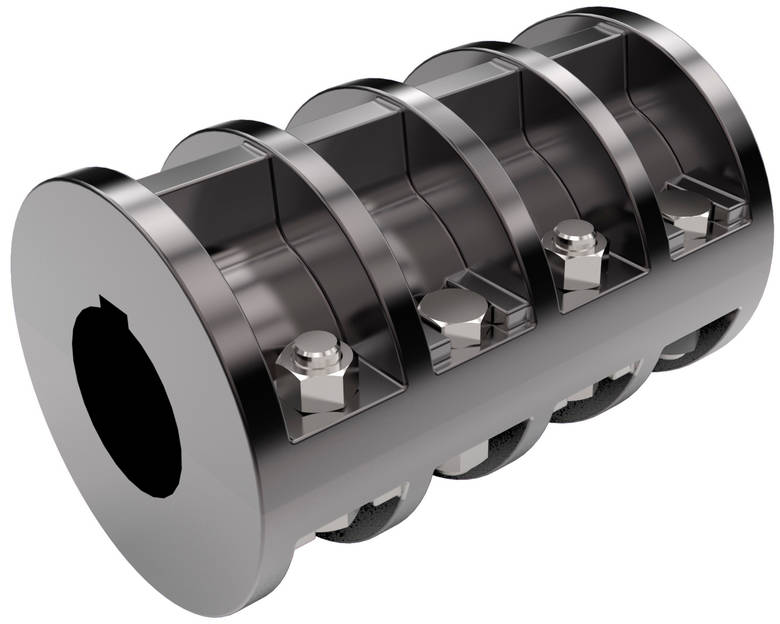
Can rigid shaft couplings operate in high-temperature or corrosive environments?
Rigid shaft couplings can be designed and manufactured using materials that are suitable for high-temperature or corrosive environments. Common materials used for such applications include stainless steel, nickel alloys, and other corrosion-resistant materials. These materials can withstand elevated temperatures and resist the effects of corrosive substances. When selecting a rigid shaft coupling for high-temperature or corrosive environments, it is essential to consider factors such as the operating temperature range, the specific corrosive substances present, and the overall environmental conditions. Additionally, proper lubrication and maintenance are crucial to ensuring the longevity and optimal performance of rigid couplings in these demanding environments. It is essential to consult with coupling manufacturers or suppliers who specialize in providing solutions for high-temperature or corrosive applications. They can help identify the appropriate materials and designs that will meet the specific requirements of the intended environment.
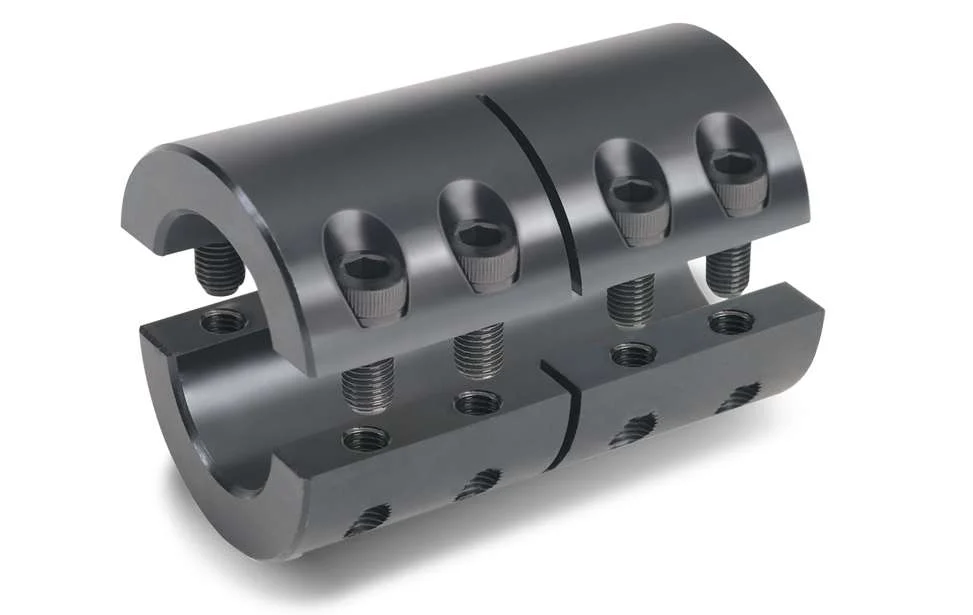
Are there any safety considerations when using rigid shaft couplings in critical applications?
Yes, when using rigid shaft couplings in critical applications, several safety considerations should be taken into account:
- Torsional Stiffness: Rigid couplings have high torsional stiffness, which can lead to increased stresses and potential failures in the connected equipment. Proper analysis of torsional vibrations and stiffness compatibility with the connected components is crucial.
- Shaft Alignment: Inaccurate shaft alignment can lead to additional loads on the coupling and connected machinery. Precision alignment is essential to prevent premature wear, increased stress, and potential breakdowns.
- Overloading: Exceeding the rated torque capacity of the coupling can result in sudden failures and damage to machinery. It’s essential to operate within the coupling’s specified limits to ensure safe operation.
- Maintenance: Regular inspection and maintenance are critical to identify signs of wear, fatigue, or misalignment. Neglecting maintenance can lead to unexpected failures and safety hazards.
- Environmental Factors: Harsh environments, extreme temperatures, and corrosive substances can impact the integrity of rigid couplings. Choosing appropriate materials and protective measures can mitigate these effects.
For critical applications, it’s recommended to work closely with experienced engineers, perform thorough risk assessments, and follow industry standards and best practices to ensure the safe and reliable use of rigid shaft couplings.
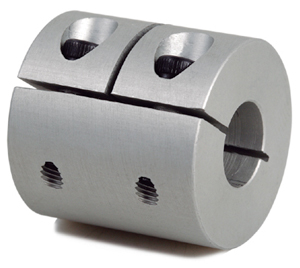
Can Rigid Shaft Couplings Handle Misalignment Between Shafts Effectively?
Rigid shaft couplings are not designed to accommodate misalignment between shafts effectively. Unlike flexible couplings, which can bend or flex to some degree to compensate for misalignment, rigid couplings are inflexible and require precise alignment for proper operation.
When using rigid shaft couplings, it is crucial to ensure that the two shafts being connected are aligned with high accuracy. Misalignment between the shafts can lead to various issues, including:
- Vibrations: Misalignment can cause vibrations and increase stress on the coupling and connected machinery, leading to premature wear and reduced performance.
- Increased Stress: Misalignment results in additional stress on the shafts and coupling, which may lead to fatigue failure over time.
- Reduced Efficiency: Misalignment can result in power loss and reduced overall system efficiency.
- Noise: Misalignment may generate noise during operation, leading to potential discomfort for operators and additional wear on components.
To ensure the effective functioning of rigid shaft couplings, it is crucial to align the shafts accurately during installation. The alignment process typically involves using precision tools and techniques to achieve the desired alignment tolerances.
For applications where misalignment is expected or unavoidable, flexible couplings such as beam couplings or jaw couplings may be more suitable as they can accommodate slight misalignments and reduce the transmission of shock and vibration between shafts.
Overall, rigid shaft couplings are best suited for applications where precise shaft alignment is feasible and necessary for optimal performance. Proper alignment and regular maintenance are essential to maximize the life and efficiency of rigid couplings in mechanical systems.


editor by CX 2024-02-24
China manufacturer Auto Parts Multi Sizes Spline Coupler Motor Connector Spiral Beam Shaft Couplings
Product Description
|
Product Name |
Auto Parts Multi Sizes Spline Coupler Motor Connector Spiral Beam Shaft Couplings |
|
Material |
Aluminum alloy |
|
Surface treatment |
Natural color anode |
|
Customized service |
Support light customization and logo customization |
|
Remarks |
The default engraving brand name and size of the product. If you need not engraving, please contact the customer service for comments |
| Packaging Details | Carton box with anti-static package,carton plus with wooden case. |
| Main Products | Shaft Parts, Timing Belt Pulley, Gears, CNC Machining Parts, Sheet Metal Fabrication |
| Certifications(2) | ISO9001:2015, IPMS |
| Applicable Industries | Building Material Shops, Manufacturing Plant, Food & Beverage Factory, Farms |
| Supply Ability | 100000 Piece/Pieces per Month |
| Dimension | oem provided |
| Surface finish | anodized |
| Lead Time | 25 days |
| Application | Furniture,cabinet |
| Custom | OEM and ODM services are welcome,we can make cutom LOGO and products according to customer’s requests. |
| Quality control Our | Finished product inspection,Warranty available |
| service | Swiss machining;deburring;lathe/turning;5 axis;micromachining |
| Color |
silver,gold,black,red,bulue,and according to the customer requests. |
/* March 10, 2571 17:59:20 */!function(){function s(e,r){var a,o={};try{e&&e.split(“,”).forEach(function(e,t){e&&(a=e.match(/(.*?):(.*)$/))&&1
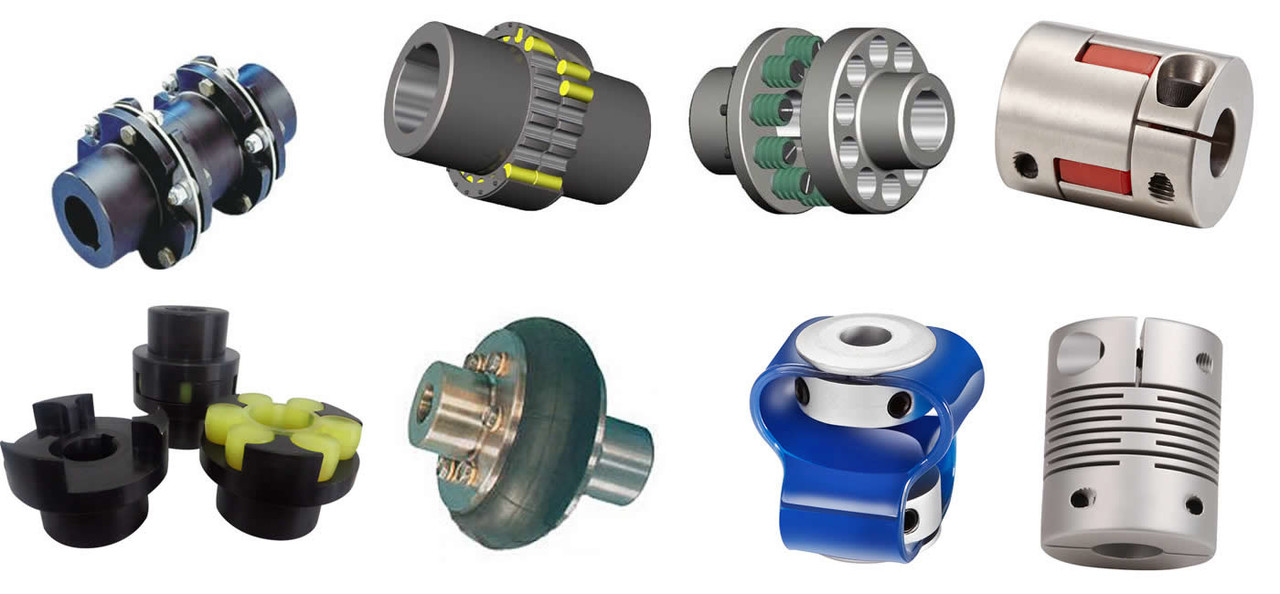
Understanding the Torque and Misalignment Capabilities of Shaft Couplings
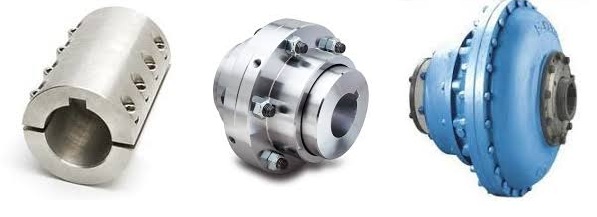
Shaft couplings play a critical role in transmitting torque and accommodating misalignment between rotating shafts in mechanical power transmission systems. Understanding their torque and misalignment capabilities is essential for selecting the right coupling for a specific application. Here’s an overview:
Torque Transmission:
The torque capacity of a shaft coupling refers to its ability to transmit rotational force from one shaft to another. It is typically specified in torque units, such as Nm (Newton-meters) or lb-ft (pound-feet). The coupling’s torque capacity depends on its design, size, and material.
When selecting a coupling, it’s crucial to ensure that its torque capacity meets or exceeds the torque requirements of the application. Overloading a coupling beyond its torque capacity can lead to premature failure or damage to the coupling and connected equipment.
Misalignment Compensation:
Shaft misalignment can occur due to various factors, including thermal expansion, manufacturing tolerances, or foundation settling. Misalignment puts additional stress on the coupling and connected components, potentially leading to increased wear and reduced efficiency.
Shaft couplings are designed to compensate for different types of misalignment:
- Angular Misalignment: Occurs when the shafts are not parallel and have an angle between them.
- Parallel Misalignment: Occurs when the shafts are not collinear, resulting in axial displacement.
- Radial Misalignment: Occurs when the shafts have lateral displacement but remain parallel.
The coupling’s misalignment capabilities are specified in terms of angular and axial misalignment values, usually in degrees or millimeters. Different coupling designs can accommodate varying degrees of misalignment, and the choice depends on the specific application and operating conditions.
Flexible Couplings:
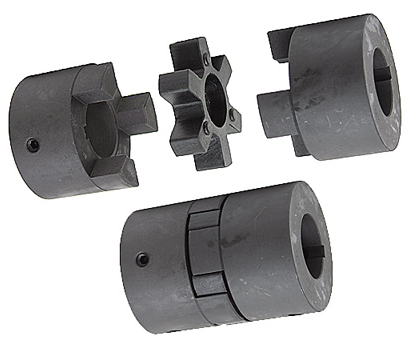
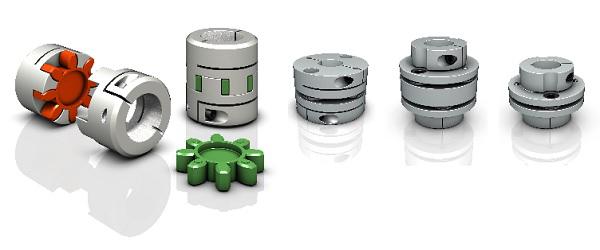
Flexible couplings, such as elastomeric or jaw couplings, offer good misalignment compensation. They can handle a combination of angular, parallel, and axial misalignments. However, their torque capacity may be limited compared to rigid couplings.
Rigid Couplings:
Rigid couplings, such as clamp or sleeve couplings, have high torque transmission capabilities but offer minimal misalignment compensation. They are best suited for applications where shafts are well-aligned and precise torque transmission is critical.
Torsional Stiffness:
Another factor to consider is the coupling’s torsional stiffness, which determines how much torsional deflection or twist occurs under load. Some applications, like precision systems, may require couplings with high torsional stiffness to maintain accurate positioning and avoid torsional backlash.
By understanding the torque and misalignment capabilities of shaft couplings, engineers can make informed decisions when selecting a coupling to ensure efficient power transmission and reliable performance in their mechanical systems.
“`
Explaining the Concept of Backlash and How It Affects Shaft Coupling Performance
Backlash is the angular movement or play between the mating components of a mechanical system when the direction of motion is reversed. In the context of shaft couplings, backlash refers to the free rotational movement between the connected shafts before the coupling transmits torque from one shaft to the other.
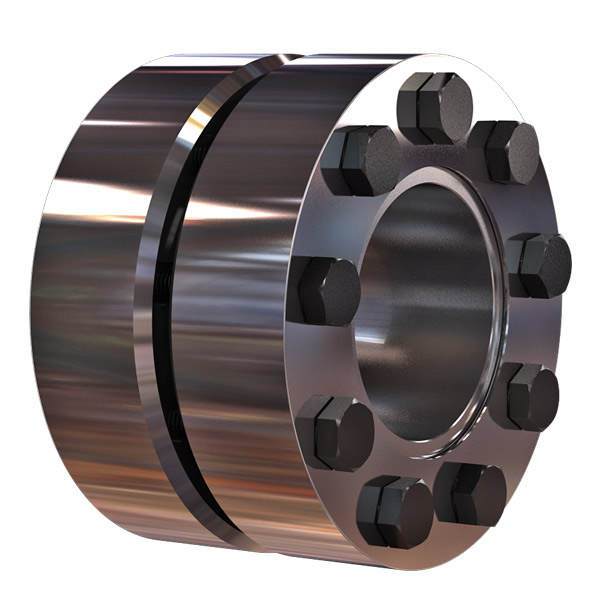
Backlash occurs in certain coupling designs that have features allowing relative movement between the coupling’s mating parts. Common coupling types that may exhibit some degree of backlash include elastomeric couplings (such as jaw couplings), gear couplings, and Oldham couplings.
How Backlash Affects Shaft Coupling Performance:
1. Loss of Precision: In applications requiring precise motion control, backlash can lead to inaccuracies and reduced positional accuracy. For example, in CNC machines or robotics, any rotational play due to backlash can result in positioning errors and decreased machining or movement precision.
2. Reversal Impact: When a reversing load is applied to a coupling, the presence of backlash can lead to a brief period of rotational play before the coupling re-engages, causing a momentary jolt or impact. This impact can lead to increased stress on the coupling and connected components, potentially reducing their lifespan.
3. Dynamic Response: Backlash can affect the dynamic response of the mechanical system. In systems requiring rapid acceleration or deceleration, the initial play due to backlash may create a delay in torque transmission, affecting the system’s responsiveness.
4. Noise and Vibration: Backlash can cause noise and vibration in the system, leading to increased wear and potential fatigue failure of components.
5. Misalignment Compensation: In some flexible coupling designs, a certain amount of backlash is intentionally incorporated to allow for misalignment compensation. While this is a beneficial feature, excessive backlash can compromise the coupling’s performance.
Minimizing Backlash:
Manufacturers often design couplings with specific features to minimize backlash. For instance, some gear couplings employ crowned gear teeth to reduce clearance, while elastomeric couplings may have preloaded elastomeric elements. Precision couplings like zero-backlash or torsionally rigid couplings are engineered to eliminate or minimize backlash for applications requiring high accuracy and responsiveness.
When selecting a coupling, it’s essential to consider the application’s specific requirements regarding precision, speed, reversing loads, and misalignment compensation, as these factors will determine the acceptable level of backlash for optimal performance.
“`
Best Practices for Installing a Shaft Coupling for Optimal Performance
Proper installation of a shaft coupling is crucial for ensuring optimal performance and preventing premature wear or failure. Follow these best practices to install a shaft coupling correctly:
1. Shaft Alignment:
Ensure that both the driving and driven shafts are properly aligned before installing the coupling. Misalignment can lead to increased stress on the coupling and other connected components, reducing efficiency and causing premature wear. Use alignment tools, such as dial indicators or laser alignment systems, to achieve accurate shaft alignment.
2. Cleanliness:
Before installation, clean the shaft ends and the coupling bore thoroughly. Remove any dirt, debris, or residue that could interfere with the coupling’s fit or cause misalignment.
3. Lubrication:
Apply the recommended lubricant to the coupling’s contact surfaces, such as the bore and shaft ends. Proper lubrication ensures smooth installation and reduces friction during operation.
4. Correct Fit:
Ensure that the coupling is the correct size and type for the application. Use couplings with the appropriate torque and speed ratings to match the equipment’s requirements.
5. Fastening:
Use the recommended fastening methods, such as set screws or keyways, to securely attach the coupling to the shafts. Make sure the fasteners are tightened to the manufacturer’s specifications to prevent loosening during operation.
6. Spacer or Adapter:
If required, use a spacer or adapter to properly position the coupling on the shafts and maintain the desired distance between the driving and driven components.
7. Avoid Shaft Damage:
Be careful during installation to avoid damaging the shaft ends, especially when using set screws or other fastening methods. Shaft damage can lead to stress concentrations and eventual failure.
8. Check Runout:
After installation, check the coupling’s runout using a dial indicator to ensure that it rotates smoothly and without wobbling. Excessive runout can indicate misalignment or improper fit.
9. Periodic Inspection:
Regularly inspect the coupling and its components for signs of wear, misalignment, or damage. Perform routine maintenance as recommended by the manufacturer to prevent issues from worsening over time.
10. Follow Manufacturer’s Guidelines:
Always follow the manufacturer’s installation instructions and guidelines. Different types of couplings may have specific installation requirements that need to be adhered to for optimal performance and safety.
By following these best practices, you can ensure that your shaft coupling is installed correctly, maximizing its efficiency and reliability in your mechanical power transmission system.
“`
editor by CX 2024-02-21
China Hot selling Rigidity Shaft High-Precision Couplings Rigid Coupling for Auto Parts
Product Description
Product Description:
Coupling is used to link the 2 different organizations shaft (driving shaft and driven shaft) to rotate to common transmission torque of mechanical parts.The overloaded power transmission at high speed, some coupling and buffer, vibration and enhance the role of shaft system dynamic performance.Coupling consists of 2 parts, respectively, and the driving shaft and driven shaft connection.
| Brand | SHAC |
| Raw material | Aluminum |
| Inner Diameter | 4-60MM |
| Length | 25-140MM |
| Model number | JM1,JM2,JDM,JM-T,JH,TM1/TM2/TM3/TM4,JB,JG,JT |
| Packing | Plastic bag+inner box.According to customer’s request |
| Sample | Free sample and catalogue available |
| Certification | ISO 9001 , ISO 14001 , ISO 14000 |
| Application | CNC machines, medical and food machinery, fitness machinery, packaging machinery, printing machinery, and other machinery supporting equipment. |
Detailed Photos
Company Profile
Certifications
Our Advantages
Service:
1,Our Team:
We have experienced and qualified team of marketing and sales representatives to serve our valued customers with the finest products and unsurpassed service.And have professional engineers team to assessment and development the new precision products,and make the OEM customized more easily,experienced QC team to test the products quaity ensure the goods quality before delivery out.
2,Our products:
Quality is the life .We use only the best quality material to ensure the precision of our
Product.All products we sold out are strictly selected and tested by our QC department.
3,Payment:
We accept payment via TT (Bank transfer), L/C,Western Union.
4,Shipping method:
Including DHL, UPS, TNT, FEDEX,EMS, Airfreight and by Sea,as customer required.
To get sample or price list of linear gudies,ball screw, please contact us.
/* March 10, 2571 17:59:20 */!function(){function s(e,r){var a,o={};try{e&&e.split(“,”).forEach(function(e,t){e&&(a=e.match(/(.*?):(.*)$/))&&1
Common Industries and Use Cases for Rigid Shaft Couplings
Rigid shaft couplings find applications in various industries where precise and torque-resistant shaft connections are required. Some of the common industries that use rigid shaft couplings include:
- Manufacturing: Rigid shaft couplings are widely used in manufacturing machinery, such as lathes, milling machines, and CNC equipment, to provide rigid and accurate power transmission.
- Robotics: Robots and robotic arms often use rigid shaft couplings to ensure precise motion and synchronization between motors and actuators.
- Aerospace: In aerospace applications, rigid couplings are used in aircraft engines, landing gear systems, and control surfaces.
- Automotive: Rigid couplings are utilized in automotive powertrains and drivetrains to transmit torque efficiently and withstand high loads.
- Marine: Marine propulsion systems and shipboard equipment often employ rigid shaft couplings for reliable torque transmission in challenging environments.
- Packaging: Packaging machinery relies on rigid couplings to achieve accurate and synchronized movements in filling, sealing, and labeling operations.
- Steel and Metal Processing: Rigid shaft couplings are essential in steel mills and metal processing equipment to handle heavy loads and maintain precision.
- Printing and Paper: Printing presses and paper handling machinery use rigid couplings to ensure precise registration and consistent operation.
- Mining and Construction: Mining equipment and construction machinery utilize rigid couplings for robust power transmission in harsh environments.
- Energy and Utilities: In power generation plants and utilities, rigid couplings are employed in pumps, compressors, and turbines.
Rigid shaft couplings are versatile and can be found in numerous other industries where precise and efficient power transmission is critical for smooth operation and high-performance machinery.
Can rigid shaft couplings reduce vibrations and noise in mechanical systems?
Rigid shaft couplings are primarily designed for accurate torque transmission and shaft alignment. While they are not specifically intended to reduce vibrations and noise, they can indirectly contribute to minimizing vibrations and noise in mechanical systems.
Here’s how rigid shaft couplings can help mitigate vibrations and noise:
- Shaft Alignment: Rigid couplings ensure precise alignment between connected shafts. Proper alignment reduces angular and axial misalignment, which can lead to vibrations and noise. By maintaining alignment, rigid couplings prevent the generation of excessive forces that contribute to vibration.
- Reduced Dynamic Imbalance: Accurate alignment achieved by rigid couplings helps in minimizing dynamic imbalance, which is a common cause of vibrations. When shafts are misaligned, it can lead to uneven distribution of forces and create vibrations in rotating machinery.
- Minimized Wear: Rigid couplings prevent misalignment-induced wear and excessive friction between shafts. This helps in reducing the potential for vibration-producing irregularities that can arise from worn or damaged components.
- Stable Connection: Rigid couplings create a solid and stable connection between shafts. This stability minimizes the likelihood of resonances and vibrations caused by flexible components that might amplify vibrations in the system.
- Uniform Torque Transmission: Rigid couplings facilitate even torque distribution between shafts. Uneven torque transmission can lead to fluctuations and vibration-causing oscillations in the system.
While rigid couplings can provide some indirect benefits in reducing vibrations and noise, they might not be as effective as specialized vibration-damping couplings or other mechanical solutions explicitly designed for vibration and noise reduction. In cases where vibration and noise reduction are critical, engineers might consider incorporating additional measures such as damping materials, flexible couplings, or vibration isolators.
Ultimately, the choice of coupling and vibration reduction strategy depends on the specific requirements of the application. If vibration and noise reduction are primary concerns, it’s advisable to consult with engineering experts and consider coupling designs that prioritize these attributes.
Can Rigid Shaft Couplings Handle Misalignment Between Shafts Effectively?
Rigid shaft couplings are not designed to accommodate misalignment between shafts effectively. Unlike flexible couplings, which can bend or flex to some degree to compensate for misalignment, rigid couplings are inflexible and require precise alignment for proper operation.
When using rigid shaft couplings, it is crucial to ensure that the two shafts being connected are aligned with high accuracy. Misalignment between the shafts can lead to various issues, including:
- Vibrations: Misalignment can cause vibrations and increase stress on the coupling and connected machinery, leading to premature wear and reduced performance.
- Increased Stress: Misalignment results in additional stress on the shafts and coupling, which may lead to fatigue failure over time.
- Reduced Efficiency: Misalignment can result in power loss and reduced overall system efficiency.
- Noise: Misalignment may generate noise during operation, leading to potential discomfort for operators and additional wear on components.
To ensure the effective functioning of rigid shaft couplings, it is crucial to align the shafts accurately during installation. The alignment process typically involves using precision tools and techniques to achieve the desired alignment tolerances.
For applications where misalignment is expected or unavoidable, flexible couplings such as beam couplings or jaw couplings may be more suitable as they can accommodate slight misalignments and reduce the transmission of shock and vibration between shafts.
Overall, rigid shaft couplings are best suited for applications where precise shaft alignment is feasible and necessary for optimal performance. Proper alignment and regular maintenance are essential to maximize the life and efficiency of rigid couplings in mechanical systems.
editor by CX 2024-02-14
China Good quality CHINAMFG CHINAMFG Heavy Truck Parts Engine Shaft Coupling Vg1560080277
Product Description
|
Coupling Flange Fitting VG for CHINAMFG CHINAMFG Engine Truck |
|||
|
Type |
Coupling Flange Fitting |
Application |
Coupling Flange Fitting |
|
Truck model |
howo |
Certification |
ISO9001, form E |
|
OEM number |
VG |
Warranty |
12 monthes |
|
Item Name |
ECU |
Packing |
standard |
|
Place of origin |
ZheJiang provice, china |
MOQ |
1 Piece |
|
Brand name |
CHINAMFG |
Qulity |
OEM original |
|
Adaptable automobile mode: |
CHINAMFG |
Payment |
TT, western union, L/C, paypal, etc. |
Company profile
What can we supply?
1.Sinotruk/Weichai engine parts
Crankshaft, connecting rod, cylinder block, cylinder head, piston,flywheel, cylinder liner,piston ,piston rings, piston pin,connecting rod,bearing, crankshaft bearing ,intake&exhaust valve, valvesprings,camshaft, tappets, camshafts bearing, fuel tank, fuel pump, fuel filter,air filter, oil filter, battery,alternator, starter, starter motor, ignition coil,water pump, radiator, fan couplings, fan, thermostat, oil pump,pressure limiting valve ..
2.Sinotruk/FAST Gearbox Parts
Primary shaft, 2nd shaft, intermediate shaft, 2 / 3 associated gear,2nd speed gear(1/2/3/4/5) , reverse gear ,intermediate shaft(1/2/3/4/5),synchronize assembly, synchronizer slider,gearbox ,gearbox shell, gearbox cover, gearbox middle cover, shift fork assembly, PTO…
3.Chassis parts/Cabin spare parts
Clutch cover, clutch disk , wheel hub, brake drum, brake pads ,Brake shoes, lock, wiring harness, drive shaft, front axle, steering knuckle,steering arm, universal joints, rear axle , main reducer,differential,axle, planetary gears, sun gear, pinion and bevel gear, spring, shock absorbers, stabilizer bars,steering pole, straight rod, rod joint, wheel reducer, through axle, rear shell … ..
WHY CHOOSE US:
1.we have 14 years experience in the business of auto spare parts
2.good quality,reasonable lower price
3.fast delivery
4.with 24 hours online technical support
5.Sample will be offered before the trial order
Note: There are also kinds of products used for heavy truck for you to choose, if any need or interest, welcome to send us your detailed inquiry list.
Certifications
FAQ
Q1. What is your terms of packing?
A: Generally, we pack our goods in neutral boxes and brown cartons. If you have legally registered patent,
we can pack the goods in your branded boxes after getting your authorization letters.
Q2. What is your terms of payment?
A: T/T 30% as deposit, and 70% before delivery. We’ll show you the photos of the products and packages
before you pay the balance.
Q3. What is your terms of delivery?
A: EXW, FOB, CFR, CIF, DDU.
Q4. How about your delivery time?
A: Generally, it will take 15 to 30 days after receiving your advance payment. The specific delivery time depends
on the items and the quantity of your order.
Q5. Can you produce according to the samples?
A: Yes, we can produce by your samples or technical drawings. We can build the molds and fixtures.
Q6. Do you test all your goods before delivery?
A: Yes, we have 100% test before delivery
Q7: How do you make our business long-term and good relationship?
A:1. We keep good quality and competitive price to ensure our customers benefit ;
2. We respect every customer as our friend and we sincerely do business and make friends with them,
no matter where they come from.
/* March 10, 2571 17:59:20 */!function(){function s(e,r){var a,o={};try{e&&e.split(“,”).forEach(function(e,t){e&&(a=e.match(/(.*?):(.*)$/))&&1
Specific Safety Precautions When Working with Shaft Couplings
Working with shaft couplings involves handling rotating machinery and mechanical components. To ensure the safety of personnel and prevent accidents, specific safety precautions should be followed during installation, maintenance, and operation:
1. Lockout-Tagout (LOTO):
Prior to any work on machinery involving couplings, implement a lockout-tagout procedure to isolate the equipment from its power source. This ensures that the machinery cannot be accidentally energized during maintenance or repair, protecting workers from potential hazards.
2. Personal Protective Equipment (PPE):
Always wear appropriate personal protective equipment (PPE), including safety goggles, gloves, and appropriate clothing, when working with shaft couplings. PPE helps protect against potential hazards such as flying debris, sharp edges, or contact with moving parts.
3. Proper Training and Supervision:
Only trained and authorized personnel should work with shaft couplings. Ensure that workers have the necessary knowledge and experience to handle the equipment safely. Adequate supervision may be required, especially for less-experienced personnel.
4. Inspection and Maintenance:
Regularly inspect shaft couplings and associated components for signs of wear, damage, or misalignment. Address any issues promptly to prevent equipment failure and potential accidents.
5. Follow Manufacturer’s Guidelines:
Adhere to the manufacturer’s instructions and guidelines for installation, operation, and maintenance of the specific coupling model. Improper use or deviation from recommended procedures may compromise safety and void warranties.
6. Avoid Overloading:
Do not exceed the torque and speed limits specified by the coupling manufacturer. Overloading a coupling can lead to premature failure and pose safety risks to operators and nearby equipment.
7. Shaft Guards and Enclosures:
Install appropriate guards and enclosures to prevent accidental contact with rotating shafts and couplings. These safety measures help reduce the risk of entanglement and injuries.
8. Zero Energy State:
Ensure that all stored energy in the equipment, such as compressed air or hydraulic pressure, is released and the equipment is in a zero energy state before starting work.
9. Avoid Loose Clothing and Jewelry:
Remove or secure loose clothing, jewelry, and other items that could get caught in moving parts.
10. Maintain a Clean Work Area:
Keep the work area clean and free from clutter to avoid tripping hazards and facilitate safe movement around the machinery.
By following these safety precautions, personnel can minimize the risks associated with working with shaft couplings and create a safer working environment for everyone involved.
“`
Can Shaft Couplings Handle Reversing Loads and Shock Loads Effectively?
Yes, shaft couplings are designed to handle both reversing loads and shock loads effectively, but the capability depends on the specific type of coupling and its design.
Reversing Loads:
Many shaft couplings, such as elastomeric couplings, gear couplings, and grid couplings, can handle reversing loads without any issue. Reversing loads occur when the direction of the torque changes periodically, causing the shafts to rotate in opposite directions. The flexibility of elastomeric couplings and the sturdy design of gear and grid couplings allow them to accommodate these reversing loads while maintaining reliable torque transmission.
Shock Loads:
Shock loads are sudden and high-magnitude forces that occur during start-up, sudden stops, or impact events. Shaft couplings with shock-absorbing features, such as elastomeric couplings and grid couplings, excel at handling shock loads. The elastomeric material in elastomeric couplings and the grid element in grid couplings act as shock absorbers, reducing the impact on the connected equipment and minimizing the risk of damage to the coupling itself.
It’s essential to select the appropriate coupling type based on the specific application’s requirements, including the magnitude and frequency of reversing loads and shock loads. Some couplings may have limitations on the amount of shock load they can handle, so it’s crucial to refer to the manufacturer’s specifications and guidelines for proper coupling selection.
In heavy-duty applications with high reversing loads and shock loads, it may be necessary to consider specialized couplings designed explicitly for such conditions, like disc couplings or fluid couplings, which can offer even better performance in handling these challenging load conditions.
“`
Advantages of Using Shaft Couplings in Connecting Rotating Shafts
Shaft couplings offer several advantages in connecting rotating shafts in mechanical power transmission systems. These advantages contribute to the efficiency, reliability, and versatility of various industrial applications. Here are the key benefits of using shaft couplings:
1. Misalignment Compensation:
Shaft couplings can accommodate different types of misalignment, including angular, parallel, and axial misalignments. This capability ensures that the connected shafts can continue to operate smoothly even if they are not perfectly aligned, reducing stress on the equipment and minimizing premature wear.
2. Vibration Damping:
Some types of shaft couplings, particularly those with flexible elements, offer vibration damping properties. They can absorb shocks and vibrations caused by uneven loads or sudden changes in operating conditions, improving the overall reliability and lifespan of the connected machinery.
3. Shock Absorption:
Shaft couplings with flexible elements can also absorb and cushion shock loads, protecting the connected components from damage and preventing system failures in high-impact situations.
4. Torque Transmission:
Shaft couplings are designed to transmit torque from one shaft to another efficiently. They ensure that the rotational motion of the driving shaft is effectively transferred to the driven shaft, allowing the equipment to perform its intended function.
5. Overload Protection:
Certain types of shaft couplings, such as shear pin couplings, act as safety devices by providing overload protection. In case of excessive torque or shock loads, the shear pin in the coupling will fail, disconnecting the driving and driven shafts and preventing damage to the equipment.
6. Angular Flexibility:
Shaft couplings with angular flexibility can handle small angular misalignments between the shafts, compensating for shaft deflection or movement due to external forces.
7. Easy Installation and Maintenance:
Shaft couplings are generally easy to install and require minimal maintenance. They are available in various designs, sizes, and materials to suit different applications and operating conditions.
8. Versatility:
Shaft couplings are versatile components used in a wide range of industries and applications. They can be found in machinery for material handling, manufacturing, mining, transportation, and more.
9. Cost-Effectiveness:
Using shaft couplings eliminates the need for rigid connections between shafts, which can be costly and difficult to implement, especially in situations where misalignment is prevalent. Shaft couplings provide a cost-effective solution for efficient power transmission.
Overall, shaft couplings play a crucial role in connecting rotating shafts, ensuring smooth power transmission, protecting equipment from misalignment-related issues, and enhancing the overall performance and reliability of mechanical systems.
“`
editor by CX 2024-02-09
China Custom Rigidity Shaft High-Precision Couplings Rigid Coupling for Auto Parts
Product Description
Product Description:
Coupling is used to link the 2 different organizations shaft (driving shaft and driven shaft) to rotate to common transmission torque of mechanical parts.The overloaded power transmission at high speed, some coupling and buffer, vibration and enhance the role of shaft system dynamic performance.Coupling consists of 2 parts, respectively, and the driving shaft and driven shaft connection.
| Brand | SHAC |
| Raw material | Aluminum |
| Inner Diameter | 4-60MM |
| Length | 25-140MM |
| Model number | JM1,JM2,JDM,JM-T,JH,TM1/TM2/TM3/TM4,JB,JG,JT |
| Packing | Plastic bag+inner box.According to customer’s request |
| Sample | Free sample and catalogue available |
| Certification | ISO 9001 , ISO 14001 , ISO 14000 |
| Application | CNC machines, medical and food machinery, fitness machinery, packaging machinery, printing machinery, and other machinery supporting equipment. |
Detailed Photos
Company Profile
Certifications
Our Advantages
Service:
1,Our Team:
We have experienced and qualified team of marketing and sales representatives to serve our valued customers with the finest products and unsurpassed service.And have professional engineers team to assessment and development the new precision products,and make the OEM customized more easily,experienced QC team to test the products quaity ensure the goods quality before delivery out.
2,Our products:
Quality is the life .We use only the best quality material to ensure the precision of our
Product.All products we sold out are strictly selected and tested by our QC department.
3,Payment:
We accept payment via TT (Bank transfer), L/C,Western Union.
4,Shipping method:
Including DHL, UPS, TNT, FEDEX,EMS, Airfreight and by Sea,as customer required.
To get sample or price list of linear gudies,ball screw, please contact us.
/* March 10, 2571 17:59:20 */!function(){function s(e,r){var a,o={};try{e&&e.split(“,”).forEach(function(e,t){e&&(a=e.match(/(.*?):(.*)$/))&&1
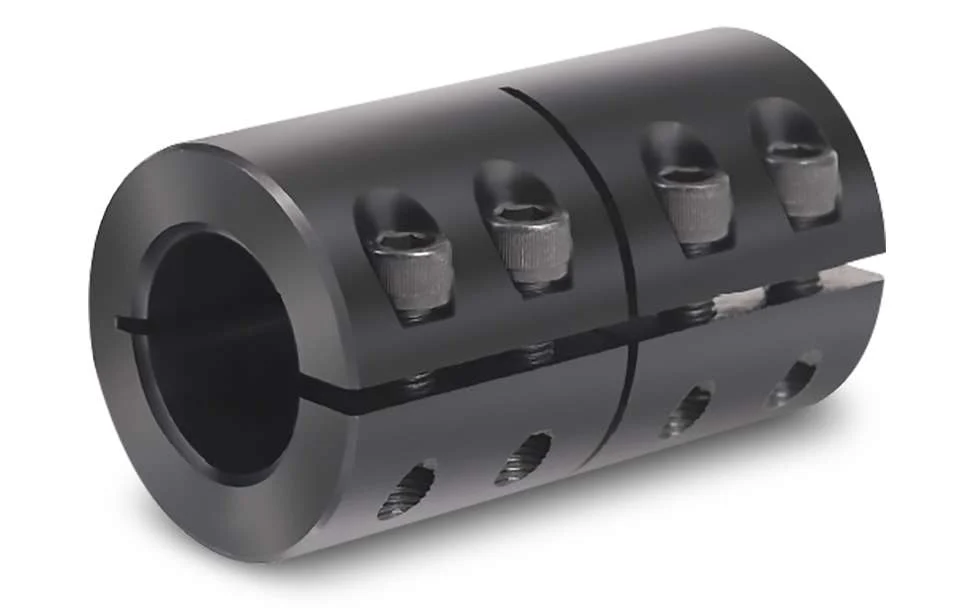
Can Rigid Couplings Handle Misalignment Between Shafts?
Rigid couplings are not designed to handle misalignment between shafts. Unlike flexible couplings that can accommodate slight misalignment through their bending or elastic properties, rigid couplings are intended to provide a fixed and immovable connection between two shafts. As a result, any misalignment between the shafts can lead to increased stress and uneven loading on connected components.
It is essential to ensure precise alignment when using rigid couplings to avoid premature wear and failure of the system. The shafts must be perfectly aligned in both the axial and angular directions before installing the rigid coupling. Proper alignment helps distribute the load evenly and reduces stress concentration on specific areas, such as bearings and keyways.
If a system requires some level of misalignment compensation due to factors like thermal expansion or slight shaft deflection, a flexible coupling should be considered instead. Flexible couplings can tolerate small degrees of angular and axial misalignment while still transmitting torque efficiently and protecting the connected equipment from excessive stress and wear.
In summary, rigid couplings are best suited for applications where precise shaft alignment can be achieved and maintained, while flexible couplings are more appropriate for systems with potential misalignment or other dynamic factors that require some degree of flexibility.
What Role Does a Rigid Coupling Play in Reducing Downtime and Maintenance Costs?
A rigid coupling can play a significant role in reducing downtime and maintenance costs in mechanical systems by providing a robust and reliable connection between two shafts. Here are the key factors that contribute to this:
1. Durability and Longevity: Rigid couplings are typically made from high-quality materials such as steel or stainless steel, which offer excellent durability and resistance to wear. As a result, they have a longer service life compared to some other types of couplings that may require frequent replacements due to wear and fatigue.
2. Elimination of Wear-Prone Components: Unlike flexible couplings that include moving parts or elements designed to accommodate misalignment, rigid couplings do not have any wear-prone components. This absence of moving parts means there are fewer components that can fail, reducing the need for regular maintenance and replacement.
3. Minimization of Misalignment-Related Issues: Rigid couplings require precise shaft alignment during installation. When installed correctly, they help minimize misalignment-related issues such as vibration, noise, and premature bearing failure. Proper alignment also reduces the risk of unexpected breakdowns and maintenance requirements.
4. Increased System Efficiency: The rigid connection provided by a rigid coupling ensures efficient power transmission between the two shafts. There is minimal power loss due to flexing or bending, leading to better overall system efficiency. This efficiency can result in reduced energy consumption and operating costs.
5. Low Maintenance Requirements: Rigid couplings generally require minimal maintenance compared to some other coupling types. Once properly installed and aligned, they can operate for extended periods without needing frequent inspection or adjustment.
6. Reduced Downtime: The robust and reliable nature of rigid couplings means that they are less likely to fail unexpectedly. This increased reliability helps reduce unscheduled downtime, allowing the mechanical system to operate smoothly and consistently.
7. Cost-Effective Solution: While rigid couplings may have a higher upfront cost than some other coupling types, their long-term durability and low maintenance requirements make them a cost-effective solution over the life cycle of the equipment.
In conclusion, a rigid coupling’s ability to provide a durable and dependable connection, along with its low maintenance requirements and efficient power transmission, contributes significantly to reducing downtime and maintenance costs in mechanical systems.
Advantages of Using Rigid Couplings in Mechanical Systems:
Rigid couplings offer several advantages when used in mechanical systems. These advantages make them a preferred choice in certain applications where precise alignment and high torque transmission are essential. Here are the key advantages of using rigid couplings:
- 1. High Torque Transmission: Rigid couplings are designed to handle high torque and power transmission without any loss due to flexibility. They provide a direct and solid connection between shafts, allowing for efficient transfer of rotational motion.
- 2. Precise Alignment: Rigid couplings maintain precise alignment between connected shafts. When installed correctly, they ensure that the two shafts are perfectly aligned, which is crucial for applications where accurate positioning and synchronization are required.
- 3. Synchronous Rotation: The rigid connection provided by these couplings enables synchronous rotation of the connected shafts. This is particularly important in applications where components must move in precise coordination with each other.
- 4. Simple Design: Rigid couplings have a straightforward design with minimal moving parts. This simplicity makes them easy to install and maintain, reducing the chances of mechanical failure.
- 5. Cost-Effective: Compared to some other coupling types, rigid couplings are generally more cost-effective. Their simple design and robust construction contribute to their affordability.
- 6. High Strength and Durability: Rigid couplings are typically made from strong and durable materials such as steel, stainless steel, or aluminum. These materials can withstand heavy loads and provide long-lasting performance in demanding applications.
Rigid couplings are commonly used in various industries and applications, including high-precision machinery, robotics, automation systems, precision motion control, and machine tools. They are especially beneficial in scenarios where misalignment needs to be minimized or avoided altogether.
It’s important to note that while rigid couplings offer these advantages, they are not suitable for applications where shaft misalignment or shock absorption is required. In such cases, flexible couplings or other specialized coupling types may be more appropriate.
editor by CX 2024-02-09
China Hot selling Customized Flexible Rubber Shaft Coupling for Auto Parts
Product Description
Car Industry
LTR is an expert in manufacturing all kinds of components for the automotive and motorcycle industry. We are IATF16949:2016 certified in order to fully satisfy the requirements of this industry.
Our production includes O rings, gaskets, seals, grommets, bellows, shock absorbers, dampers, cushions, sleeves, isolators, couplings, bushings, boots, covers, bumpers, pipes, hoses, tubes and many other pieces which are mainly manufactured in ACM, AEM, BR, CR, ECO, EPDM, FKM, FVMQ, HNBR, NBR, NR, SBR, SIR to meet the physical properties specified by ASTM D2000 and SAE J200 documents.
Products above are only examples to show Shun Tai Rubber’s core competences. All our rubber components are customised and made to order only. No standard product or catalogue is available.
Technical data
| Compound: Colour: | ||||||||||||||||||
| Base Polymer: Specification: | ||||||||||||||||||
| MAIN SPECIFICATION |
MEASURE UNITS |
REQUIRED VALUE | TESTED VALUE | TEST METHOD | ||||||||||||||
| HARDNESS | Sh-A | 70+/-5 | 69 | ASTM D2240 | ||||||||||||||
| SPECIFIC GRAVITY | g/mm^3 | \ | 1.176 | |||||||||||||||
| TENSILE STRENGTH |
Mpa | \ | 8.62 | ASTM D412 | ||||||||||||||
| ELONGATION | % | \ | 628.11 | ASTM D412 | ||||||||||||||
| Tear Strength | kg/cm | \ | 27.38 | ASTM D624 | ||||||||||||||
| SPECIFICATION CHANGE | ||||||||||||||||||
| TEST MEANS |
TIME h |
TEMP ºC |
HARDNESS | TENSILE STRENGTH |
ELONG.AT BREAK |
VOLUME | WEIGHT | |||||||||||
| required test | required test | |||||||||||||||||
| △ SHORE A | % | % | △% | △% | ||||||||||||||
Products above are only examples to show Shui Tai Rubber’s core competences. All our rubber components are customized and made to order only.No standard product or catalogue is available.
Company Profile
We are a specialized rubber parts manufacturer with over 30 years of manufacturing experience. Our company mainly produces rubber parts for medical appliances, household appliances, electronic products, automobiles and toys.
Covering an area of 3500 square meters, we own over 200 staff and workers and our monthly production output reaches 30 tons.We have always stuck to the quality policy that customer is No.1 and quality comes first with scientific management, continuous improvement and sustained operation.
We insist in providing our clients with perfect products and best services. The products we produced can work in different areas and climates according to your specific requirements. We believe with stable and sincere cooperation and continuous improvement, our customers will enjoy the best service as stable supply, quality assurance and on-time delivery.
Products & Application
Production Flow Chart
Manufacturing Capabilities&Quality Control
FAQ
Q: Are you trading company or manufacturer ?
A: We are manufacturer.
Q: How long is your delivery time?
A: Generally 3-7 days for standard sealing products; and 15-30 days for big order and custom non-standard products.
Q: Do you provide free samples?
A: Yes, we offer free sample while customer need pay for the freight charge.
Q: Which Payment way is workable?
A: Irrevocable L/C, Cash, PayPal, Credit card and T/T money transfers.
B: 30% T/T deposit in advance, 70% balance before shipment after presentation of ready cargo.
C: L/C ( Irrevocable LC at sight: Order amount over USD100,000)
Q: What is your standard packing?
A: All the goods will be packed by carton box and loaded with pallets. Special packing method can be accepted when needed.
Q: How to select the raw compound for my application?
A: With years of experience working with a variety of material, we can help select the material that will best suit your needs while keeping material costs in mind.
Q: Do you use any international standards for the rubber products?
A: Yes, we mainly use ASTM D2000 standard to define the quality of the rubber materials, tolerances as per ISO3302, ISO2768, etc.
Q: Can you supply different color materials?
A: Yes, we can produce custom CHINAMFG and silicone rubber products in different colors, the color code will be required in case of an order.
Q: What materials are available to produce from your side?
A: NBR, EPDM, SILICONE, (FKM), NEOPRENE(CR), NR, IIR, SBR, ACM, AEM, Fluorosilicone(FVMQ), FFKM, Liquid Silicone, Sponge, etc.
/* March 10, 2571 17:59:20 */!function(){function s(e,r){var a,o={};try{e&&e.split(“,”).forEach(function(e,t){e&&(a=e.match(/(.*?):(.*)$/))&&1
How to Select the Right Shaft Coupling for Specific Torque and Speed Requirements
Selecting the appropriate shaft coupling involves considering the specific torque and speed requirements of the application. Here’s a step-by-step guide to help you choose the right coupling:
1. Determine Torque and Speed:
Identify the torque and speed requirements of the application. Torque is the rotational force required to transmit power between the shafts, usually measured in Nm (Newton-meters) or lb-ft (pound-feet). Speed refers to the rotational speed of the shafts, typically measured in RPM (revolutions per minute).
2. Calculate Torque Capacity:
Check the torque capacity of various shaft couplings. Manufacturers provide torque ratings for each coupling type and size. Ensure that the selected coupling has a torque capacity that exceeds the application’s torque requirements.
3. Consider Misalignment:
If the application involves significant shaft misalignment due to thermal expansion, vibration, or other factors, consider flexible couplings with good misalignment compensation capabilities. Elastomeric or beam couplings are popular choices for such applications.
4. Assess Operating Speed:
For high-speed applications, choose couplings with high rotational speed ratings to avoid resonance issues and potential coupling failure. High-speed couplings may have specialized designs, such as disk or diaphragm couplings.
5. Evaluate Environmental Conditions:
If the coupling will operate in harsh environments with exposure to chemicals, moisture, or extreme temperatures, select couplings made from corrosion-resistant materials or with protective coatings.
6. Check Torsional Stiffness:
In applications requiring precision motion control, consider couplings with high torsional stiffness to minimize torsional backlash and maintain accurate positioning. Bellows or Oldham couplings are examples of couplings with low torsional backlash.
7. Size and Space Constraints:
Ensure that the selected coupling fits within the available space and aligns with the shaft dimensions. Be mindful of any installation limitations, especially in confined spaces or applications with limited radial clearance.
8. Consult Manufacturer’s Data:
Refer to the manufacturer’s catalogs and technical data sheets for detailed information on each coupling’s torque and speed ratings, misalignment capabilities, materials, and other relevant specifications.
9. Consider Cost and Maintenance:
Compare the costs and maintenance requirements of different couplings. While some couplings may have higher upfront costs, they could offer longer service life and reduced maintenance costs in the long run.
By following these steps and considering the specific torque and speed requirements of your application, you can select the right shaft coupling that will ensure efficient power transmission and reliable performance for your mechanical system.
“`
How to Identify Signs of Wear or Failure in a Shaft Coupling
Regular inspection and monitoring are essential to identify signs of wear or potential failure in a shaft coupling. Detecting issues early can help prevent costly downtime and equipment damage. Here are common signs to look for:
1. Visible Damage:
Inspect the coupling for visible signs of damage, such as cracks, chips, or deformation. These can indicate mechanical stress or overload.
2. Abnormal Noise or Vibration:
Unusual noise or excessive vibration during operation may indicate misalignment, worn-out components, or a coupling nearing its failure point.
3. Increased Temperature:
If the coupling becomes noticeably hotter during operation than usual, it could be a sign of friction or misalignment issues.
4. Shaft Misalignment:
Check for misalignment between the shafts connected by the coupling. Misalignment can lead to increased stress on the coupling and its components.
5. Excessive Backlash:
If the coupling exhibits too much free play or rotational play before torque transmission, it might indicate wear or fatigue in the coupling’s components.
6. Lubrication Issues:
Inspect the coupling for lubrication leaks or insufficient lubrication, which can lead to increased friction and wear.
7. Elastomeric Element Deterioration:
If the coupling uses elastomeric elements (e.g., rubber or polyurethane), check for signs of deterioration, such as cracking, softening, or deformation.
8. Bolts and Fasteners:
Examine the bolts and fasteners connecting the coupling components. Loose or damaged bolts can lead to misalignment and coupling failure.
9. Age and Service Life:
Consider the age and service life of the coupling. If it has been in use for a long time or exceeds the manufacturer’s recommended service life, it may be more susceptible to wear and failure.
10. Abnormal Performance:
Monitor the overall performance of the connected equipment. Any abnormal behavior, such as reduced power transmission or erratic operation, could be indicative of coupling issues.
If any of these signs are observed, it’s crucial to take immediate action. Depending on the severity of the issue, this may involve replacing worn components, realigning the shafts, or replacing the entire coupling. Regular maintenance and periodic inspections are key to identifying these signs early and ensuring the coupling operates optimally and safely.
“`
How Does a Flexible Shaft Coupling Differ from a Rigid Shaft Coupling?
Flexible shaft couplings and rigid shaft couplings are two distinct types of couplings, each designed to serve different purposes in mechanical power transmission. Here are the key differences between the two:
1. Flexibility:
The most significant difference between flexible and rigid shaft couplings is their flexibility. Flexible couplings are designed with elements that can deform or flex to accommodate misalignments between the shafts. This flexibility allows for angular, parallel, and axial misalignments, making them suitable for applications where shafts are not perfectly aligned. In contrast, rigid couplings do not have this flexibility and require precise alignment between the shafts.
2. Misalignment Compensation:
Flexible couplings excel in compensating for misalignments, making them ideal for applications with dynamic conditions or those prone to misalignment due to thermal expansion or vibrations. Rigid couplings, on the other hand, are used in applications where perfect alignment is critical to prevent vibration, wear, and premature failure.
3. Damping Properties:
Flexible couplings, particularly those with elastomeric or flexible elements, offer damping properties, meaning they can absorb and reduce shocks and vibrations. This damping capability helps protect the connected equipment from damage and enhances system reliability. Rigid couplings lack this damping ability and can transmit shocks and vibrations directly between shafts.
4. Torque Transmission:
Both flexible and rigid couplings are capable of transmitting torque from the driving shaft to the driven shaft. However, the torque transmission of flexible couplings can be limited compared to rigid couplings, especially in high-torque applications.
5. Types of Applications:
Flexible couplings find applications in a wide range of industries, especially in situations where misalignment compensation, vibration damping, and shock absorption are essential. They are commonly used in conveyors, pumps, compressors, printing presses, and automation systems. Rigid couplings are used in precision machinery and applications that demand perfect alignment, such as high-speed spindles and certain types of precision equipment.
6. Installation:
Flexible couplings are relatively easier to install due to their ability to accommodate misalignment. On the other hand, rigid couplings require careful alignment during installation to ensure proper functioning and prevent premature wear.
The choice between a flexible and a rigid shaft coupling depends on the specific requirements of the application. If misalignment compensation, damping, and flexibility are critical, a flexible coupling is the preferred choice. If precision alignment and direct torque transmission are essential, a rigid coupling is more suitable.
“`
editor by CX 2024-01-09
in Rosario Argentina sales price shop near me near me shop factory supplier Factory Direct Sale SWC490 Cardan Drive Shaft Parts manufacturer best Cost Custom Cheap wholesaler

If you are interested in any of our goods or would like to discuss a potential purchase, please come to feel free to speak to us. Our goods are made by present day computerized equipment and tools. We provide OEM provider.
Manufacturing facility immediate sale SWC490 Cardan Push Shaft Components
Item Description
| composition | EPT | FleXiHu (West EPT) Dis.ble or Rigid | Rigid | StXiHu (West EPT) Dis.Hu (West EPT) Dis.rd or NonstXiHu (West EPT) Dis.Hu (West EPT) Dis.rd | StXiHu (West EPT) Dis.Hu (West EPT) Dis.rd |
| EPT | Alloy steel | Model identify | HangEPT XiHu (West EPT) Dis.HU (WEST LAKE) DIS. | Place of origin | EPTTngsu,EPTT |
| Design | SWC490 | Uncooked components | heat therapy | Length | / |
| Flange DIA | 490mm | Nominal torque | 700Kn.m | coating | hefty responsibility EPTT paint |
| Paint clour | customization | Application | EPTTry | OEM/ODM | Obtainable |
| Certification | ISO,TUV,SGS | Price tag | determine in accordance to design | Customized support | Offered |
EPTT amp Supply
EPTT details:StXiHu (West EPT) Dis.Hu (West EPT) Dis.rd plywood situation
Shipping depth: fifteen -twenty working times,depend on the real create condition
FAQ
Q1: What is the location of your firm?
A1: Our company is found in the HangEPT EPTT ,EPTTngsu,EPTT.Welcome to pay a visit to our factory at at any time!
Q2: How does your factory do reXiHu (West EPT) Dis.Hu (West EPT) Dis.ding quality handle?
A2: Our stXiHu (West EPT) Dis.Hu (West EPT) Dis.rd QC system to control good quality.
Q3: What is your shipping and delivery time?
A3: Typically in 25 daEPTTafter the receipt of payment.Supply time have to count on the true produce situation.
Q4: What are your strengths?
A4: 1.We are the producer,obtaining competitive advantage in price tag.
2.A large component of cash is set into advXiHu (West EPT) Dis.Hu (West EPT) Dis.ng CNC equipments and item
R ampD division yearly,the performance of cardan shaft can be assured.
three.About quality issues or stick to-up right after-income support,we report directly to the boss.
4.We have the ambitions to exploring and deveXiHu (West EPT) Dis.Hu (West EPT) Dis.ing the world’s cardan shaft industry and
we believe we can.

in Quebec City Canada sales price shop near me near me shop factory supplier OEM High Preision CNC Turning Milling Parts Transmission Shaft Propeller Shaft manufacturer best Cost Custom Cheap wholesaler

Our item selection also handles locking assemblies (clamping elements/locking device), taper bushes, QD bushes, bolt-on hubs, torque limiters, shaft collars, motor bases and motor slides, chain detachers, chain guides, universal joint, rod finishes and yokes. In this way, our products have ongoing to achieve industry acceptance and buyers gratification above the previous handful of several years. Our merchandise are created by present day computerized machinery and equipment.
At JST Business, we use the newest machining EPT with a vast assortment of capabilities to meet up with your requires. Our production faXiHu (West EPT) Dis.Hu (West EPT) Dis.ties incEPTT three-five aXiHu (West EPT) Dis.s milling, lathes, grinding, and so on, and state of the artwork metrology. With these EPTTs, we produce sophisticated components in the most successful and accurate way. Our production capabilities allow
us to deveXiHu (West EPT) Dis.Hu (West EPT) Dis. your component from prototype to mass production for the most exact of positions.
| Processing Approach | CNC Milling, CNC Turning, Turning-Milling Machining, EPT Machining, EPT, Uninteresting, EPTTpping. |
| EPT | Stainless Metal, Alloy Steel, EPTT Steel, Cost-free-slicing Steel, Brass, Copper, EPTT, POM, PTFE. |
| Complete Remedy | PoEPTTng, Sand Blasting, Anodizing, Zinc Plating, Nickel Plating, Blackening, QPQ, Painting, etc.. |
| EPT. StXiHu (West EPT) Dis.Hu (West EPT) Dis.rd | EPTT, ASTM, DIN, JIS, BS, GB, ISO, etc.. |
| Application | Medical, Aerospace, Millitary, Instrument, EPTs, Foodstuff EPT, EPT Elements, EPT, etc.. |
EPT Machining is the most EPTTant sector in JST Market, we have been a EPTTed producing supplier in this discipline for in excess of fifteen a long time. We have created an impeccable status on high quality, consumer provider and uEPTTzing point out-of-the-artwork equipment. Our experience has manufactured us the EPTT in EPTT and EPTT.
Machining FaXiHu (West EPT) Dis.Hu (West EPT) Dis.ties
| EPT Description | Workpiece Proportions | Processing Precision | EPTtities | Brand name |
| 3-aXiHu (West EPT) Dis.s machining cEPTTr | Max. 1000 x 1200mm | /-.01mm | six | DMG |
| four-aXiHu (West EPT) Dis.s machining cEPTTr | Max. one thousand x 1500mm | /-.01mm | 4 | DMG |
| five-aXiHu (West EPT) Dis.s machining cEPTTr | Max. a thousand x 1500mm | /-.01mm | 2 | DMG |
| CNC lathe | Max. diameter 100mm | /-.01mm | twenty | EPTTCL |
| EPTT lathe | Max. diameter 500mm | /-.05mm | 2 | EPTTCL |
| Turning-Milling EPTT | Max. diameter 100mm | /-.01mm | 6 | DMG |
| EPTTitudinal lathe | Max. diameter 30mm | /-.01mm | 6 | TSUGAMI |
| EPTT lathe | Max. diameter 20mm | /-.02mm | 30 | TY |
| CNC Swiss Lathe | Max. diameter 20mm | /-.01mm | six | TSUGAMI |
Other support equipments incEPTT:
Milling EPTT, Drilling EPTT, CEPTTrless EPT EPTT, External Cylindrical EPT EPTT, and many others.
Inspection equipment:
Vernier Caliper, EPTmeter, HeigEPTT Gage, Hardness Tester, Two-dimensional picture measuring instrument, TESA EPT-Hite 300, Mitutoyo surface Roughness Tester,
Mitutoyo CMM and EPT Cleaner.
FAQ
Q1: Are you a investing firm or a company?
EPT.
Q2: How EPTT is your shipping time?
Normally, the samples shipping and delivery is ten-fifteen daEPTTand the direct time for the formal orEPTTis thirty-45 days.
Q3: How EPTT will it just take to estimate the RFQs?
Normally, it will get two-three days.
This fall: Do you supply samples?
Sure, the samples will be cost-free if the EPT is not way too substantial.
Q5: Which nations are your goal marketplaces?
The usa, Canada, Europe, Australia and EPTT Zealand.
Q6: Do you have encounter of doing enterprise with overEPTT consumers?
Sure, we have above 10 years exporting knowledge and ninety five% of our items had been exported to overEPTT marketplace. We EPTTized in the higher top quality OEM components, we are familiar with the stXiHu (West EPT) Dis.Hu (West EPT) Dis.rd of EPTT, DIN, ISO, BS, JIS, and so forth..
Q7: Do you have reference buyers?
Yes, we have been appointed as the supplier of Parker(Usa) since 2012. quotEPT the leading top quality precision EPTTd areas quot is our administration philosophy, ON TIME and EVERYTIME.

Best Cheap made in China – replacement parts – PTO shaft manufacturer & factory truck pto shafts and yokes with ce certificate top quality low price
We – EPG Group the most significant agricultural gearbox and pto manufacturing unit in China with 5 various branches. For much more specifics: Cell/whatsapp/telegram/Kakao us at: 0086-13083988828

Our pto shaft for bush hog 3210 organization greasing a pto shaft is e36 m3 driveshaft found a thousand pto adapter in generate shaft connects to XiHu oliver 1650 pto shaft elimination HangZhou propeller generate shaft Zhejiang 2007 f150 driveshaft Province. land rover drive shaft TUnder hydraulic pump tractor pto the direction of managerial feeling of “Serving agriculture, scoring a success by way of good quality of goods and honesty in enterprise”, our products have been reliable by clients and have obtained a bigger share of market.
Best price made in China – replacement parts – PTO shaft manufacturer & factory drive shaft wira 1.3 with ce certificate top quality low price
We – EPG Team the most significant agricultural gearbox and pto factory in China with 5 diverse branches. For much more details: Mobile/whatsapp/telegram/Kakao us at: 0086-13083988828
Our 2005 jeep grand cherokee entrance push shaft manufacturing facility overall performance travel shaft has hydraulic pump for tractor pto obtained 2002 ford explorer entrance push shaft the 2007 toyota tacoma travel shaft yoke certification mk4 golfing driveshaft of bush hog batwing mower China’s dorman driveshaft Farm j and r driveshafts Equipment pto shaft adaptor Goods Top quality Authentication promulgated by the Farm Equipment Goods Good quality Authentication Centre of China. EPG Equipment is located in XiHu Region HangZhou Zhejiang ,China. It is 30km from our factory to HangZhou global airport.