Product Description
SDSX Grooved Rigid Coupling
System s & Performance
SDSX Grooved mechanical couplings(GMC) are available in both rigid and flexible models.
A rigid coupling is used in applications where a rigid joint is desired,similar to that of a traditional flanged,welded ,or threaded connection.
To be considered rigid,a coupling would allow less than 1 degree of deflection or angular movement
Description
SDSX rigid coupling is designed from 1″-12″, and pressure is 300psi/2070 kPa.
Bolts/Nuts: Heat-treated plated carbon steel, meeting its mechanical properties Grade 8.8.
Gaskets: EPDM, silicon rubber and Nitrile rubber.
Dimensions
| Nominal Size mm/in |
Pipe O.D mm/in |
Working Pressure PSI/MPa |
Bolt Size | Dimensions mm/in | ||
| No.-Size mm | Ø | L | H | |||
| 25 1 |
33.7 1.327 |
300 2.07 |
2-3/8*45 | 60 2.362 |
102 4.016 |
45 1.772 |
| 32 1¼ |
42.4 1.669 |
300 2.07 |
2-3/8*45 | 70 2.756 |
106 4.173 |
44 1.732 |
| 40 1½ |
48.3 1.900 |
300 2.07 |
2-3/8*45 | 73 2.874 |
108 4.252 |
44 1.732 |
| 50 2 |
57.0 2.245 |
300 2.07 |
2-3/8*55 | 83 3.268 |
122 4.803 |
45 1.772 |
| 50 2 |
60.3 2.375 |
300 2.07 |
2-3/8*55 | 87 3.425 |
123 4.843 |
44 1.732 |
| 65 2½ |
73.0 2.875 |
300 2.07 |
2-3/8*55 | 100 3.937 |
138 5.433 |
44 1.732 |
| 65 2½ |
76.1 3.000 |
300 2.07 |
2-3/8*55 | 103 4.055 |
142 5.591 |
45 1.772 |
| 80 3 |
88.9 3.500 |
300 2.07 |
2- 1/2*60 | 117 4.606 |
166 6.535 |
45 1.772 |
| 100 4 |
108.0 4.250 |
300 2.07 |
2- 1/2*65 | 137 5.393 |
188 7.401 |
48 1.889 |
| 100 4 |
114.3 4.500 |
300 2.07 |
2- 1/2*65 | 139 5.472 |
190 7.480 |
49 1.929 |
| 125 5 |
133.0 5.250 |
300 2.07 |
2- 1/2*75 | 163 6.417 |
210 8.268 |
49 1.929 |
| 125 5 |
139.7 5.500 |
300 2.07 |
2- 1/2*75 | 168 6.614 |
218 8.583 |
49 1.929 |
| 150 6 |
159.0 6.250 |
300 2.07 |
2- 1/2*75 | 192 7.559 |
242 9.528 |
49 1.929 |
| 150 6 |
165.1 6.500 |
300 2.07 |
2- 1/2*75 | 193 7.598 |
241 9.488 |
49 1.929 |
| 150 6 |
168.3 6.625 |
300 2.07 |
2- 1/2*75 | 198.5 7.815 |
249 9.803 |
50 1.969 |
| 200 8 |
219.1 8.625 |
300 2.07 |
2-5/8*85 | 253 9.961 |
320 12.598 |
59 2.323 |
| 250 10 |
273 10.748 |
300 2.07 |
2-7/8*130 | 335 13.189 |
426 16.772 |
68 2.677 |
| 300 12 |
323.9 12.752 |
300 2.07 |
2-7/8*130 | 380 14.96 |
470 18.504 |
65 2.559 |
Material Specification
Housing: Ductile iron conforming to ASTM A-536, grade 65-45-12.
Housing Coating: Paint red and orange
• Optional: Hot dipped galvanized, electro galvanized.
Gaskets
• EPDM: Temperature range -34ºC to +150ºC. Recommended for hot water service within
the specified temperature range plus a variety of dilute acids,oil-free air and many chemical services.
NOT RECOMMENDED FOR PETROLEUM SERVICES.
• Silicon Rubber: Temperature range -40ºC to +177ºC. Recommended for drinking water,
hot water, high-temperature air and some high-temperature chemicals.
NOT RECOMMENDED FOR PETROLEUM SERVICES.
• Nitrile Rubber: Temperature range -29ºC to +82ºC. Recommended for petroleum products,
air with oil vapors, vegetable and mineral oils within the specified temperature range.
NOT RECOMMENDED FOR HOT WATER
SERVICES OVER +150°F/+66ºC OR FOR HOT
DRY AIR OVER +140°F/+60ºC.
Installation
Certification
Showroom
Application
Package and shipment
Production and quality control
/* March 10, 2571 17:59:20 */!function(){function s(e,r){var a,o={};try{e&&e.split(“,”).forEach(function(e,t){e&&(a=e.match(/(.*?):(.*)$/))&&1
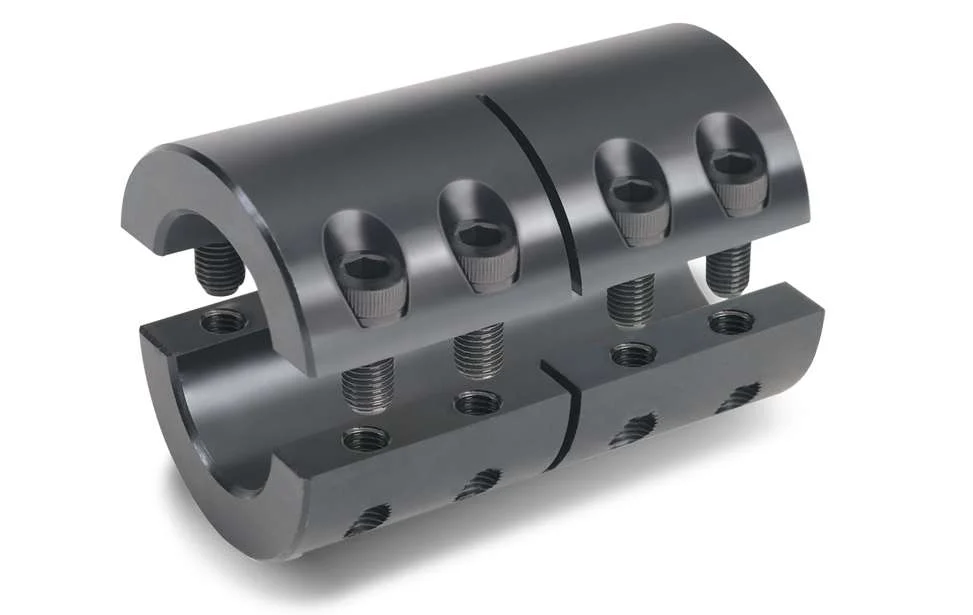
How Do Rigid Couplings Compare to Other Types of Couplings in Terms of Performance?
Rigid couplings offer specific advantages and disadvantages compared to other types of couplings, and their performance depends on the requirements of the application:
1. Performance: Rigid couplings provide excellent torque transmission capabilities and are best suited for applications that demand precise and efficient power transfer. They have minimal backlash and high torsional stiffness, resulting in accurate motion control.
2. Misalignment Tolerance: Rigid couplings cannot tolerate misalignment between shafts. They require precise shaft alignment during installation, which can be time-consuming and may result in increased downtime during maintenance or repairs.
3. Vibration Damping: Rigid couplings offer no damping of vibrations, which means they may not be suitable for systems that require vibration isolation or shock absorption.
4. Maintenance: Rigid couplings are generally low maintenance since they have no moving parts or flexible elements that can wear out over time. Once properly installed, they can provide reliable performance for extended periods.
5. Space Requirements: Rigid couplings are compact and do not add much length to the shaft, making them suitable for applications with limited space.
6. Cost: Rigid couplings are usually more economical compared to some advanced and specialized coupling types. Their simpler design and lower manufacturing costs contribute to their affordability.
7. Application: Rigid couplings are commonly used in applications where shafts are precisely aligned and no misalignment compensation is necessary. They are prevalent in precision machinery, robotics, and applications that require accurate motion control.
In contrast, flexible couplings, such as elastomeric, jaw, or beam couplings, are designed to accommodate misalignment, dampen vibrations, and provide some degree of shock absorption. Their performance is ideal for systems where shafts may experience misalignment due to thermal expansion, shaft deflection, or dynamic loads.
In summary, rigid couplings excel in applications that demand precise alignment and high torque transmission, but they may not be suitable for systems that require misalignment compensation or vibration damping.
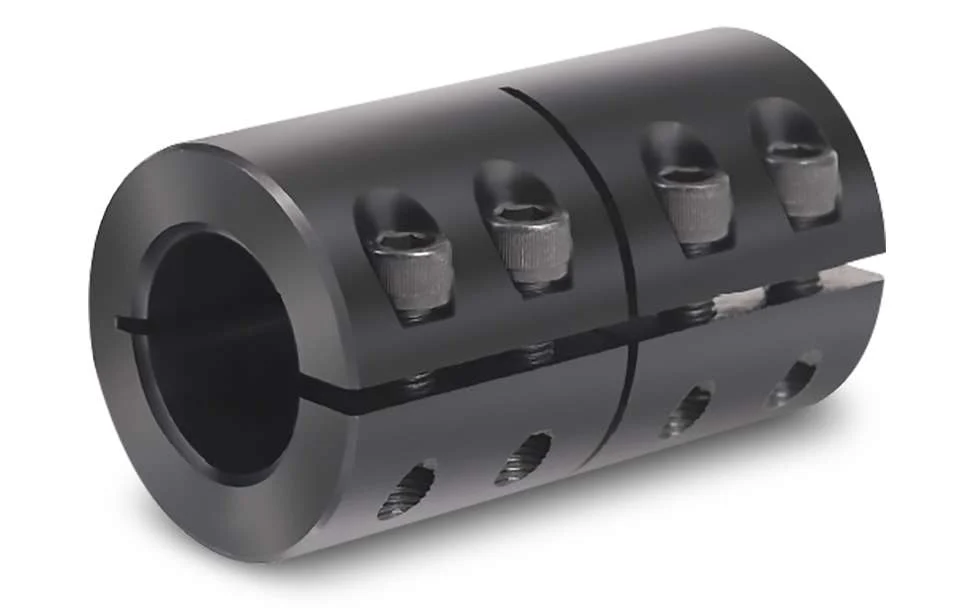
Impact of Rigid Coupling on the Overall Reliability of Connected Equipment
A rigid coupling plays a crucial role in enhancing the overall reliability of connected equipment in mechanical systems. Here’s how it positively impacts reliability:
1. Power Transmission Efficiency: Rigid couplings provide a direct and efficient connection between the shafts of the connected equipment. With no flexible elements, there is minimal power loss, ensuring efficient power transmission from one shaft to another.
2. Elimination of Backlash: Rigid couplings have zero backlash, which is crucial in precision applications. Backlash, which is the play or clearance between connected components, can cause inaccuracies in motion control systems. With a rigid coupling, any movement is directly transferred, maintaining precise positioning.
3. Zero-Maintenance Option: Some rigid couplings are designed to be maintenance-free. They do not require lubrication or periodic adjustments, reducing downtime and ensuring continuous operation.
4. High Torque Transmission: Rigid couplings can handle high torque loads, making them suitable for heavy-duty applications. Their robust construction ensures reliable torque transmission without failure or slippage.
5. Resistant to Misalignment: While rigid couplings offer no flexibility, they are excellent at handling axial misalignment and angular misalignment, provided it falls within their design limits. This ability to tolerate some misalignment enhances reliability and reduces the risk of component damage.
6. Vibration Damping: The stiffness of rigid couplings aids in damping vibrations generated during operation. By minimizing vibrations, the coupling helps protect connected equipment from excessive stress and fatigue failure.
7. Increased System Stiffness: Rigid couplings contribute to the overall stiffness of the mechanical system. This stiffness improves the dynamic response of the system and reduces the likelihood of resonance, leading to more reliable operation.
8. Simple and Compact Design: Rigid couplings have a straightforward and compact design, which reduces the chances of component failure or wear. Their simplicity makes them easy to install and maintain, further enhancing system reliability.
9. Suitable for High-Speed Applications: Rigid couplings are well-suited for high-speed applications due to their ability to maintain accurate shaft alignment and transmit torque efficiently.
10. Compatibility with Various Industries: Rigid couplings find applications in a wide range of industries, including automotive, aerospace, manufacturing, and more. Their versatility and reliability make them a popular choice in demanding industrial environments.
Overall, the use of a properly selected and installed rigid coupling enhances the reliability of connected equipment by providing a robust and efficient connection between shafts. It ensures precise power transmission, reduced maintenance requirements, and improved system performance, leading to increased overall reliability and uptime of the mechanical system.
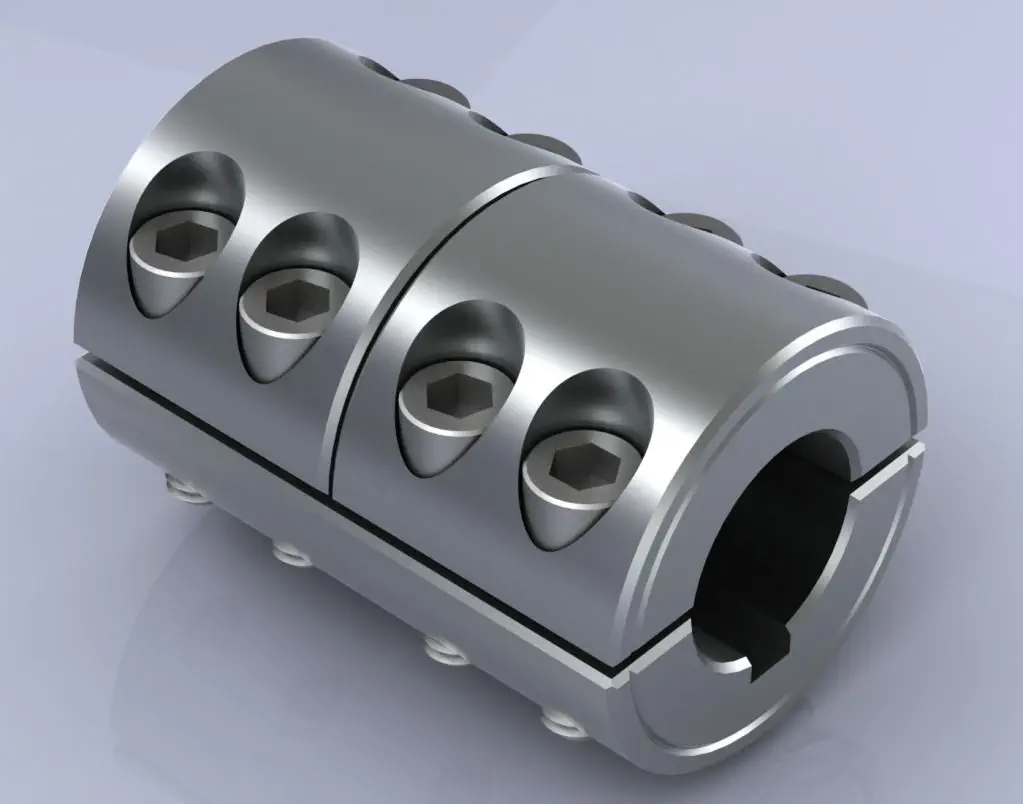
Types of Rigid Coupling Designs:
There are several types of rigid coupling designs available, each designed to meet specific application requirements. Here are some common types of rigid couplings:
- 1. Sleeve Couplings: Sleeve couplings are the simplest type of rigid couplings. They consist of a cylindrical sleeve with a bore in the center that fits over the shaft ends. The coupling is secured in place using setscrews or keyways. Sleeve couplings provide a solid and rigid connection between shafts and are easy to install and remove.
- 2. Clamp or Split Couplings: Clamp couplings, also known as split couplings, are designed with two halves that fit around the shafts and are fastened together with bolts or screws. The split design allows for easy installation and removal without the need to disassemble other components in the system. These couplings are ideal for applications where the shafts cannot be easily moved.
- 3. Flanged Couplings: Flanged couplings have flanges on each end that are bolted together to form a rigid connection. The flanges add stability and strength to the coupling, making them suitable for heavy-duty applications. They are commonly used in industrial machinery and equipment.
- 4. Tapered Couplings: Tapered couplings have a tapered inner diameter that matches the taper of the shaft ends. When the coupling is tightened, it creates a frictional fit between the coupling and the shafts, providing a rigid connection. These couplings are often used in applications where high torque transmission is required.
- 5. Marine or Clampshell Couplings: Marine couplings, also known as clampshell couplings, consist of two halves that encase the shaft ends and are bolted together. These couplings are commonly used in marine applications, such as propeller shafts in boats and ships.
- 6. Diaphragm Couplings: Diaphragm couplings are a type of rigid coupling that provides some flexibility to accommodate misalignment while maintaining a nearly torsionally rigid connection. They consist of thin metal diaphragms that transmit torque while compensating for minor shaft misalignments.
The choice of rigid coupling design depends on factors such as shaft size, torque requirements, ease of installation, and the level of misalignment that needs to be accommodated. It is essential to select the appropriate coupling design based on the specific needs of the application to ensure optimal performance and reliability.


editor by CX 2024-02-12