Description
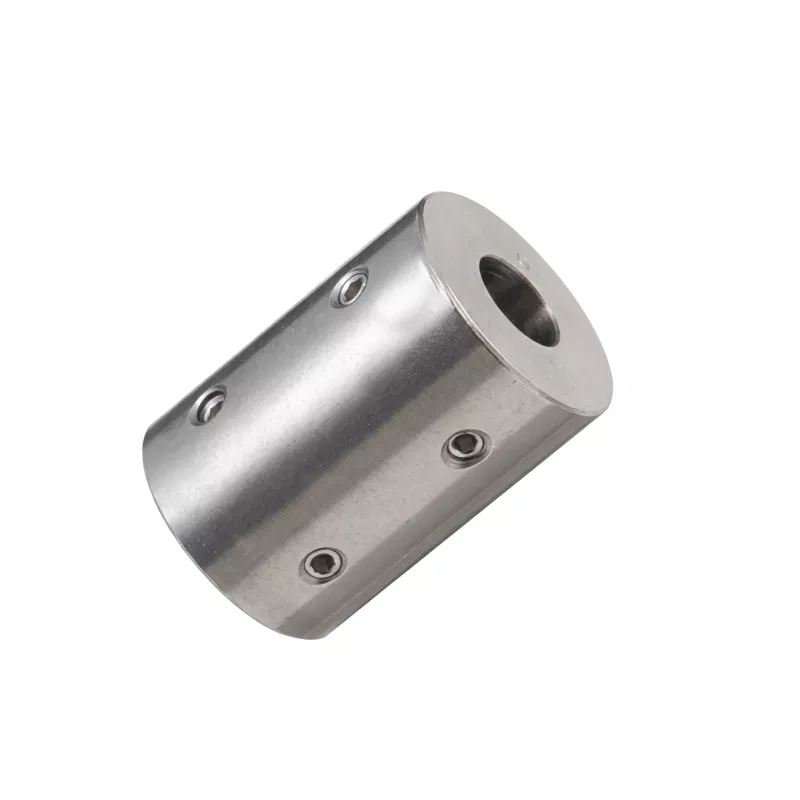
GT4 GT Type Sleeve Coupling – 32–45mm Bore Rigid Muff Coupling for Zero-Backlash Shaft Connection
The GT4 GT type sleeve coupling — also known as a muff coupling — is the simplest and most direct form of rigid shaft coupling: a single cylindrical steel body with a through bore machined to receive two co-linear shaft ends, transmitting torque through keyway and fitted key engagement on each shaft side. At 95 mm outer diameter and 187 mm overall length, the GT4 provides a compact, maintenance-free rigid connection for 32–45 mm shaft diameters, rated at 400 N·m nominal torque at up to 5600 rpm maximum speed. The GT4 at 400 N·m and 5,600 rpm enters the medium-duty industrial drive bracket. Its 32–45 mm bore range matches IEC frame 132 and 160 motor output shaft sizes, making it a natural choice for pump, fan, and conveyor drive connections in this power class.
The operating principle of the GT sleeve coupling is direct and reliable. Each shaft end is inserted into one half of the sleeve bore. A fitted key is placed in the matching keyways of both the shaft and the sleeve bore on each side — two keys total, typically positioned 180° apart. When the coupling rotates, torque is transmitted from the driving shaft to the sleeve through key-keyway bearing contact, and from the sleeve to the driven shaft through the same mechanism on the opposite side. There are no flexible elements, no preloaded fasteners to maintain, and no wear surfaces subject to degradation under normal operating conditions. The result is a permanent, zero-backlash connection that requires essentially no maintenance throughout its service life, provided the connected shafts remain accurately aligned.
The H7 bore tolerance and GB3852-1997 keyway standard ensure dimensional compatibility with standard motor and driven equipment shaft ends throughout the GT series. For special shaft configurations — non-standard diameters, tapered bores, or hydraulic fit bores — custom machining is available. The complete GT series, from GT1 through GT10, is listed on our product catalog page.
Technical Specifications
| Parameter | Value |
|---|---|
| Model | GT4 |
| Type | GT Type Sleeve Coupling (Muff Coupling) |
| Bore Range (d) | 32–45 mm |
| Outer Diameter (D) | 95 mm |
| Overall Length (L) | 187 mm |
| Nominal Torque (Tn) | 400 N·m |
| Maximum Speed [n] | 5600 rpm |
| Bore Tolerance | H7 standard |
| Keyway Standard | GB3852-1997 |
| Mass | 7.0 kg |
Dimension Reference
Construction and Functional Features
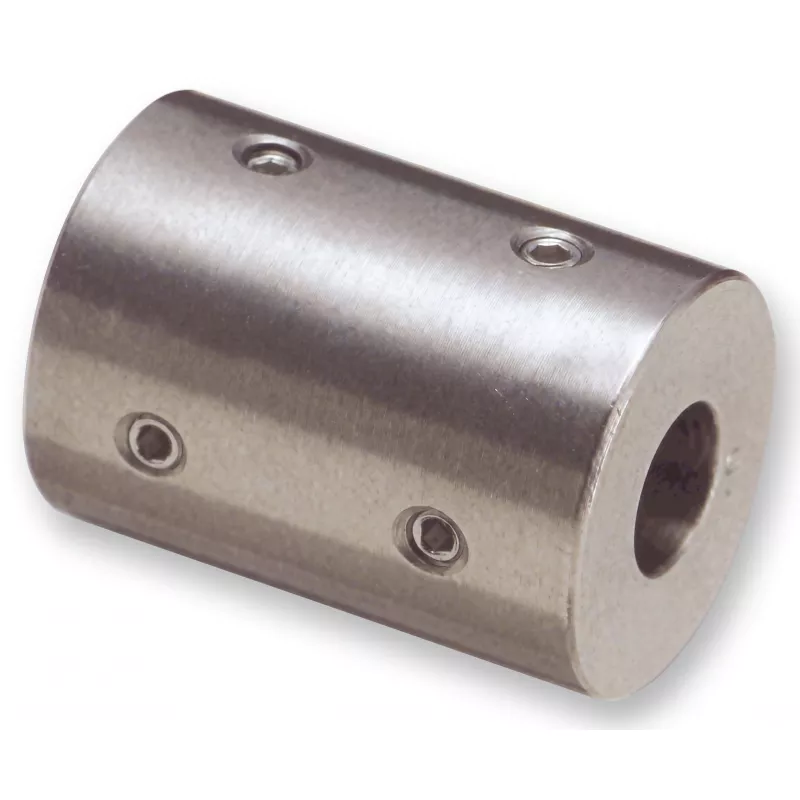
The GT4 body is machined from high-quality cast iron or cast steel — material selection dependent on model size and rated torque. The bore is machined to H7 tolerance to provide a controlled fit against the shaft end, complementing the key-keyway torque transmission with a stable radial contact between shaft and bore. The outer diameter is machined concentric with the bore to ensure rotational balance. Keyway slots are machined to GB3852-1997 standard dimensions for the specified bore size — verifying compatibility with standard motor shaft keyways without modification.
Zero Backlash
Rigid key-keyway torque transmission with no play or compliance — every angular increment on the driving shaft is replicated exactly on the driven shaft. Essential for phase-critical and encoder feedback applications.
Maintenance-Free Service Life
No wear elements, no elastomeric components to degrade, no bolts to retorque. Once correctly installed on aligned shafts, the GT sleeve coupling requires no maintenance throughout its service life.
Compact One-Piece Design
Single cylindrical body — no bolted flanges, no split halves, no external fasteners. Lowest-profile rigid coupling available for co-linear shaft connections, minimising guard size and axial space requirements.
Standard Keyway Compatibility
Bore and keyway dimensions to GB3852-1997 and H7 bore tolerance ensure direct compatibility with standard motor and driven equipment shaft ends throughout the industrial motor range.
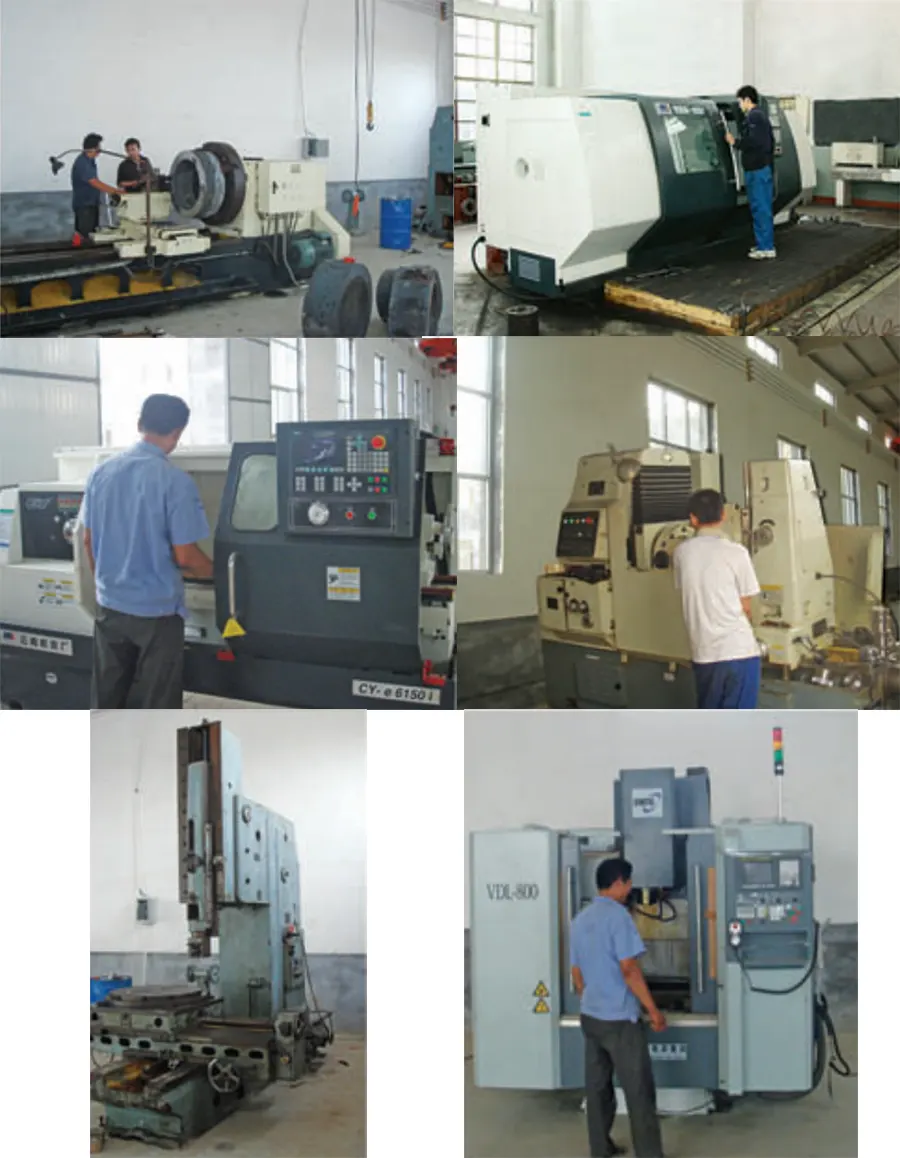
Manufacturing Quality
Typical Applications
- Large centrifugal pump motor connections — high-torque direct drive rigid coupling
- Power station auxiliary equipment drives — boiler feed pump and fan motor shaft connections
- Primary industrial conveyor drives — heavy-duty rigid shaft coupling for main belt conveyor drives
- Ball mill and crusher auxiliary drives — large industrial drive rigid shaft coupling
For technical enquiries and volume supply information, visit our contact page.
Customer Reviews and Case Studies
★★★★★
Netherlands — Industrial Fan OEM
The GT4 sleeve coupling connects motor to fan shaft on our centrifugal fan product range. At 400 N·m and 5,600 rpm, it covers our full fan product torque and speed range. The single-piece design simplifies installation compared to flanged coupling arrangements.
— Product Engineer, Rotterdam
★★★★★
Poland — Paper Converting Machinery
We use GT4 on web tension roll drive connections. The rigid sleeve coupling maintains accurate phase between motor and roll, which is critical for our tension control system’s position feedback.
— Mechanical Engineer, Warsaw
★★★★☆
Mexico — Mining Equipment
Fitted on conveyor drive head shaft connections at our silver mine. The GT4 handles our operating torque reliably in the dusty underground environment and requires no maintenance between our 6-month planned shutdown intervals.
— Plant Engineer, Monterrey
Frequently Asked Questions
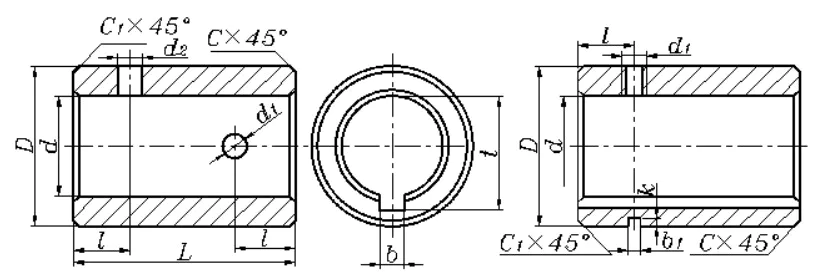
What is the L0 dimension shown on the GT coupling drawing?
L0 is the overall length of the sleeve body. This dimension governs the axial space requirement for the coupling in the shaft layout. Both shaft ends must be inserted to at least half the bore length (L0/2) to ensure adequate key engagement and torque transmission capacity.
Does the GT sleeve coupling require a coupling guard?
Yes. A close-fitting coupling guard is required for all rotating coupling installations for personnel safety. The guard should allow adequate ventilation at higher speeds to prevent heat buildup. It should be designed to contain any fragments in the unlikely event of coupling failure.
What shaft surface finish is recommended under the GT sleeve coupling bore?
A shaft surface finish of Ra 0.8 to 1.6 μm (Rz 6.3 to 10 μm) is recommended under the sleeve bore contact zone. Coarser surfaces reduce effective contact area; finer surfaces may reduce the friction grip contribution of the fit. The shaft surface must be free of corrosion, burrs, and machining chatter marks before installation.
Can the GT sleeve coupling connect shafts of two different diameters?
Yes. The GT sleeve coupling can be bored to two different diameters — one for each shaft end — provided both diameters fall within the model’s bore range. Specify both bore diameters (d1 and d2) when placing your order. Each bore section requires its own keyway machined to the appropriate dimensions for that bore size.
How do I remove a GT sleeve coupling from the shaft?
For interference fit installations, a coupling puller or hydraulic press is used to extract the sleeve axially from the shaft. For transition fit installations, the sleeve can usually be drifted off using a copper-faced mallet after removing any axial retention fasteners. Heat (to approximately 100°C) can be applied to the sleeve body to ease extraction without damaging the shaft.
Source the GT4 GT Sleeve Coupling
Ever Power manufactures the GT4 and the complete GT sleeve coupling series — GT1 through GT10, covering 12 mm to 200 mm bore — direct from our factory. Specify bore diameters, keyway requirements, and any non-standard dimensions for a prompt technical and commercial response.