Description
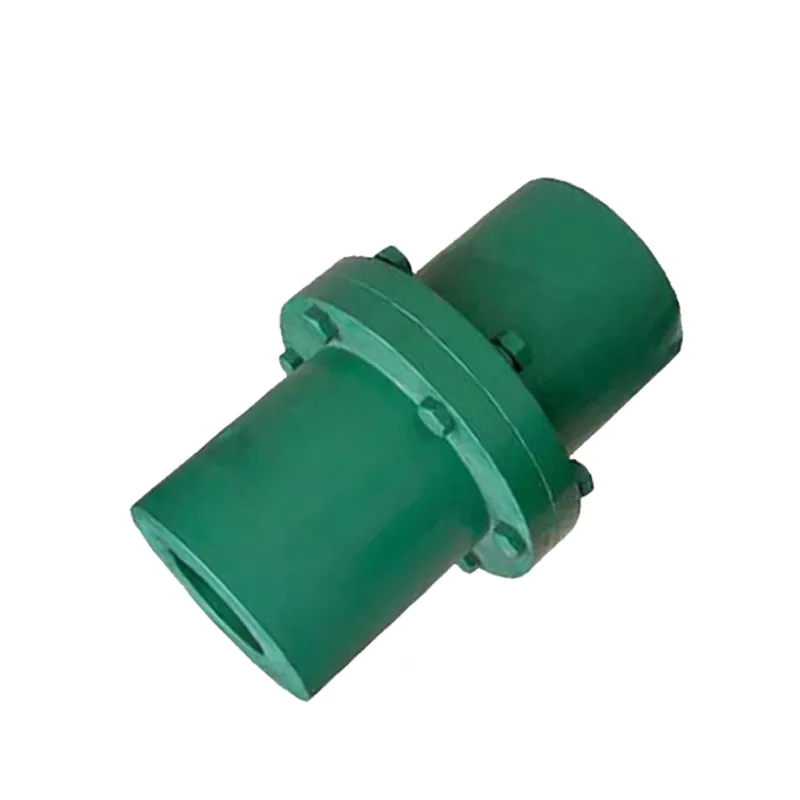
YLD1 YLD Type Flanged Coupling – 10–22mm Bore Rigid Bolted-Flange Shaft Connector to GB5843-86
The YLD1 YLD type flanged coupling is a YLD type flanged coupling with alignment tenon and spacer body designed to connect two co-axial cylindrical shaft ends rigidly through a bolted flange joint, conforming to Chinese national standard GB5843-86. With a 71 mm outer diameter, 10–22 mm bore range, and nominal torque rating of 10 N·m, the YLD1 serves shaft connections in industrial drives where a rigid, zero-backlash connection is required combined with the ability to disconnect the two shaft ends by removing the flange bolts — without moving either shaft axially. Maximum speed rating is 8100 rpm for cast iron hubs and 13000 rpm for cast steel hubs. Overall length including spacer: 192 mm (spacer length L0 = 54 mm). The spacer body provides maintenance access clearance between the two hub faces.
The YL type flanged coupling consists of two identical hub halves, each machined with a bore and keyway to receive one shaft end, and each terminating in a precision-machined circular flange. The two flanges are bolted together with 3×M6 reamed-hole precision bolts that both clamp the faces together and transmit shear torque through the bolt shank. Torque is transmitted from each shaft into its hub through the key-keyway engagement, through the hub body to the flange face, and across the bolted joint to the opposing hub and shaft. The result is a rigid, zero-backlash connection that can be separated by removing the 3 flange bolts without disturbing shaft alignment — an advantage over sleeve couplings that require axial shaft movement for installation or removal. The YLD type’s precision alignment tenon on each flange face ensures that the two hub halves re-centre automatically when the bolts are tightened after maintenance reassembly, eliminating the need for dial indicator realignment.
The YLD1 conforms to GB5843-86, which specifies dimensions for flanged couplings for cylindrical shaft connections transmitting nominal torques from 10 to 20,000 N·m. Bore and keyway dimensions conform to GB3852-1997. The complete YL and YLD flanged coupling range is listed on our product catalog page.
Technical Specifications
| Parameter | Value |
|---|---|
| Model | YLD1 |
| Type | YLD Type Flanged Coupling with Alignment Tenon |
| Standard | GB 5843-86 |
| Bore Range (d) | 10–22 mm |
| Outer Diameter (D) | 71 mm |
| Flange Diameter (D1) | 53 mm |
| Overall Length (L) | 192 mm |
| Spacer / Face Distance (L0) | 54 mm |
| Flange Bolts | 3×M6 |
| Nominal Torque (Tn) | 10 N·m |
| Max Speed – Cast Iron | 8100 rpm |
| Max Speed – Cast Steel | 13000 rpm |
| Rotational Inertia | 0.0026 kg·m² |
| Mass | 1.5 kg |
Structure Drawing
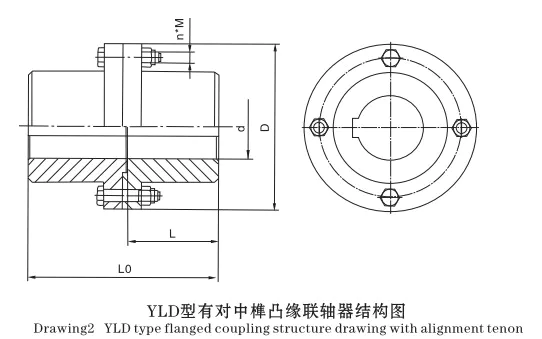
Dimension Reference
Rigid Zero-Backlash Connection
The bolted flange joint transmits torque rigidly with zero angular play. Every rotational increment on the driving shaft is replicated exactly on the driven shaft — essential for position feedback and phase-critical drive applications.
Disconnect Without Shaft Movement
Removing the flange bolts disconnects the two shaft ends without moving either shaft axially. This allows motor removal, driven equipment service, or shaft inspection without disturbing bearing housings or shaft alignment.
Cast Iron / Cast Steel Options
Hub material choice of cast iron (8100 rpm) or cast steel (13000 rpm) covers both standard industrial speed requirements and higher-speed applications. The torque rating is the same for both materials.
GB5843-86 Standard Compliance
Full conformance to national standard GB5843-86 ensures dimensional interchangeability with other GB-compliant couplings. Keyway dimensions per GB3852-1997 ensure compatibility with standard motor and driven equipment shaft keyways.
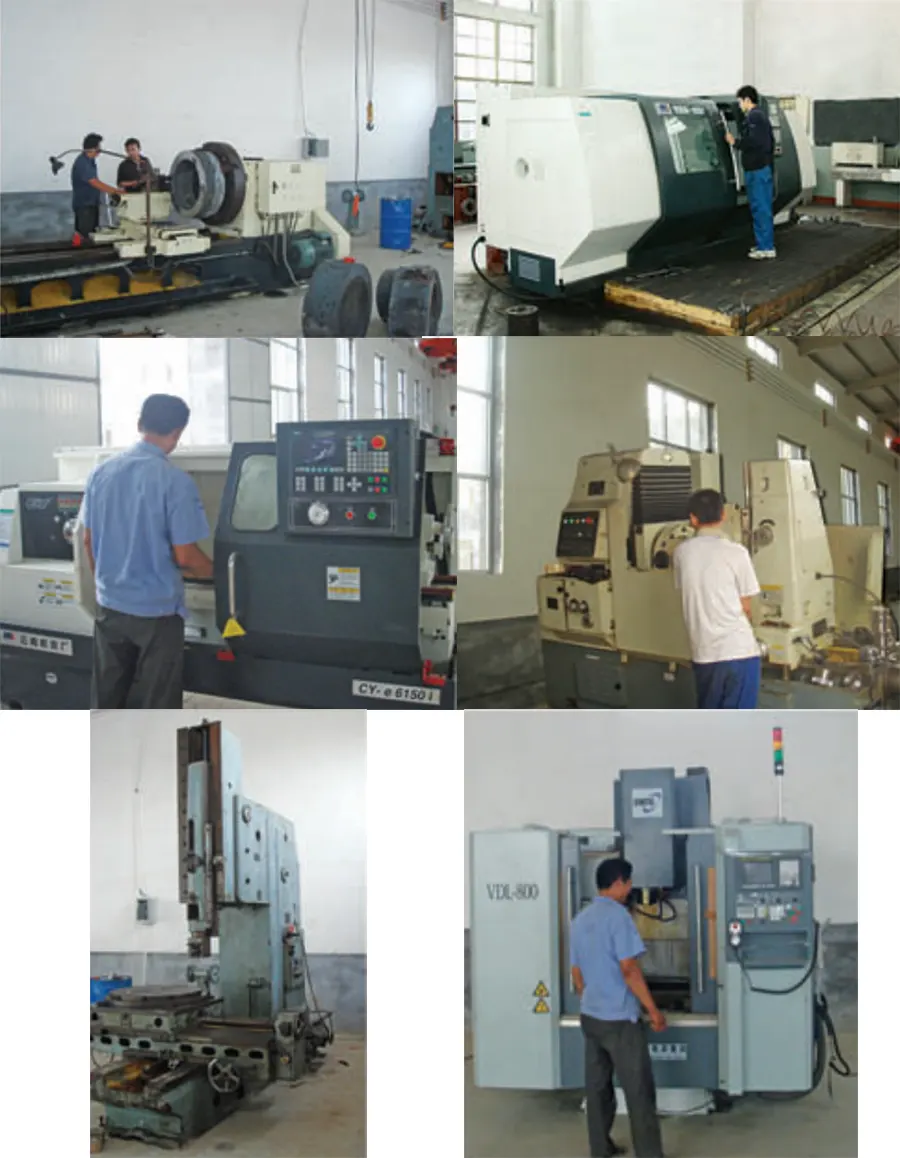
Manufacturing
Typical Applications
- Motor test bench drive connections — spacer coupling for test instrumentation access and frequent disconnection
- API pump seal access couplings — spacer body provides mechanical seal removal clearance
- Precision instrument drive connections — alignment tenon ensures repeatable shaft concentricity on reassembly
- Close-coupled pump motor connections — spacer allows bearing inspection without motor removal
For custom bore configurations and volume supply, contact our technical team.
Customer Reviews and Case Studies
★★★★★
Germany — Precision Motor Test Equipment
The YLD1 alignment tenon version ensures exact shaft concentricity on reconnection — critical for our motor test bench where misalignment would affect measurement accuracy. We reassemble the coupling multiple times per week and the tenon has maintained our alignment specification throughout.
— Test Engineer, Stuttgart
★★★★★
France — Scientific Instrument OEM
Used in precision rotary measurement instrument drive connections where the alignment tenon guarantees shaft concentricity after maintenance disassembly. The spacer section provides axial clearance for seal access without disturbing the shaft ends.
— Instrument Engineer, Paris
★★★★☆
Australia — Automation Equipment OEM
Specified the YLD1 for its spacer body which provides access clearance to the shaft joint area for seal inspection. The alignment tenon ensures repeatable shaft concentricity on reassembly, eliminating realignment after routine seal checks.
— Design Engineer, Sydney
Frequently Asked Questions
What is a YL type flanged coupling and how does it differ from YLD?
The YL type is a flanged coupling with two hub halves connected by bolts at a central flange. It connects two co-axial shaft ends rigidly. The YLD type (YLD = YL type with alignment tenon) adds a precision male-female tenon at the flange mating face that ensures accurate shaft concentricity on reassembly after the coupling is disconnected for maintenance.
What national standard governs the YL/YLD flanged coupling?
YL and YLD type flanged couplings conform to Chinese national standard GB 5843-86, which specifies modes, base figures, connecting sizes, and maximum outer sizes. Keyway and shaft hole dimensions conform to GB3852-1997.
What is the function of the alignment tenon on the YLD type?
The alignment tenon is a precision-machined male protrusion on one flange face that fits into a matching recess on the opposite flange face. When the flange bolts are tightened, the tenon centres the two halves concentrically. This ensures that the two connected shaft ends are coaxial on reassembly, eliminating the need for dial indicator realignment after each maintenance disassembly.
What bore types are available for the YL/YLD coupling?
Both Y-type (standard cylindrical bore with keyway) and J₁-type (short hub cylindrical bore with keyway) are available. Y-type is the standard configuration with full hub length for maximum key engagement. J₁-type is a short hub variant used where axial space is limited.
What is the maximum bore available for each YL/YLD model?
Bore ranges vary by model. The minimum bore is typically 10 mm for YL1/YLD1, increasing to 140 mm for YL8/YLD8. All bore sizes within the specified range for each model can be machined with matching keyways to GB3852-1997 standard dimensions.
Source the YLD1 YLD Flanged Coupling
Ever Power manufactures the YLD1 and the complete YL/YLD flanged coupling range to GB5843-86 direct from our factory. Specify bore sizes, hub type (Y or J₁), and material (cast iron or cast steel) for a prompt technical and commercial response.