Description
JQ-160 JQ Type Clamping Coupling – 160mm Split-Body Reactor Stirring Shaft Connection
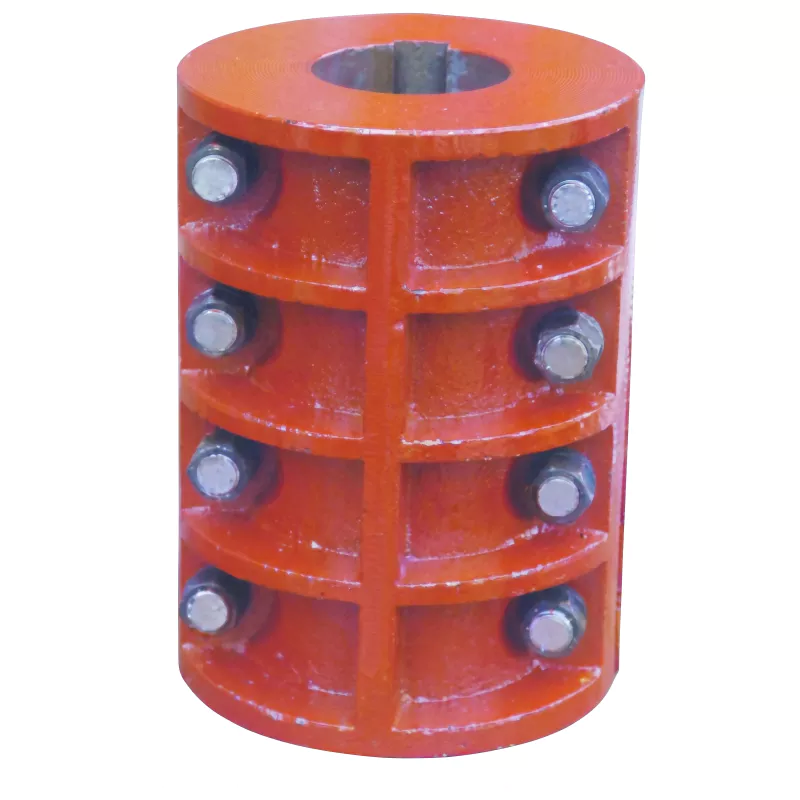
The JQ-160 JQ type clamping coupling is a split-body rigid shaft connector engineered for reactor stirring shaft applications where the shaft is manufactured in two sections — either because the complete shaft length exceeds what can be handled as a single piece during installation, or because a vertical gearbox output shaft must be connected to the reactor agitator shaft with non-standard bore dimensions. At 340 mm outer diameter and 500 mm overall length, the JQ-160 is sized for 160 mm shaft connections with a nominal torque rating of 28000 N·m, covering the full operating torque range of industrial agitator drives at this shaft size.
The JQ clamping coupling operates on the principle of split-body radial clamping: the coupling body is manufactured in two semi-cylindrical halves that wrap around the two shaft ends from the side and are drawn together by 26 clamping bolts. When the bolts are tightened to the specified torque, the bore halves compress against the shaft surfaces, generating a friction grip that transmits the rated torque without requiring any keyway or interference fit. This assembly method is particularly valuable in plant installations where shaft end access is restricted — above reactor vessels, between flanged connections, or in confined equipment rooms — because the coupling assembles laterally around the shaft rather than requiring axial shaft movement through the bore.
The ability to disassemble the coupling without shaft modification is a significant maintenance advantage. When the coupling bolts are released, the two body halves separate cleanly, leaving both shaft surfaces intact and undamaged for reuse. This is in contrast to interference-fit or keyed hub connections, which typically require heat, pressing, or shaft modification to disassemble. For the full range of clamping and rigid coupling models, visit our product catalog page.
Technical Specifications
| Parameter | Value |
|---|---|
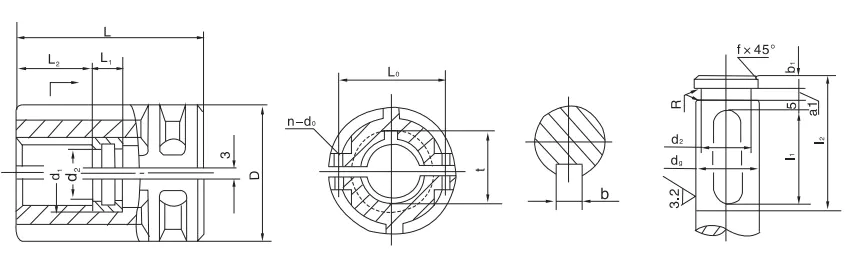
| Model | JQ-160 |
| Type | JQ Type Clamping Coupling (Split-Body) |
| Bore Diameter (dg H7) | 160 mm |
| Outer Diameter (D) | 340 mm |
| Overall Length (L) | 500 mm |
| Shaft Insertion Length (L1) | 64 mm |
| Hub Length (L2) | 218 mm |
| Body Length (L0) | 280 mm |
| Clamping Bolts (n–d0) | 26 |
| Nominal Torque (Tn) | 28000 N·m |
| Mass | 215 kg |
* Bore tolerance H7 standard; H8/j7 available. Non-standard bore sizes available on request — specify at order time.
Dimension Drawing
Split-Body Design and Operational Features
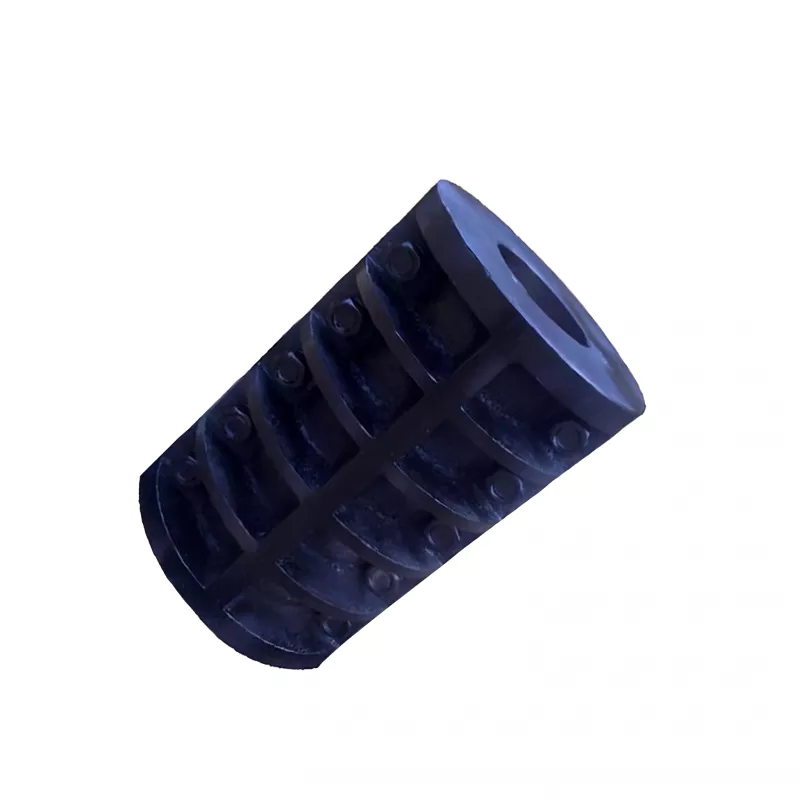
The JQ-160’s split-body construction is the defining functional feature of the JQ series. Each half of the coupling body contains one full bore semicircle, and the two halves are precision-machined to mate at the split plane with minimal gap when the clamping bolts are torqued. The bore surface is machined to H7 tolerance as standard, providing a controlled interference-adjacent fit against the shaft end for maximum friction grip area. The clamping bolt arrangement — 26 bolts distributed around the split flange — provides symmetric clamping force across the bore circumference, minimising the risk of shaft deflection or misalignment from uneven bolt loading.
Installation requires no special tooling beyond a calibrated torque wrench. The two shaft ends are brought into position, the coupling halves are placed around them, and the bolts are tightened progressively in a cross pattern until the specified bolt torque is achieved on all fasteners. The specified body length L0 of 280 mm accommodates the gap between shaft ends inside the coupling. For non-standard shaft configurations where the gap dimension is critical, custom body lengths can be specified — contact our technical team for assistance.
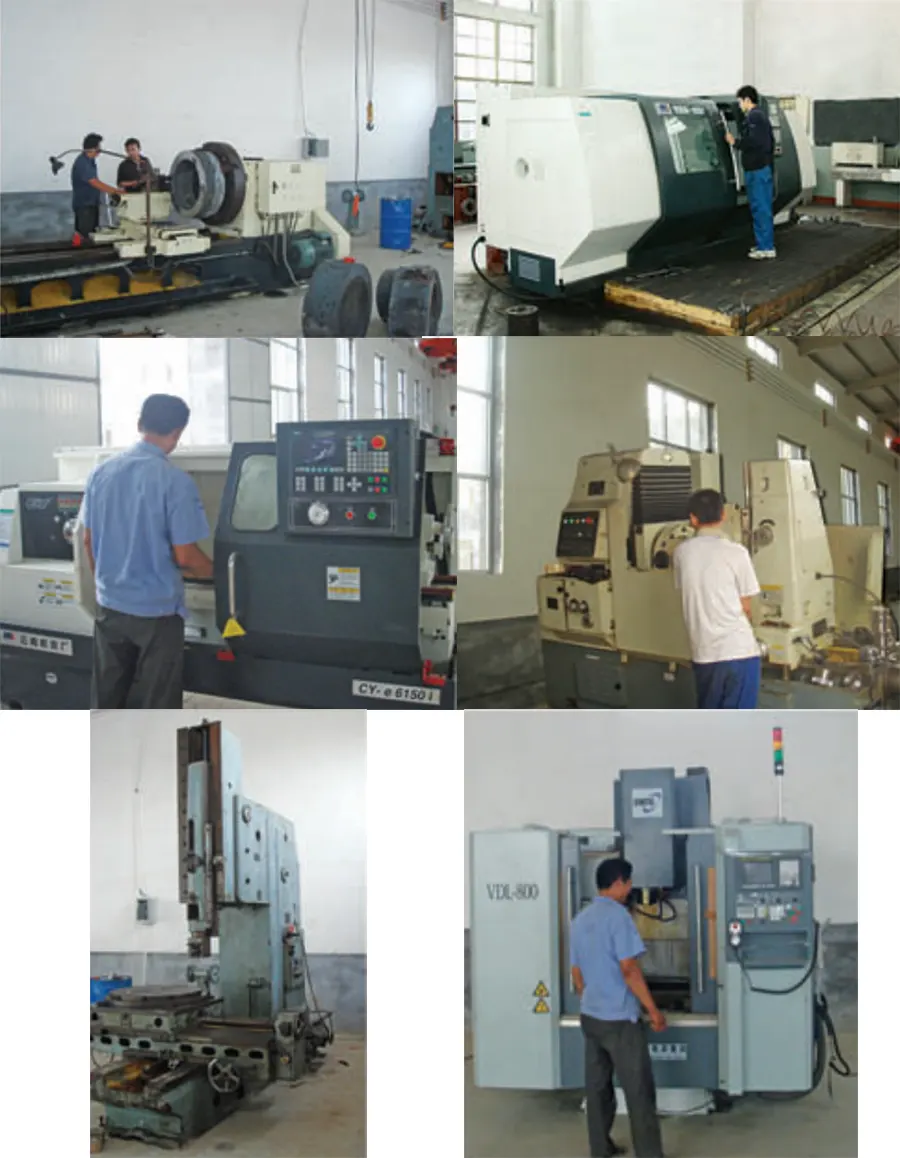
Manufacturing Quality
Keyless Shaft Connection
No keyway required in either shaft section. The friction clamp transmits the full rated torque through the bore contact surface, eliminating the keyway stress concentration that contributes to shaft fatigue in keyed hub designs.
Lateral Assembly
Assembles around the shaft from the side — no axial shaft movement required. Essential for installations in confined spaces, above reactor vessels, or between fixed-position flanges where end access is unavailable.
Non-Destructive Disassembly
Both shaft ends are released undamaged when the clamping bolts are loosened. Shafts can be reused across multiple coupling replacements — reducing lifecycle shaft cost and maintenance downtime.
Custom Bore Available
Non-standard bore diameters for vertical reducer output shafts can be specified at order time. Ever Power machines bores to the stated non-standard dimension, ensuring compatibility with custom gearbox output shafts without adapter sleeves.
Typical Applications
- Large-scale industrial reactor agitator connections in chemical, pharmaceutical, and mineral processing plants
- Offshore chemical injection mixing drives — where shaft surface preservation and easy disassembly are requirements
- Wastewater treatment infrastructure — anaerobic digester and aeration basin agitator drives
- Sugar and fermentation industry — molasses and wort agitator shaft connections
Customer Reviews and Case Studies
★★★★★
Germany — Large Reactor Agitator OEM
The JQ-160 is our largest production coupling for chemical reactor agitator drives. At 28,000 N·m rated torque, it covers the full drive range of our large industrial agitator product line. The split clamp body allows field assembly on shafts that cannot be slid axially — an essential feature at this scale where shaft mass is several hundred kilograms.
— Senior Mechanical Engineer, Mannheim
★★★★★
Australia — Mining & Mineral Processing
Installed on large-scale leach tank agitator drive shaft connections at our gold processing facility. The JQ-160 handles the variable torque loading of the leach agitator drive through seasonal temperature extremes from 5°C to 45°C without any coupling-related maintenance interventions.
— Rotating Equipment Superintendent, Perth
★★★★☆
United States — Wastewater Treatment Infrastructure
We have standardised on the JQ-160 for our largest anaerobic digester agitator connections. The split-body coupling assembles within the confined headspace above the digester dome — conventional flanged couplings at this shaft size would require dome removal, causing significant additional downtime.
— Infrastructure Projects Engineer, Chicago
Frequently Asked Questions
What is the torque safety factor recommended for JQ coupling selection?
A safety factor of 1.5 to 2.5 on the nominal torque rating is typically applied depending on the application shock loading class. For smooth-running agitators in low-viscosity fluids, a factor of 1.5 may be acceptable. For high-viscosity or high-viscosity startup conditions, use 2.0 to 2.5.
How is shaft alignment maintained after JQ coupling assembly?
The two shaft sections are aligned by the bore of the coupling body itself. Accurate bore machining ensures the two shaft ends are coaxially aligned when the coupling is assembled. For critical applications, shaft runout should be verified with a dial indicator after assembly and before commissioning.
What lubrication is required for the JQ coupling?
No lubrication is required on the shaft bore contact surfaces — these must be clean and dry to maximise friction clamping force. The clamping bolt threads should be lubricated with a thin oil or anti-seize compound before assembly to achieve consistent bolt preload at the specified tightening torque.
Can the JQ coupling accommodate slight shaft misalignment?
No. The JQ clamp coupling is a rigid connection — it does not compensate for angular, parallel, or axial misalignment between the two shaft sections. Both shafts must be accurately aligned before the coupling is tightened. Misalignment will transmit bending moments to the reactor bearing and shaft.
Is documentation available for the JQ coupling for regulatory compliance?
Material certificates, dimensional inspection reports, and hydrostatic test certificates (where applicable) are available on request. These documents are commonly required for regulated industries including pharmaceutical, food processing, and petrochemical applications.
Source the JQ-160 JQ Clamping Coupling
Ever Power manufactures the JQ-160 and the full JQ clamping coupling series direct from our factory. Specify your bore diameter, shaft configuration, and non-standard dimensions if required — our team will confirm suitability and provide factory-direct pricing.