Description
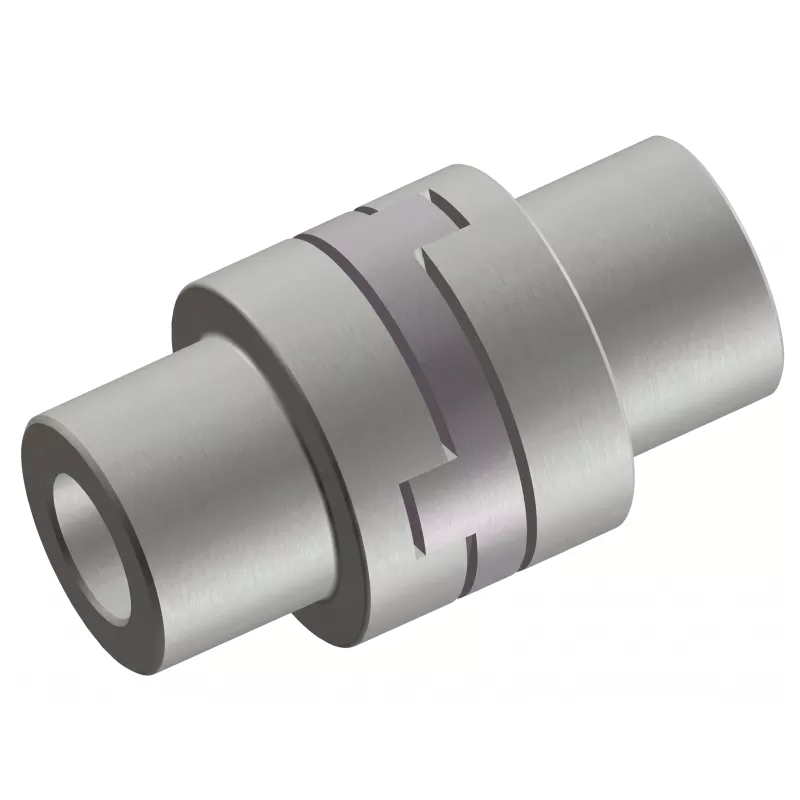
WH9 WH Type Oldham Coupling – 65–85mm Bore Shock-Absorbing Sliding-Block Flexible Drive Coupling
The WH9 WH Type Oldham coupling is a sliding-block flexible drive coupling designed for applications transmitting 3550 N·m at up to 1800 rpm where a certain degree of shaft relative offset compensation, shock absorption, and vibration damping capability are all simultaneously required. With a 250 mm outer diameter and bore range of 65–85 mm, it suits the full range of industrial shaft connections in this torque class — from compact instrument drives at the WH1 end of the series to large pump and processing equipment drives at the WH10 level. The coupling’s working temperature range of -20°C to +70°C covers standard industrial and outdoor service environments. The WH9 at 3550 N·m rated torque represents the upper-large bracket of the WH series, serving 65–85 mm shaft connections in the 250 kW to 1 MW industrial drive class. Large centrifugal pump, fan, and processing equipment drives in pulp, paper, and mineral processing applications constitute its primary market.
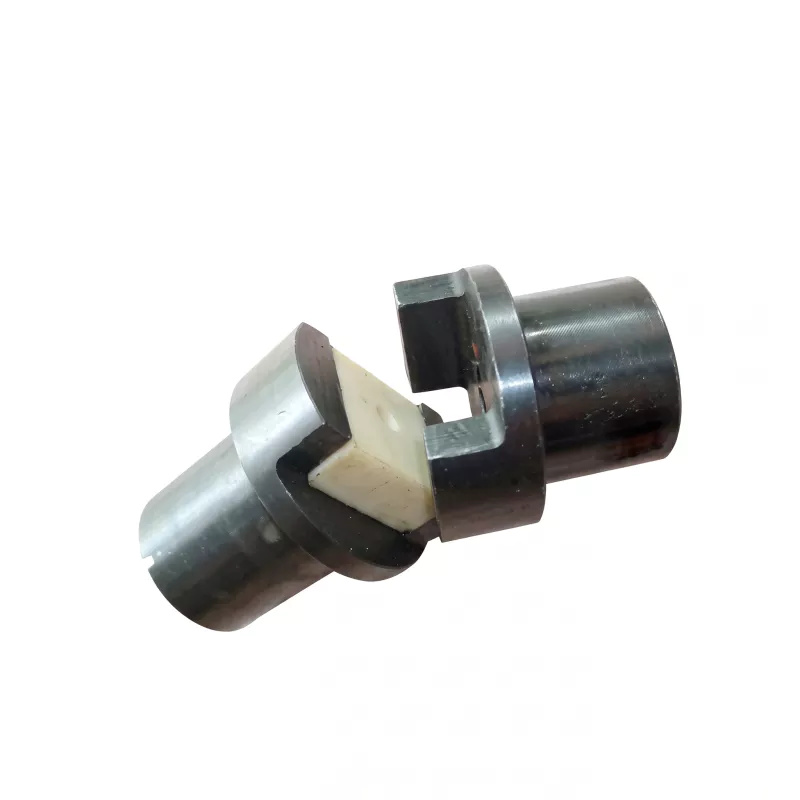
The WH Type coupling is a three-component sliding-block Oldham design: two identical metal hubs, each mounted on one shaft, and a central polymer slider block that simultaneously engages the tongue-groove features on each hub face. Torque is transmitted through the sliding contact between the polymer block tongues and the metal hub grooves. Relative radial displacement between the two shafts is absorbed by translational sliding of the block within the hub grooves during rotation. The polymer block material provides inherent shock absorption by deflecting elastically under peak torque loads, attenuating transient torque spikes before they are transmitted to the connected shaft and its bearings. This shock absorption characteristic distinguishes the WH Type from rigid Oldham couplings and makes it particularly valuable in drive applications with variable or intermittent loading.
Y-type (standard length) and J-type (short hub) bore configurations are both available for the WH9, with bore length dimensions of 142–172 mm (Y-type) and 107–132 mm (J-type). The full WH series documentation and selection guidance is available on our product catalog page.
Technical Specifications
| Parameter | Value |
|---|---|
| Model | WH9 |
| Type | WH Type Oldham (Sliding-Block) Coupling |
| Bore Range (d) | 65–85 mm |
| Outer Diameter (D) | 250 mm |
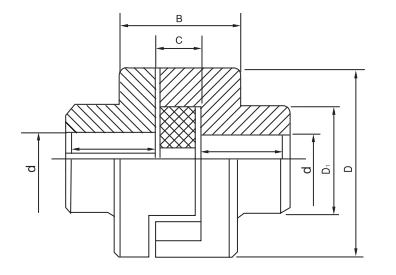
| Inner Hub Diameter (D₁) | 150 mm |
| Slider Block Width (B) | 180 mm |
| Tongue Depth (C) | 62 mm |
| Y-Type Bore Length (L) | 142–172 mm |
| J-Type Bore Length (L) | 107–132 mm |
| Nominal Torque (Tn) | 3550 N·m |
| Maximum Speed [n] | 1800 rpm |
| Working Temperature | -20°C to +70°C |
| Mass | 85 kg |
Dimension Reference
Hub and Slider Block Assembly
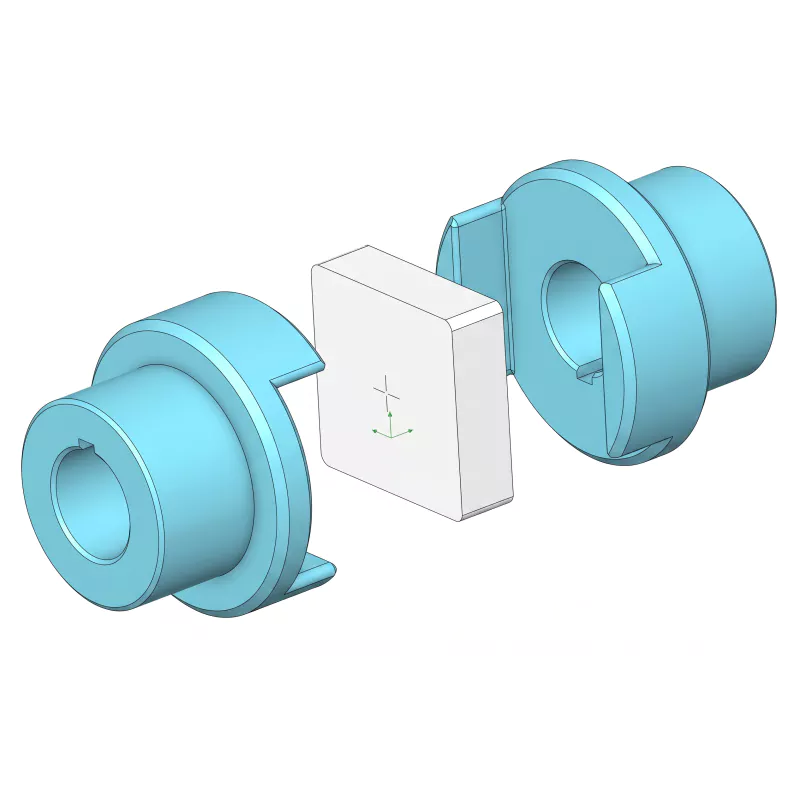
The WH9’s intermediate slider block is the functional core of the coupling. Machined from engineering polymer to precise tongue and groove dimensions, the block simultaneously engages the drive faces on both hub ends. The tongue width and groove dimensions on the WH9 are sized to provide adequate compressive contact area for reliable 3550 N·m torque transmission while maintaining the sliding clearance needed for radial compensation movement during rotation. The tongue depth dimension C = 62 mm determines the shear plane geometry of the engagement and is a key parameter in the coupling’s shock absorption capacity.
Shock Absorption
The polymer slider block deflects elastically under peak torque loads, attenuating drive transients and protecting both motor and driven equipment bearings from shock loading. This is the primary functional differentiator of the WH Type over rigid Oldham couplings.
Shaft Offset Compensation
Radial shaft offset between the two connected shaft centrelines is absorbed by the sliding mechanism, preventing transmission of radial forces to motor or driven equipment bearings — reducing bearing overload and extending equipment service life.
Vibration Damping
The polymer block’s internal damping dissipates vibrational energy transmitted through the drive shaft, reducing vibration levels in both the motor and driven equipment — beneficial in applications where vibration affects product quality or equipment fatigue life.
Y and J Bore Options
Both standard-length Y-type and short-hub J-type bore configurations are available, accommodating applications with different axial space constraints between bearing supports.
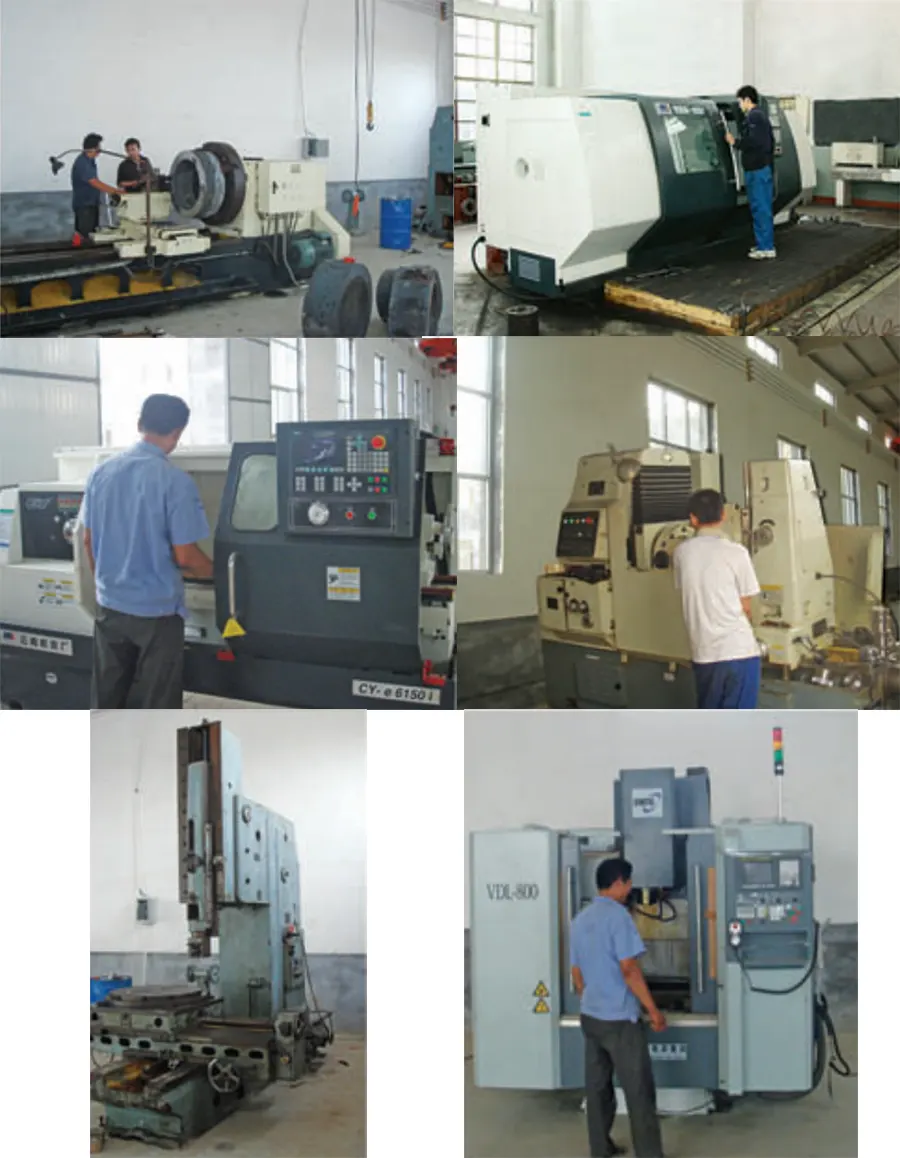
Manufacturing
Typical Applications
- Small instrument and automation drive connections — servo and stepper motor output shaft connections with misalignment compensation and vibration isolation
- Printing and packaging machine drives — torque transient absorption during acceleration/deceleration cycles
- Medical and laboratory instrument drives — vibration damping for sensitive measurement equipment
- Conveyor feed drive connections — small format conveyor head drum connections with frame assembly offset
For application enquiries and volume supply, please visit our contact page.
Customer Reviews and Case Studies
★★★★★
United States — Industrial Pump OEM
The WH9 Oldham coupling connects large centrifugal pump motors to pump shafts in our 100–400 kW pump product range. The 3,550 N·m rated torque covers our complete range and the coupling’s shock absorption reduces pump startup torque transient transmission to the motor.
— Applications Engineer, Pittsburgh
★★★★★
India — Paper Mill
Used on large paper machine roll drive connections. The WH9 handles the sustained 3,550 N·m drive torque of our paper machine rolls and accommodates the thermal and gravitational shaft offset that develops during machine warm-up.
— Mechanical Manager, Lucknow
★★★★☆
Finland — Wood Processing Equipment
Fitted on large wood chipper main drive connections. The WH9 absorbs the high shock torque of the chipper disk impacting wood pieces, protecting the drive motor from the impact loading that would otherwise reduce motor winding life.
— Production Engineer, Tampere
Frequently Asked Questions
What is the significance of the B dimension in the WH Type coupling?
B is the outer width of the intermediate slider block. It determines the axial space requirement for the assembled coupling. When designing the shaft layout, the total coupling envelope width (approximately L plus the slider block protrusion at each side) must fit within the available axial space between bearing supports.
What is the C dimension in the WH Type coupling?
C is the depth of the tongue-and-groove engagement in each hub face. It determines the contact area between the slider block tongues and the hub grooves, which governs the compressive stress on the contact surfaces at the rated torque. The C dimension is a key parameter in verifying slider block material adequacy at the operating torque level.
Can the WH Type coupling transmit torque in both rotational directions?
Yes. The tongue-and-groove engagement between the slider block and both hub faces provides torque transmission in both rotational directions. For reversing applications, the contact changes between the two faces of each tongue — this imposes impact loads on the slider block at each reversal and may reduce block service life compared to unidirectional operation.
What is the maximum speed rating of WH Type couplings?
Maximum speed varies by model: WH1 is rated to 10,000 rpm; WH10 is rated to 1,500 rpm. The speed limit decreases with increasing model size due to the increasing sliding velocity of the larger intermediate block at higher rotational speeds. Check the specification table for the exact speed limit of your model.
How is the WH Type coupling shaft secured — keyway or clamp?
The standard hub bore uses a keyway and setscrew arrangement for shaft retention. The keyway dimensions conform to the relevant standard for the bore diameter. A shaft flat-face setscrew bearing on the key is used for axial retention. For specific installation guidance, refer to the installation documentation provided with the coupling.
Enquire About the WH9 WH Type Oldham Coupling
Ever Power manufactures the WH9 and the complete WH Type coupling range — 10 models from WH1 to WH10 covering 16 N·m to 5,000 N·m — direct from our factory. Specify your bore diameter, bore type (Y or J), operating torque, and speed for a prompt technical and commercial response.