Product Description
Product DescriptionFire fighting ductile iron grooved coupling and fitting with UL FM CE ISO certification 1.Name:FM UL Approved ductile iron grooved pipe fitting rigid coupling (Rigid coupling, Reducing coupling, Flexible coupling, Mechanical Tee, Mechanical cross, U-Bolt mechanical tee, elbow, cross, tee, flange adapter, split flange,cap
| Brand | JUNT |
| Company Type | Manufacturer |
| Standard | ANSI,ASTM,DIN,JIS,GB,BS |
| Materal | Ductile Iron (ASTM A536 Grade 65-45-12) |
| Color | Red RAL3000 , Orange , Bule or according to custom requirements |
| Surface Treatment | Paint, Epoxy, Galvanization or Dacroment |
| Threaded | BSPT NPT |
| Certification | UL FM CE ISO 9001 |
| Delivery Time | Normally within 15-30days |
| Pressure | 300PSI 500PSI 2.5MPA |
| Payment Terms | T/T L/C OR Other |
| Useage
|
1) Automatic sprinkler system for fire production on commercial,civil and municipal constructions like water supplying ,gas supplying , heat supplying , etc |
| 2)Industrial pipeline system on shipping , mine , textile oil field , power plant , etc | |
| 3)Pipeline system on subway station , railway station airport , seaport, brided , etc |
Our company
HangZhou CHINAMFG Machinery Auxiliaries Co.,Ltd is established in 2004,is a professional manufacturer specialized in the R&D,Pro-duction ,sale and service of ductile iron Grooved Couplings and Pipe Fittings. Our company is a large enterprise group composed of 1 main factory, 3 branch factories which cover-s an area of 68000m2 and has an annual production capacity of more than 50000 tons. We have an experienced team, around 500 skilled staff members, 20 percent of them are engineers and technicians who are professional and hardworking.We are equipped with automation molding line, China 416 automation molding line, Erich automation sand mixing line, CNC lathe, WINTER mold machining center and so on.
We have a very professional laboratory with full serious of testing and inspection as leak testing, raw material receiving inspection, batch chemical composition inspection, microstructure testing, dimension inspection, first article inspection, in-process inspection and final visual inspection in order to ensure the product quality.
Packing&Delivery
1)JUNT Large boxes ,non-wood pallets (110L*110W*12H)with PE film,27boxes per pallet at most.
2)JUNT Samal boxes,non-wood pallets(110L*110W*12H)with PE film ,54boxes per pallet at most.
3)We can also pack products as per customer’s requirement.
4) Delivery Details : 5-30 days after order
FAQQ: Are you trading company or manufacturer ?
A: We are factory.Exported abroad directly from our own factories,so the price is competitive.
Q: How long is your delivery time?
A: Generally it is 5-10 days if the goods are in stock. or it is 15-20 days if the goods are not in stock, it is according to quantity.
Q: Do you provide samples ? is it free or extra ?
A: Yes, we could offer the sample for free charge but do not pay the cost of freight.
Q: What is your terms of payment ?
A: Payment=1000USD, 30% T/T in advance ,balance before shipp-ment.
If you have another question, pls feel free to contact us as below:
Alisa shi
/* March 10, 2571 17:59:20 */!function(){function s(e,r){var a,o={};try{e&&e.split(“,”).forEach(function(e,t){e&&(a=e.match(/(.*?):(.*)$/))&&1
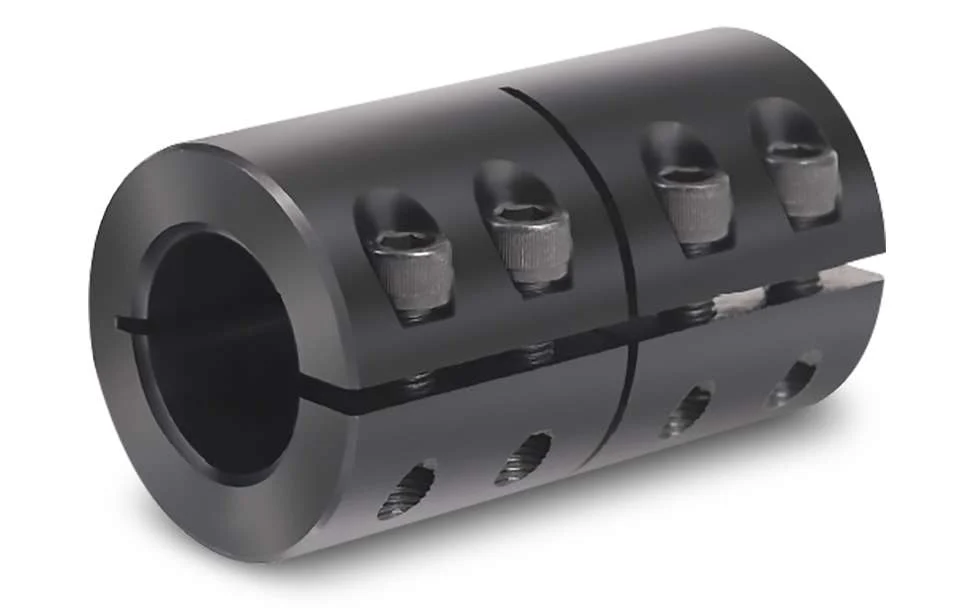
Can Rigid Couplings Be Used in Both Horizontal and Vertical Shaft Arrangements?
Yes, rigid couplings can be used in both horizontal and vertical shaft arrangements. Rigid couplings are designed to provide a solid, non-flexible connection between two shafts, making them suitable for various types of shaft orientations.
Horizontal Shaft Arrangements: In horizontal shaft arrangements, the two shafts are positioned parallel to the ground or at a slight incline. Rigid couplings are commonly used in horizontal setups as they efficiently transmit torque and maintain precise alignment between the shafts. The horizontal orientation allows gravity to aid in keeping the coupling elements securely in place.
Vertical Shaft Arrangements: In vertical shaft arrangements, the two shafts are positioned vertically, with one shaft above the other. This type of setup is often found in applications such as pumps, compressors, and some gearboxes. Rigid couplings can also be used in vertical shaft arrangements, but additional considerations must be taken into account:
- Keyless Design: To accommodate the vertical orientation, some rigid couplings have a keyless design. Traditional keyed couplings may experience issues with keyway shear due to the force of gravity on the key, especially in overhung load situations.
- Set Screw Tightening: When installing rigid couplings in vertical shaft arrangements, set screws must be tightened securely to prevent any axial movement during operation. Locking compound can also be used to provide additional security.
- Thrust Load Considerations: Vertical shaft arrangements may generate thrust loads due to the weight of the equipment and components. Rigid couplings should be chosen or designed to handle these thrust loads to prevent axial displacement of the shafts.
It’s essential to select a rigid coupling that is suitable for the specific shaft orientation and operating conditions. Proper installation and alignment are critical for both horizontal and vertical shaft arrangements to ensure the rigid coupling’s optimal performance and reliability.
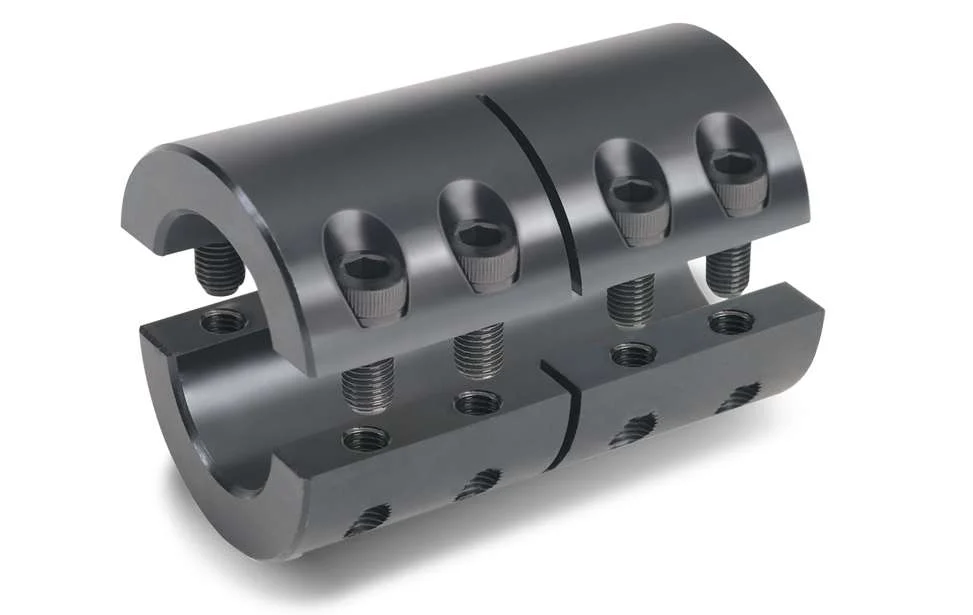
Use of Rigid Couplings for Motor-to-Shaft and Shaft-to-Shaft Connections
Yes, rigid couplings can be used for both motor-to-shaft and shaft-to-shaft connections in mechanical systems. Rigid couplings are designed to provide a solid and non-flexible connection between two shafts. This characteristic makes them versatile for various applications, including motor-to-shaft and shaft-to-shaft connections.
1. Motor-to-Shaft Connections: In motor-to-shaft connections, a rigid coupling is used to connect the output shaft of an electric motor to the driven shaft of a machine or equipment. This ensures direct power transmission without any flexibility. Motor-to-shaft connections are common in applications where the motor’s rotational motion needs to be transferred to the driven equipment with high precision and efficiency.
2. Shaft-to-Shaft Connections: In shaft-to-shaft connections, a rigid coupling joins two shafts directly, providing a solid and immovable link between them. This is beneficial in applications where precise alignment and torque transmission are essential, such as in precision motion control systems or heavy-duty industrial machinery.
Rigid couplings are available in various designs, such as one-piece, two-piece, and split types, to accommodate different shaft arrangements. The type of rigid coupling used depends on the specific application and the shaft sizes to be connected.
Advantages of Using Rigid Couplings:
– Zero backlash ensures accurate motion transfer and positioning.
– Efficient power transmission without loss due to flexibility.
– Minimal maintenance requirements due to their simple design.
– High torque capacity suitable for heavy-duty applications.
– Tolerance to misalignment (within design limits) enhances versatility.
– Provides system stiffness, reducing the risk of resonance and vibration-related issues.
– Suitable for high-speed applications.
– Versatility for various industrial applications.
Whether it’s connecting a motor to a driven shaft or joining two shafts together, rigid couplings offer reliability, precision, and efficiency, making them a popular choice in numerous mechanical systems.
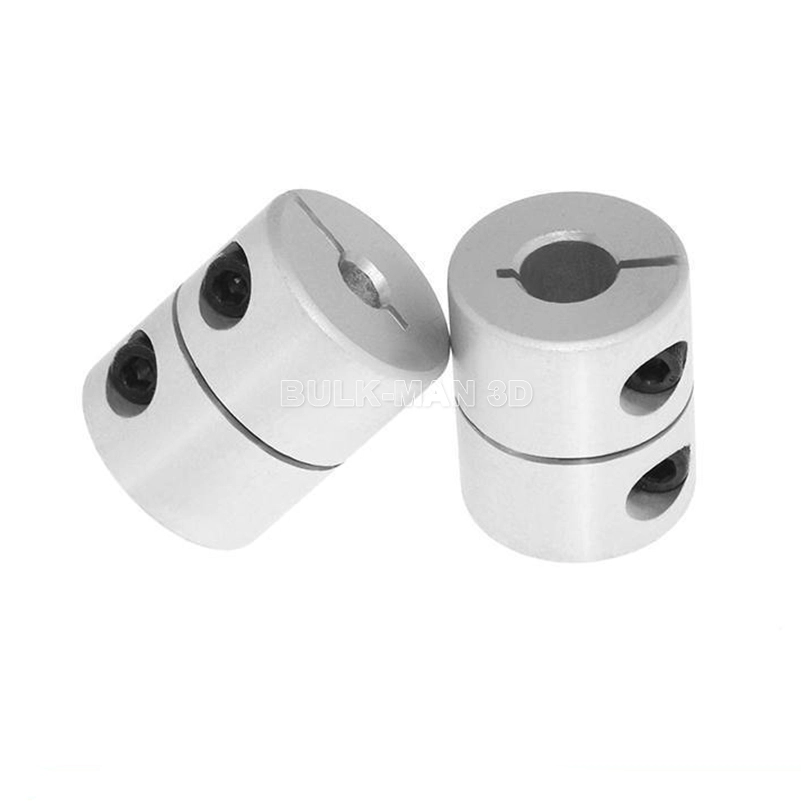
Limitations and Disadvantages of Using Rigid Couplings:
Rigid couplings offer several advantages in providing a strong and direct connection between shafts, but they also have certain limitations and disadvantages that should be considered in certain applications:
- No Misalignment Compensation: Rigid couplings are designed to provide a fixed connection with no allowance for misalignment between shafts. As a result, any misalignment, even if slight, can lead to increased stress on connected components and cause premature wear or failure.
- Transmit Shock and Vibration: Rigid couplings do not have any damping or vibration-absorbing properties, which means they can transmit shock and vibration directly from one shaft to another. In high-speed or heavy-duty applications, this can lead to increased wear on bearings and other components.
- No Torque Compensation: Unlike flexible couplings, rigid couplings cannot compensate for torque fluctuations or angular displacement between shafts. This lack of flexibility may not be suitable for systems with varying loads or torque requirements.
- Higher Stress Concentration: Rigid couplings can create higher stress concentration at the points of connection due to their inflexibility. This can be a concern in applications with high torque or when using materials with lower fatigue strength.
- More Challenging Installation: Rigid couplings require precise alignment during installation, which can be more challenging and time-consuming compared to flexible couplings that can tolerate some misalignment.
- Increased Wear: The absence of misalignment compensation and vibration absorption can lead to increased wear on connected components, such as bearings, shafts, and seals.
- Not Suitable for High Misalignment: While some rigid couplings have limited ability to accommodate minor misalignment, they are not suitable for applications with significant misalignment, which could lead to premature failure.
Despite these limitations, rigid couplings are still widely used in many applications where precise alignment and a strong, permanent connection are required. However, in systems with significant misalignment, vibration, or shock loads, flexible couplings may be a more suitable choice to protect the connected components and improve overall system performance and longevity.


editor by CX 2024-01-19