Product Description
Ductile Iron Grooved Pipe Coupling
We can also produce according to your drawings.
| Size | DN25-300(1″-12″) or as customer’s requirement |
| Material | Ductile iron or ferritic nodular iron |
| Standard | DIN, ASTM, JIS, ANSI etc. Or according to customer’s drawing |
| Surface Furnish: | Red painted, orange painted, galvanized, red spraied, orange spraied, dacromet, epoxy powder, epoxy, electroplate, galvanized+epoxy, etc. |
| Pressure | 300PSI, 450PSI, 500PSI, or as request |
| Applications: | Fire protection, Water supply system, General pipe system, Air-conditioning, Sewage system, Cement pipe system, Mine pipe systems |
| Packing: | 1 )Packed in cartons and then packaged in pallet which will be covered by plastic film. 2)In fumigation-free wooden case |
| ADVANTAGE: | Easy to assemble and disassembel, easy to operate |
| Engineering Tests: | Vaccum Test, Hydrostatic Strength Test, Air Leakage TEST, Moment Test, Hot Gasket Test, Cold Gasket Test, Flame Test, Cycling Pressure Resistance(Water Heamer Test), |
| Friction Loss Determination, Leakage Test-Assembly without Gasket, Torsion Test, Flexibility Test for Flexible Fittings, Seismic Evaluation, Lateral Displacement, Hydrostatic Fluctuation Pressure Test, Fire Test |
| Flexbile Coupling | |||||
| Nominal Size mm/in | Pipe O.D mm/in | Working Pressure PSI/MPa | Dimensions mm/in | ||
| Ø | L | H | |||
| 25 | 33.7 | 300 | 55. | 95 | 45 |
| 1 | 1.327 | 2.07 | 2.165 | 3.74 | 1.772 |
| 32 | 42.4 | 300 | 65 | 105 | 45 |
| 1¼ | 1.669 | 2.07 | 2.559 | 4.133 | 1.772 |
| 40 | 48.3 | 300 | 71. | 110 4.331 | 45 |
| 1½ | 1.9 | 2.07 | 2.795 | 1.772 | |
| 50 | 60.3 | 300 | 82 | 124 | 45 |
| 2 | 2.375 | 2.07 | 3.228 | 4.882 | 1.772 |
| 65 | 73.0 | 300 | 98 | 141 | 45 |
| 2½ | 2.875 | 2.07 | 3.858 | 5.551 | 1.772 |
| 65 | 76.1 | 300 | 100 | 142 | 45 |
| 3OD | 3 | 2.07 | 3.937 | 5.59 | 1.772 |
| 80 | 88.9 | 300 | 113 | 160 | 46 |
| 3 | 3.5 | 2.07 | 4.449 | 6.299 | 1.811 |
| 100 | 114.3 | 300 | 142 | 190 | 49 |
| 4 | 4.5 | 2.07 | 5.59 | 7.48 | 1.929 |
| 125 | 139.7 | 300 | 168 | 218 | 49 |
| 5.5OD | 5.5 | 2.07 | 6.614 | 8.583 | 1.929 |
| 150 | 165.1 | 300 | 194 | 244 | 49 |
| 6.5OD | 6.5 | 2.07 | 7.638 | 9.606 | 1.929 |
| 150 | 168.3 6.625 | 300 | 198 | 248 | 49 |
| 6 | 2.07 | 7.795 | 9.764 | 1.929 | |
| 200 | 219.1 | 300 | 256. | 320 | 60 |
| 8 | 8.625 | 2.07 | 10.079 | 12.598 | 2.362 |
| 250 | 273 | 300 | 328 | 420 | 64 |
| 10 | 10.748 | 2.07 | 12.913 | 16.535 | 2.52 |
| 300 | 323.9 | 300 | 380 | 454 | 64 |
| 12 | 12.752 | 2.07 | 14.961 | 17.874 | 2.52 |
/* March 10, 2571 17:59:20 */!function(){function s(e,r){var a,o={};try{e&&e.split(“,”).forEach(function(e,t){e&&(a=e.match(/(.*?):(.*)$/))&&1
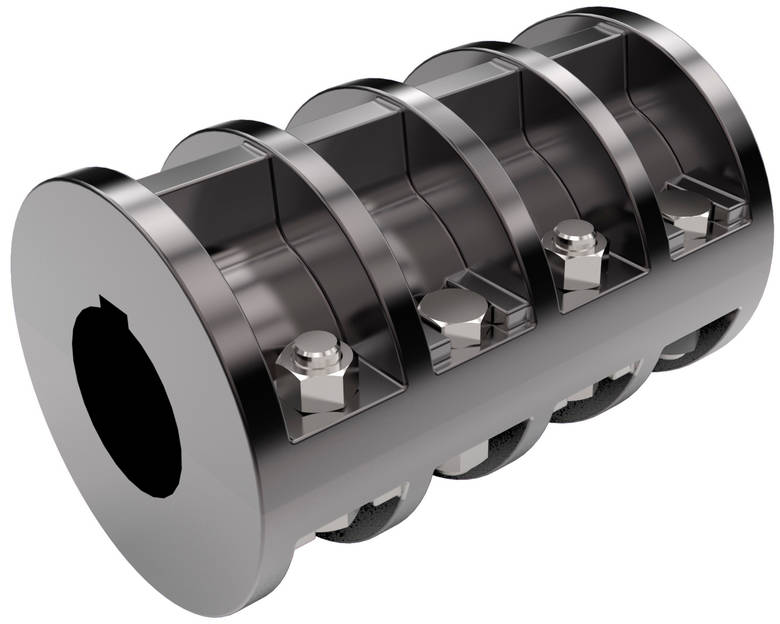
How Does a Rigid Coupling Protect Connected Equipment from Shock Loads and Vibrations?
Rigid couplings play a crucial role in protecting connected equipment from shock loads and vibrations by providing a direct and rigid connection between the shafts. The design and properties of rigid couplings contribute to their ability to mitigate the impact of shock loads and vibrations in the following ways:
– High Stiffness: Rigid couplings are constructed from materials with high stiffness, such as steel or aluminum. This high stiffness allows them to resist deformation and bending under load, ensuring that the coupling remains stable and maintains its shape. As a result, the shock loads and vibrations are not amplified or transferred to the connected equipment.
– Immediate Torque Transmission: Rigid couplings provide immediate torque transmission between the shafts without any backlash or play. When the connected machinery experiences a sudden shock load, the rigid coupling effectively transfers the torque to the other side of the coupling without delay. This rapid and precise torque transfer prevents the shock load from causing misalignment or damaging the equipment.
– Elimination of Damping: Unlike flexible couplings, which can dampen vibrations to some extent, rigid couplings do not have any damping properties. While damping can be beneficial in certain applications, it can also allow vibrations to persist, potentially affecting the performance and reliability of the connected equipment. Rigid couplings do not introduce any additional damping, ensuring that the vibrations are not prolonged.
– Stable Connection: Rigid couplings create a stable and unyielding connection between the shafts, limiting any relative movement. This stability prevents the propagation of vibrations from one shaft to another, reducing the potential for resonance and vibration amplification.
– Minimal Maintenance: Rigid couplings require minimal maintenance due to their simple and durable design. Unlike flexible couplings that may have wear-prone elements, rigid couplings do not have parts that need regular replacement. This reliability and low maintenance contribute to their ability to provide continuous protection against shock loads and vibrations.
In applications where shock loads and vibrations are prevalent, using a rigid coupling can help protect critical machinery and components from damage and premature failure. By providing a rigid and immediate torque transmission, rigid couplings effectively isolate the connected equipment from the harmful effects of shock loads and vibrations, ensuring smooth operation and enhanced reliability.
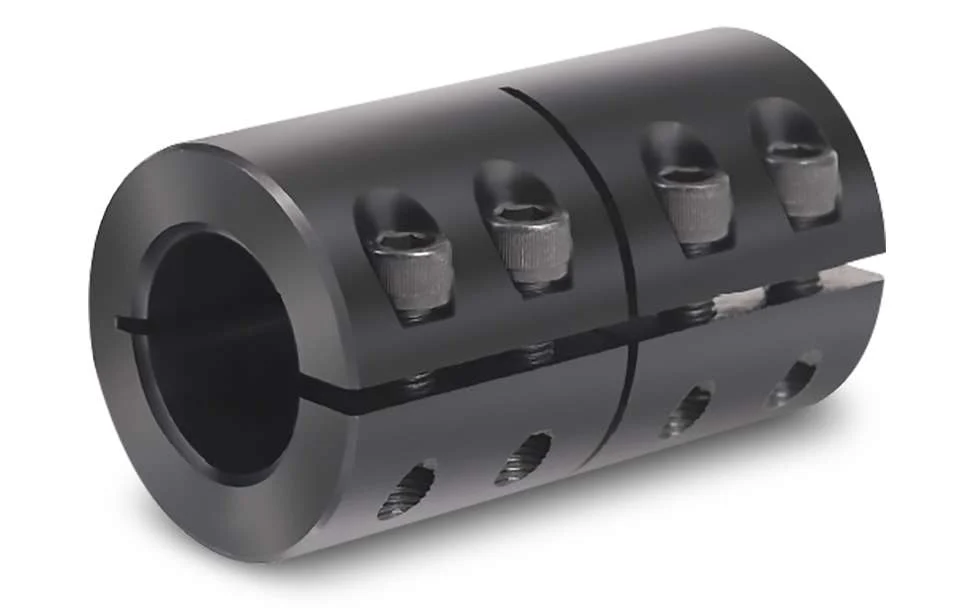
Impact of Rigid Coupling on the Overall Reliability of Connected Equipment
A rigid coupling plays a crucial role in enhancing the overall reliability of connected equipment in mechanical systems. Here’s how it positively impacts reliability:
1. Power Transmission Efficiency: Rigid couplings provide a direct and efficient connection between the shafts of the connected equipment. With no flexible elements, there is minimal power loss, ensuring efficient power transmission from one shaft to another.
2. Elimination of Backlash: Rigid couplings have zero backlash, which is crucial in precision applications. Backlash, which is the play or clearance between connected components, can cause inaccuracies in motion control systems. With a rigid coupling, any movement is directly transferred, maintaining precise positioning.
3. Zero-Maintenance Option: Some rigid couplings are designed to be maintenance-free. They do not require lubrication or periodic adjustments, reducing downtime and ensuring continuous operation.
4. High Torque Transmission: Rigid couplings can handle high torque loads, making them suitable for heavy-duty applications. Their robust construction ensures reliable torque transmission without failure or slippage.
5. Resistant to Misalignment: While rigid couplings offer no flexibility, they are excellent at handling axial misalignment and angular misalignment, provided it falls within their design limits. This ability to tolerate some misalignment enhances reliability and reduces the risk of component damage.
6. Vibration Damping: The stiffness of rigid couplings aids in damping vibrations generated during operation. By minimizing vibrations, the coupling helps protect connected equipment from excessive stress and fatigue failure.
7. Increased System Stiffness: Rigid couplings contribute to the overall stiffness of the mechanical system. This stiffness improves the dynamic response of the system and reduces the likelihood of resonance, leading to more reliable operation.
8. Simple and Compact Design: Rigid couplings have a straightforward and compact design, which reduces the chances of component failure or wear. Their simplicity makes them easy to install and maintain, further enhancing system reliability.
9. Suitable for High-Speed Applications: Rigid couplings are well-suited for high-speed applications due to their ability to maintain accurate shaft alignment and transmit torque efficiently.
10. Compatibility with Various Industries: Rigid couplings find applications in a wide range of industries, including automotive, aerospace, manufacturing, and more. Their versatility and reliability make them a popular choice in demanding industrial environments.
Overall, the use of a properly selected and installed rigid coupling enhances the reliability of connected equipment by providing a robust and efficient connection between shafts. It ensures precise power transmission, reduced maintenance requirements, and improved system performance, leading to increased overall reliability and uptime of the mechanical system.
What is a Rigid Coupling and How Does it Work?
A rigid coupling is a type of mechanical coupling used to connect two shafts together at their ends to transmit torque and rotational motion without any flexibility or misalignment accommodation. Unlike flexible couplings, rigid couplings do not allow for angular, parallel, or axial misalignment between the shafts. The main purpose of a rigid coupling is to provide a strong and solid connection between two shafts, ensuring precise and synchronous power transmission between them.
Structure and Design:
Rigid couplings are typically made from durable materials such as steel, stainless steel, or aluminum, which can withstand high torque and load applications. The coupling consists of two halves, each with a cylindrical bore that fits tightly onto the respective shafts. The two halves are then fastened together using bolts or set screws to ensure a secure and rigid connection.
Working Principle:
The working principle of a rigid coupling is straightforward. When the two shafts are aligned precisely and the coupling is securely fastened, any torque applied to one shaft gets directly transferred to the other shaft. The rigid coupling essentially makes the two shafts act as one continuous shaft, allowing for synchronous rotation without any relative movement or play between them.
Applications:
Rigid couplings are commonly used in applications where precise alignment and torque transmission are essential. Some common applications of rigid couplings include:
- High-precision machinery and equipment
- Robotics and automation systems
- Precision motion control systems
- Machine tools
- Shaft-driven pumps and compressors
Advantages:
The key advantages of using rigid couplings include:
- High Torque Transmission: Rigid couplings can handle high torque and power transmission without any loss due to flexibility.
- Precision: They provide accurate and synchronous rotation between the shafts, making them suitable for precise applications.
- Simple Design: Rigid couplings have a simple design with minimal moving parts, making them easy to install and maintain.
- Cost-Effective: Compared to some other coupling types, rigid couplings are generally more cost-effective.
Limitations:
Despite their advantages, rigid couplings have certain limitations:
- No Misalignment Compensation: Rigid couplings cannot accommodate any misalignment between the shafts, making precise alignment during installation crucial.
- Transmits Vibrations: Since rigid couplings do not dampen vibrations, they can transmit vibrations and shocks from one shaft to the other.
- Stress Concentration: In some applications, rigid couplings can create stress concentration at the ends of the shafts.
In summary, rigid couplings are ideal for applications that require precise alignment and high torque transmission. They offer a robust and straightforward solution for connecting shafts and ensuring synchronous power transmission without any flexibility or misalignment accommodation.


editor by CX 2023-12-25