Product Description
GIC-16xl6 Aluminum Alloy Parallel Line Clamping Rigid Shaft Coupling
Description of GIC-16xl6 Aluminum Alloy Parallel Line Clamping Rigid Shaft Coupling
>Integrated structure, the overall use of high-strength aluminum alloy materials
>Elastic action compensates radial, angular and axial deviation
>No gap shaft and sleeve connection, suitable for CHINAMFG and reverse rotation
>Designed for encoder and stepper motor
>Fastening method of clamping screw
Catalogue of GIC-16xl6 Aluminum Alloy Parallel Line Clamping Rigid Shaft Coupling
|
model parameter |
common bore diameter d1,d2 |
ΦD |
L |
L1 |
L2 |
F |
M |
tightening screw torque |
|
GIC-12xl8.5 |
2,3,4,5,6 |
12 |
18.5 |
0.55 |
1.3 |
2.5 |
M2.5 |
1 |
|
GIC-16xl6 |
3,4,5,6,6.35 |
16 |
16 |
0.55 |
1.4 |
3.18 |
M2.5 |
1 |
|
GIC-16×23 |
3,4,5,6,6.35 |
16 |
23 |
0.55 |
1.4 |
3.18 |
M2.5 |
1 |
|
GIC-19×23 |
3,4,5,6,6.35,7,8 |
19 |
23 |
0.55 |
1.4 |
3.18 |
M2.5 |
1 |
|
GIC-20×20 |
4,5,6,6.35,7,8,10 |
20 |
20 |
0.55 |
1.5 |
3.75 |
M2.5 |
1 |
|
GIC-20×26 |
4,5,6,6.35,7,8,10 |
20 |
26 |
0.55 |
1.5 |
3.75 |
M3 |
1.5 |
|
GIC-25×25 |
5,6,6.35,7,8,9,9.525,10,11,12 |
25 |
25 |
0.6 |
1.7 |
4.84 |
M3 |
1.5 |
|
GIC-25×31 |
5,6,6.35,7,8,9,9.525,10,11,12 |
25 |
31 |
0.6 |
1.8 |
4.46 |
M3 |
1.5 |
|
GIC-28.5×38 |
6,6.35,8,9,9.525,10,11,12,12.7,14 |
28.5 |
38 |
0.8 |
2.1 |
5.62 |
M4 |
2.5 |
|
GIC-32×32 |
8,9,9.525,10,11,12,12.7,14,15,16 |
32 |
32 |
0.8 |
2.3 |
6.07 |
M4 |
2.5 |
|
GIC-32×41 |
8,9,9.525,10,11,12,12.7,14,15,16 |
32 |
41 |
0.8 |
2.3 |
6.02 |
M4 |
2.5 |
|
GIC-38×41 |
8,9,9.525,10,11,12,14,15,16,17,18,19 |
38 |
41 |
0.8 |
2.7 |
5.32 |
M5 |
7 |
|
GIC-40×50 |
8,9,9.525,10,11,12,14,15,16,17,18,19,20 |
40 |
50 |
0.8 |
2.7 |
6.2 |
M5 |
7 |
|
GIC-40×56 |
8,10,11,12,12.7,14,15,16,17,18,19,20 |
40 |
56 |
0.8 |
2.7 |
8.5 |
M5 |
7 |
|
GIC-42×50 |
10,11,12,12.7,14,15,16,17,18,19,20,22,24 |
42 |
50 |
0.8 |
2.7 |
6.2 |
M5 |
7 |
|
GIC-50×50 |
10,12,12.7,14,15,16,17,18,19,20,22,24,25,28 |
50 |
50 |
0.8 |
2.9 |
7.22 |
M6 |
12 |
|
GIC-50×71 |
10,12,12.7,14,15,16,17,18,19,20,222425,28 |
50 |
71 |
0.8 |
3.3 |
8.5 |
M6 |
12 |
|
model parameter |
Rated torque(N.m) |
allowable eccentricity (mm) |
allowable deflection angle (°) |
allowable axial deviation (mm) |
maximum speed (rpm) |
static torsional stiffness (N.M/rad) |
weight (g) |
|
GIC-12xl8.5 |
0.5 |
0.1 |
2 |
±0.2 |
11000 |
60 |
4.8 |
|
GIC-16xl6 |
0.5 |
0.1 |
2 |
±0.2 |
10000 |
80 |
8 |
|
GIC-16×23 |
0.5 |
0.1 |
2 |
±0.2 |
9500 |
80 |
9.3 |
|
GIC-19×23 |
1 |
0.1 |
2 |
±0.2 |
9500 |
80 |
13 |
|
GIC-20×20 |
1 |
0.1 |
2 |
±0.2 |
10000 |
170 |
14 |
|
GIC-20×26 |
1 |
0.1 |
2 |
±0.2 |
7600 |
170 |
16.5 |
|
GIC-25×25 |
2 |
0.15 |
2 |
±0.2 |
6100 |
780 |
26 |
|
GIC-25×31 |
2 |
0.15 |
2 |
±0.2 |
6100 |
380 |
29 |
|
GIC-28.5×38 |
3 |
0.15 |
2 |
±0.2 |
5500 |
400 |
51 |
|
GIC-32×32 |
4 |
0.15 |
2 |
±0.2 |
5000 |
1100 |
56 |
|
GIC-32×41 |
4 |
0.15 |
2 |
±0.2 |
500 |
500 |
65 |
|
GIC-38×41 |
6.5 |
0.2 |
2 |
±0.2 |
650 |
650 |
107 |
|
GIC-40×50 |
6.5 |
0.2 |
2 |
±0.2 |
600 |
650 |
135 |
|
GIC-40×56 |
8 |
0.2 |
2 |
±0.2 |
800 |
800 |
142 |
|
GIC-42×50 |
8.5 |
0.2 |
2 |
±0.2 |
800 |
850 |
135 |
|
GIC-50×50 |
20 |
0.2 |
2 |
±0.2 |
1000 |
1000 |
220 |
|
GIC-50×71 |
20 |
0.2 |
2 |
±0.2 |
1000 |
1000 |
330 |
Can rigid shaft couplings operate in high-temperature or corrosive environments?
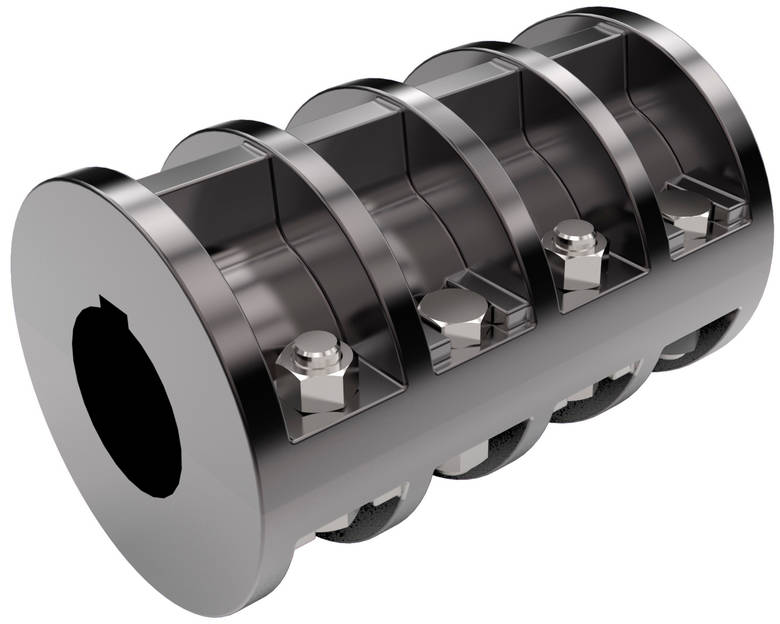
Rigid shaft couplings can be designed and manufactured using materials that are suitable for high-temperature or corrosive environments. Common materials used for such applications include stainless steel, nickel alloys, and other corrosion-resistant materials. These materials can withstand elevated temperatures and resist the effects of corrosive substances. When selecting a rigid shaft coupling for high-temperature or corrosive environments, it is essential to consider factors such as the operating temperature range, the specific corrosive substances present, and the overall environmental conditions. Additionally, proper lubrication and maintenance are crucial to ensuring the longevity and optimal performance of rigid couplings in these demanding environments. It is essential to consult with coupling manufacturers or suppliers who specialize in providing solutions for high-temperature or corrosive applications. They can help identify the appropriate materials and designs that will meet the specific requirements of the intended environment.
How do rigid shaft couplings compare to flexible couplings in terms of torque transmission and misalignment handling?
Rigid shaft couplings and flexible couplings differ in their ability to handle torque transmission and misalignment. Here’s a comparison of these aspects:
- Torque Transmission: Rigid shaft couplings offer excellent torque transmission due to their solid construction. They efficiently transmit high torque loads without significant power loss. Flexible couplings, on the other hand, may have some inherent power loss due to their flexibility.
- Misalignment Handling: Flexible couplings excel in compensating for misalignment between shafts. They can accommodate angular, parallel, and axial misalignments, reducing stress on connected equipment. Rigid couplings are limited in their misalignment compensation, primarily handling minimal misalignments. Significant misalignment can lead to increased wear and premature failure.
The choice between rigid and flexible couplings depends on the specific requirements of the application. If precise torque transmission and minimal misalignment are priorities, rigid couplings may be suitable. However, if misalignment compensation and vibration dampening are crucial, flexible couplings are a better option.
Are There Different Types of Rigid Shaft Couplings Available, and What Are Their Specific Applications?
Yes, there are different types of rigid shaft couplings available, each with its own specific applications. Some common types of rigid shaft couplings include:
- Sleeve Couplings: Sleeve couplings are simple and cost-effective couplings that connect two shafts together using a solid sleeve or tube. They are commonly used in applications with moderate torque requirements and where shaft alignment can be maintained with high precision.
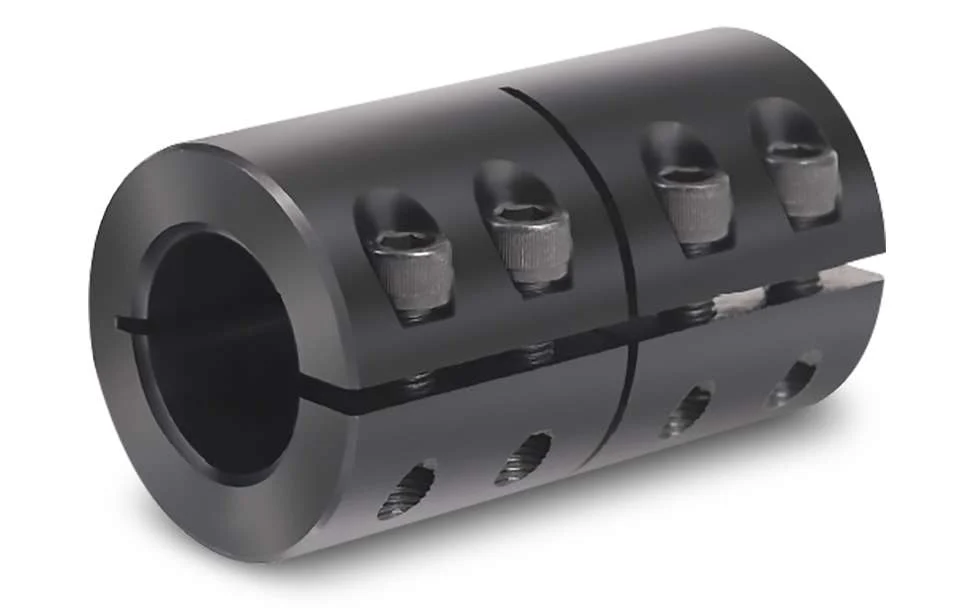
- Clamp or Split Couplings: Clamp or split couplings consist of two halves that are clamped together around the shafts using screws or bolts. They are easy to install and suitable for applications where frequent maintenance or disassembly is required.
- Flanged Couplings: Flanged couplings have flanges on both ends that are bolted together. They are used in applications where shafts need to be rigidly connected and where some degree of axial movement is expected.
- Tapered Shaft Couplings: Tapered shaft couplings have tapered bores that fit tightly onto tapered shafts, creating a friction-based connection. They are often used in applications where precise alignment and torque transmission are essential.
- Keyed Shaft Couplings: Keyed shaft couplings use a key and keyway arrangement to connect the shafts securely. They are commonly used in heavy-duty applications where high torque transmission is required.
The choice of rigid shaft coupling depends on the specific requirements of the application. Factors such as torque transmission, shaft size, alignment precision, ease of installation, and maintenance needs play a crucial role in selecting the appropriate coupling type.
Rigid shaft couplings are widely used in various industries, including manufacturing, power generation, robotics, aerospace, and automotive. They are often employed in applications such as pumps, compressors, conveyors, and high-precision machinery.
It is essential to consider the specific demands of the application and consult with coupling manufacturers or experts to determine the most suitable rigid coupling type for optimal performance and reliability.


editor by CX 2023-12-12