Product Description
Rigid Pipe Steel Couplings Rigid Fittings Rigid Pipe Coupling imc conduit connector
Description:
Rigid Pipe Steel Couplings Rigid Fittings Rigid Pipe Coupling imc conduit connector
Standards: UL
Finish: Galvanized/HDG
Material: Galvanized Steel
Usage: for imc /rigid conduit(RMC) connection
Package: carton
Delivery time: 20 to 30 days
Place of CHINAMFG : China
Size: 1/2″-4″
Brand : RIFI
Field Names: Rigid couplings, threaded rigid couplings, heavy wall couplings, threaded heavy wall couplings, rigid couplers, heavy wall couplers, threaded couplers.
Specifications:
Rigid Pipe Steel Couplings Rigid Fittings Rigid Pipe Coupling imc conduit connector
IMC coupling
|
IC050 |
1/2″ |
|
IC075 |
3/4″ |
|
IC100 |
1″ |
|
IC125 |
1-1/4″ |
|
IC150 |
1-1/2″ |
|
IC200 |
2″ |
|
IC300 |
3″ |
|
IC400 |
4″ |
Rigid coupling
|
RGC050 |
1/2″ |
|
RGC075 |
3/4″ |
|
RGC100 |
1″ |
|
RGC125 |
1-1/4″ |
|
RGC150 |
1-1/2″ |
|
RGC200 |
2″ |
|
RGC300 |
3″ |
|
RGC400 |
4″ |
Application
These Rigid Pipe Steel Couplings Rigid Fittings Rigid Pipe Coupling imc conduit connector are used to join 2 ends of threaded rigid conduits or IMC conduits together. They can also be used with CHINAMFG nipples and connectors to CHINAMFG threaded conduits to electrical junction boxes or enclosures.
Our service
1) Excellent Quality: The stable supply of materials we used is good quality, and we pay more attention and strictly treat the quality from production and package.
2) Customized Service: We can customize the size and engraving service of the product according to the customer’s needs.
3) Offering Best Price: We have professional factory, so our cost is low than others and you can get a favorable price from us.
4) Convenience For Purchasing: Customers can find conduit and all the related fittings here, and can get all the goods you need in a short time. Like set screw coupling/compression connectors/ strut clamps and so on.
FAQ
Q1: Are you a trading company or manufacturing company?
A: Both we are, we have 2 production bases and about 10 sourcing factory to meet customer whole line items demand .
Q2:When can I get the quotation?
A1:For regular items within 24 hours; For sprcial items or customize items need a little more time .
Q3: How can I request product samples?
A: The samples are free but courier charge will be collected. Please send us samples list and courier account number.
Q4: How can I request a product catalog?
A: Pls send us your email and we will send you our e catalog ( pdf file ).
The PDF catalog we can send to you by email or WeTransfer.
Q5: What is your payment terms?
A:Normally 30% T/T deposit,balance against B/L copy;
the other is irrevocable L/C 100% at sight.
Q6: How about the delivery time?
A: Accord to your order list and quantity,mostly delivery in 30days.
Q7: How do we control the products’ quality?
A: 1. high quality mold
2. raw materials control
3. production process quality control
4. final inspection
5. water testing (no leaking)
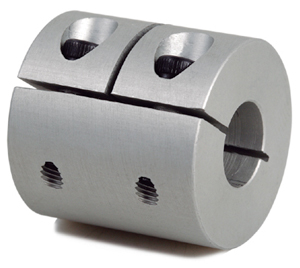
Can Rigid Couplings Accommodate High Torque and High-Speed Applications?
Yes, rigid couplings are well-suited for high torque and high-speed applications. Their design and construction allow them to efficiently transmit large amounts of torque and handle high rotational speeds without compromising performance or introducing backlash.
Rigid couplings are typically made from robust materials, such as steel or aluminum, which provide high strength and stiffness. This allows them to withstand substantial torque loads without deformation or failure. Additionally, rigid couplings do not have flexible elements, such as elastomers or springs, which can be a limiting factor in high-torque applications.
The absence of flexible elements also means that rigid couplings have minimal backlash. Backlash is the clearance between mating teeth in a coupling and can cause position inaccuracies, especially in high-precision systems. Since rigid couplings have a solid, one-piece design, they offer precise and immediate torque transmission, making them suitable for applications requiring high accuracy and repeatability.
Furthermore, the solid construction of rigid couplings allows them to handle high rotational speeds. They do not exhibit the bending or torsional flexibility seen in some other coupling types, which can be limiting factors in high-speed applications. As a result, rigid couplings are commonly used in various high-speed machinery, such as power transmission systems, motors, pumps, and industrial equipment.
However, it is essential to ensure proper alignment and installation when using rigid couplings in high-torque and high-speed applications. Any misalignment between the shafts can lead to increased stresses and premature failure. Regular maintenance, including shaft alignment checks, can help ensure optimal performance and longevity in such demanding applications.
In summary, rigid couplings are an excellent choice for high torque and high-speed applications due to their robust design, minimal backlash, and ability to provide precise torque transmission. When correctly installed and maintained, rigid couplings can reliably handle the demands of various industrial and mechanical systems.
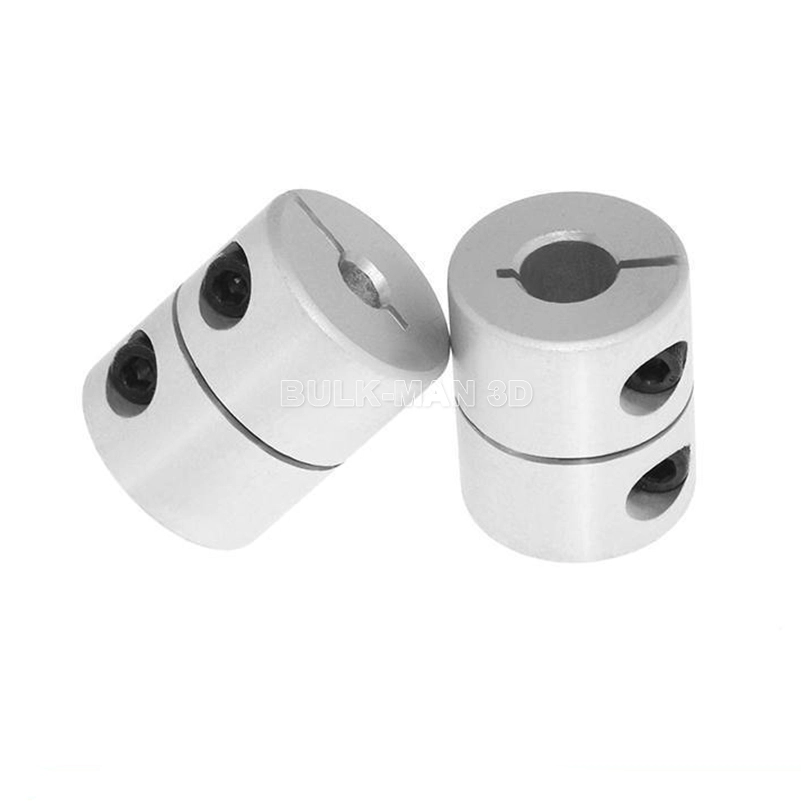
Factors to Consider When Choosing a Rigid Coupling for a Specific System
Choosing the right rigid coupling for a specific system is crucial to ensure proper functionality and reliable performance. Several factors should be considered when making this decision:
1. Shaft Size and Compatibility: The most fundamental factor is ensuring that the rigid coupling is compatible with the shaft sizes of the connected components. The coupling should have the appropriate bore size and keyway dimensions to fit securely onto the shafts.
2. Operating Torque: Consider the torque requirements of the application. The rigid coupling should have a torque rating that exceeds the maximum torque expected during operation to prevent failures and ensure safety.
3. Speed: Determine the rotational speed (RPM) of the connected shafts. Rigid couplings have maximum RPM limits, and the selected coupling should be capable of handling the system’s operating speed.
4. Misalignment Tolerance: Assess the potential misalignment between the shafts. Rigid couplings provide no flexibility, so the system must have minimal misalignment to prevent excessive forces on the components.
5. Temperature and Environment: Consider the operating temperature range and the environment where the coupling will be used. Ensure the chosen material can withstand the temperature and any corrosive or harsh conditions present.
6. Space Limitations: Evaluate the available space for the coupling. Rigid couplings have a compact design, but ensure that there is enough clearance for installation and maintenance.
7. Backlash and Torsional Stiffness: In some precision systems, backlash must be minimized to maintain accurate positioning. Additionally, the torsional stiffness of the coupling can impact system response and stability.
8. Keyway or Keyless Design: Decide between a coupling with a keyway or a keyless design based on the specific application requirements and ease of installation.
9. Material Selection: Consider the material properties of the rigid coupling. Common materials include steel, stainless steel, and aluminum, each with its own advantages and limitations.
10. Maintenance: Determine the maintenance requirements of the coupling. Some couplings may need periodic lubrication or inspections, while others may be maintenance-free.
11. Cost: While cost should not be the sole consideration, it is essential to evaluate the cost-effectiveness of the coupling, taking into account its performance and longevity.
By carefully considering these factors, you can select the most suitable rigid coupling for your specific system, ensuring optimal performance, and longevity of your mechanical setup.
Limitations and Disadvantages of Using Rigid Couplings:
Rigid couplings offer several advantages in providing a strong and direct connection between shafts, but they also have certain limitations and disadvantages that should be considered in certain applications:
- No Misalignment Compensation: Rigid couplings are designed to provide a fixed connection with no allowance for misalignment between shafts. As a result, any misalignment, even if slight, can lead to increased stress on connected components and cause premature wear or failure.
- Transmit Shock and Vibration: Rigid couplings do not have any damping or vibration-absorbing properties, which means they can transmit shock and vibration directly from one shaft to another. In high-speed or heavy-duty applications, this can lead to increased wear on bearings and other components.
- No Torque Compensation: Unlike flexible couplings, rigid couplings cannot compensate for torque fluctuations or angular displacement between shafts. This lack of flexibility may not be suitable for systems with varying loads or torque requirements.
- Higher Stress Concentration: Rigid couplings can create higher stress concentration at the points of connection due to their inflexibility. This can be a concern in applications with high torque or when using materials with lower fatigue strength.
- More Challenging Installation: Rigid couplings require precise alignment during installation, which can be more challenging and time-consuming compared to flexible couplings that can tolerate some misalignment.
- Increased Wear: The absence of misalignment compensation and vibration absorption can lead to increased wear on connected components, such as bearings, shafts, and seals.
- Not Suitable for High Misalignment: While some rigid couplings have limited ability to accommodate minor misalignment, they are not suitable for applications with significant misalignment, which could lead to premature failure.
Despite these limitations, rigid couplings are still widely used in many applications where precise alignment and a strong, permanent connection are required. However, in systems with significant misalignment, vibration, or shock loads, flexible couplings may be a more suitable choice to protect the connected components and improve overall system performance and longevity.


editor by CX 2023-12-12