Product Description
GM screw thread setscrew series coupling winding coupling
Description of GM screw thread setscrew series coupling winding coupling
>Integrated structure, the overall use of high-strength aluminum alloy materials
>Elastic action compensates radial, angular and axial deviation
>Spring design, with buffer effect
>Special design for encoder, micro motor
>Fastening method of set screw
Dimensions of GM screw thread setscrew series coupling winding coupling
| model parameter | common bore diameter d1,d2 | ΦD | L | L1 | L2 | F | M | tightening screw torque (N.M) |
| GM-12xl8.5 | 2,3,4,5,6,6.35 | 12 | 18.5 | 1.8 | 0.4 | 3.5 | M3 | 0.7 |
| GM-15.5×21 | 3,4,5,6,6.35,7 | 15.5 | 21 | 2 | 0.4 | 3.3 | M3 | 0.7 |
| GM-15.5×23 | 3,4,5,6,6.35,7 | 15.5 | 23 | 2 | 0.4 | 3.6 | M3 | 0.7 |
| GM-19.1×19.1 | 4,5,6,6.35,7,8 | 17.5 | 23 | 2 | 0.4 | 3.6 | M4 | 1.7 |
| GM-17.5×23 | 4,5,6,6.35,7,8,10 | 19.1 | 19.1 | 2 | 0.4 | 3 | M4 | 1.7 |
| GM-19.5×24.5 | 6,6.35,7,8,9,9.525,10 | 19.5 | 24.5 | 2 | 0.4 | 3.3 | M4 | 1.7 |
| GM-25×32 | 5,6,6.35,7,8,9,9.525,10,11,12,12.7 | 25 | 32 | 2 | 0.4 | 3.7 | M4 | 1.7 |
| GM-25.4×25.4 | 6,6.35,7,8,9,9.525,10,11,12,12.7 | 25.4 | 25.4 | 2 | 0.4 | 3.7 | M4 | 1.7 |
| GM-28.6×28.6 | 8,9,9.525,10,11,12,12.7,14 | 28.6 | 28.6 | 2.75 | 0.4 | 4.2 | M4 | 1.7 |
| GM-32×32 | 8,9,9.525,10,11,12,12.7,14,15,16,17,18 | 32 | 32 | 2.75 | 0.4 | 5.5 | M4 | 1.7 |
| GM-32×41 | 8,9,9.525,10,11,12,12.7,14,15,16,17,18 | 32 | 41 | 2.75 | 0.4 | 6.8 | M4 | 1.7 |
| GM-38.7×38.1 | 8,10,11,12,12.7,14,15,16,17,18,19,20,22 | 38.1 | 38.1 | 3 | 0.4 | 5.2 | M5 | 4 |
| GM-42×50 | 12,12.7,14,15,16,17,18,19,20,22,24,25,28 | 42 | 50 | 3.5 | 0.4 | 8.5 | M6 | 7 |
| GM-50×50 | 12,12.7,14,15,16,17,18,19,20,22,24,25,28,30,32 | 50 | 50 | 3.5 | 0.5 | 8.5 | M6 | 7 |
| model parameter | Rated torque (N.M)* |
allowable eccentricity (mm)* |
allowable deflection angle (°)* |
allowable axial deviation (mm)* |
maximum speed rpm |
static torsional stiffness (N.M/rad) |
moment of inertia (Kg.M2) |
Material of shaft sleeve | surface treatment | weight (g) |
| GM-12xl8.5 | 0.3 | 0.15 | 3 | ±0.2 | 30000 | 40 | 8.0×10⁻⁷ | High strength aluminum alloy | Anodizing treatment | 4 |
| GM-15.5×21 | 0.5 | 0.15 | 3 | ±0.2 | 25000 | 80 | 2.8×10⁻⁷ | 7.7 | ||
| GM-15.5×23 | 0.5 | 0.15 | 3 | ±0.2 | 25000 | 50 | 2.9×10⁻⁷ | 9.3 | ||
| GM-17.5×23 | 0.6 | 0.15 | 3 | ±0.2 | 25000 | 85 | 3.5×10⁻⁷ | 12.7 | ||
| GM-19.1×19.1 | 0.9 | 0.15 | 3 | ±0.2 | 24000 | 130 | 7.2×10⁻⁷ | 11.6 | ||
| GM-19.5×24.5 | 1 | 0.15 | 3 | ±0.2 | 19000 | 150 | 8.1×10⁻⁷ | 16 | ||
| GM-25×32 | 2 | 0.15 | 3 | ±0.2 | 15000 | 300 | 3.5×10⁻⁷ | 32 | ||
| GM-25.4×25.4 | 2 | 0.15 | 3 | ±0.2 | 14000 | 360 | 2.3×10⁻⁶ | 26 | ||
| GM-28.6×28.6 | 2 | 0.15 | 3 | ±0.2 | 14000 | 380 | 2.3×10⁻⁶ | 39 | ||
| GM-32×32 | 3 | 0.15 | 3 | ±0.2 | 13000 | 380 | 2.5×10⁻⁶ | 57 | ||
| GM-32×41 | 4 | 0.15 | 3 | ±0.2 | 12000 | 450 | 9.6×10⁻⁶ | 65 | ||
| GM-38.7×38.1 | 6.5 | 0.15 | 3 | ±0.2 | 9500 | 400 | 2.7×10⁻⁵ | 97 | ||
| GM-42×50 | 8 | 0.15 | 3 | ±0.2 | 9000 | 500 | 7.2×10⁻³ | 185 | ||
| GM-50×50 | 20 | 0.15 | 3 | ±0.2 | 8000 | 785 | 8.1×10⁻⁵ | 220 |
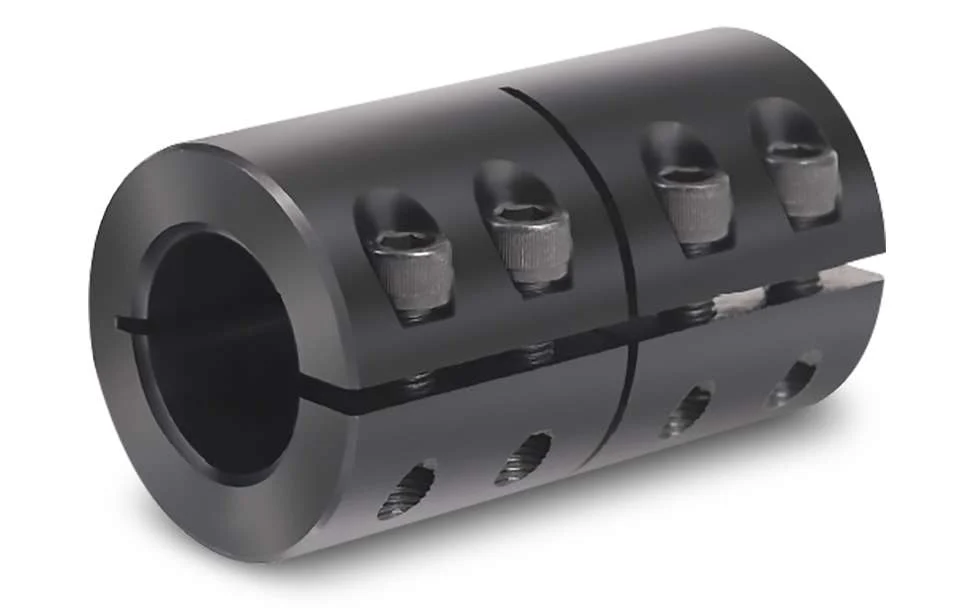
Can Rigid Couplings Be Used in Both Horizontal and Vertical Shaft Arrangements?
Yes, rigid couplings can be used in both horizontal and vertical shaft arrangements. Rigid couplings are designed to provide a solid, non-flexible connection between two shafts, making them suitable for various types of shaft orientations.
Horizontal Shaft Arrangements: In horizontal shaft arrangements, the two shafts are positioned parallel to the ground or at a slight incline. Rigid couplings are commonly used in horizontal setups as they efficiently transmit torque and maintain precise alignment between the shafts. The horizontal orientation allows gravity to aid in keeping the coupling elements securely in place.
Vertical Shaft Arrangements: In vertical shaft arrangements, the two shafts are positioned vertically, with one shaft above the other. This type of setup is often found in applications such as pumps, compressors, and some gearboxes. Rigid couplings can also be used in vertical shaft arrangements, but additional considerations must be taken into account:
- Keyless Design: To accommodate the vertical orientation, some rigid couplings have a keyless design. Traditional keyed couplings may experience issues with keyway shear due to the force of gravity on the key, especially in overhung load situations.
- Set Screw Tightening: When installing rigid couplings in vertical shaft arrangements, set screws must be tightened securely to prevent any axial movement during operation. Locking compound can also be used to provide additional security.
- Thrust Load Considerations: Vertical shaft arrangements may generate thrust loads due to the weight of the equipment and components. Rigid couplings should be chosen or designed to handle these thrust loads to prevent axial displacement of the shafts.
It’s essential to select a rigid coupling that is suitable for the specific shaft orientation and operating conditions. Proper installation and alignment are critical for both horizontal and vertical shaft arrangements to ensure the rigid coupling’s optimal performance and reliability.
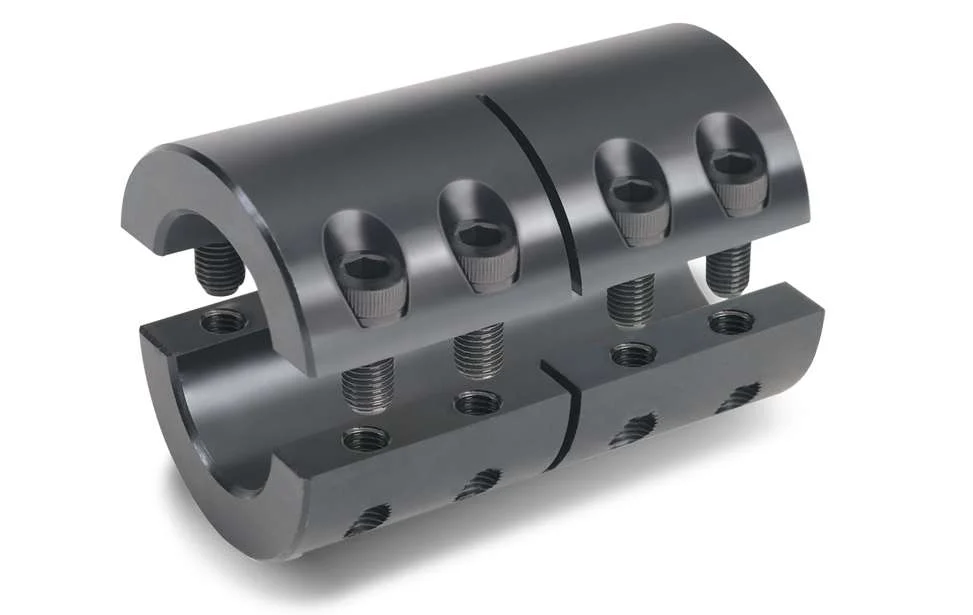
What Industries Commonly Use Rigid Couplings for Power Transmission?
Rigid couplings are widely used in various industries for power transmission applications that require a solid and reliable connection between rotating shafts. Some of the industries that commonly utilize rigid couplings include:
- Manufacturing: In the manufacturing industry, rigid couplings are employed in a wide range of equipment, such as conveyors, mixers, pumps, compressors, and machine tools. These couplings ensure precise power transmission and alignment, making them ideal for maintaining accuracy in manufacturing processes.
- Material Handling: Material handling equipment, including cranes, hoists, and elevators, often rely on rigid couplings to transfer power between shafts efficiently. Rigid couplings provide a robust connection that can handle the heavy loads and continuous operation common in material handling applications.
- Automotive: The automotive industry employs rigid couplings in various automotive systems, including drive shafts, transmissions, and steering systems. Rigid couplings contribute to the overall performance and reliability of these components, ensuring smooth power transfer and minimizing vibration.
- Mining and Construction: In the mining and construction industries, rugged and durable power transmission components are crucial. Rigid couplings are used in equipment like crushers, mills, and heavy-duty conveyors, where they can withstand the harsh conditions and heavy loads commonly found in these applications.
- Oil and Gas: The oil and gas industry often utilizes rigid couplings in pumps, compressors, and drilling equipment. Rigid couplings offer consistent and dependable power transmission, which is essential for critical operations in this sector.
- Marine: In marine applications, such as ship propulsion systems and marine pumps, rigid couplings are used to transmit power between the ship’s engine and various equipment. They can handle the dynamic forces and vibrations encountered in marine environments.
- Aerospace: In aerospace applications, where precision and reliability are paramount, rigid couplings play a role in power transmission between various aircraft components.
Rigid couplings are chosen in these industries for their ability to maintain shaft alignment, resist misalignment, and provide a backlash-free connection. Their robust construction and simple design make them suitable for high torque and high-speed applications, where precision and efficiency are crucial.
Advantages of Using Rigid Couplings in Mechanical Systems:
Rigid couplings offer several advantages when used in mechanical systems. These advantages make them a preferred choice in certain applications where precise alignment and high torque transmission are essential. Here are the key advantages of using rigid couplings:
- 1. High Torque Transmission: Rigid couplings are designed to handle high torque and power transmission without any loss due to flexibility. They provide a direct and solid connection between shafts, allowing for efficient transfer of rotational motion.
- 2. Precise Alignment: Rigid couplings maintain precise alignment between connected shafts. When installed correctly, they ensure that the two shafts are perfectly aligned, which is crucial for applications where accurate positioning and synchronization are required.
- 3. Synchronous Rotation: The rigid connection provided by these couplings enables synchronous rotation of the connected shafts. This is particularly important in applications where components must move in precise coordination with each other.
- 4. Simple Design: Rigid couplings have a straightforward design with minimal moving parts. This simplicity makes them easy to install and maintain, reducing the chances of mechanical failure.
- 5. Cost-Effective: Compared to some other coupling types, rigid couplings are generally more cost-effective. Their simple design and robust construction contribute to their affordability.
- 6. High Strength and Durability: Rigid couplings are typically made from strong and durable materials such as steel, stainless steel, or aluminum. These materials can withstand heavy loads and provide long-lasting performance in demanding applications.
Rigid couplings are commonly used in various industries and applications, including high-precision machinery, robotics, automation systems, precision motion control, and machine tools. They are especially beneficial in scenarios where misalignment needs to be minimized or avoided altogether.
It’s important to note that while rigid couplings offer these advantages, they are not suitable for applications where shaft misalignment or shock absorption is required. In such cases, flexible couplings or other specialized coupling types may be more appropriate.


editor by CX 2023-11-16