Description
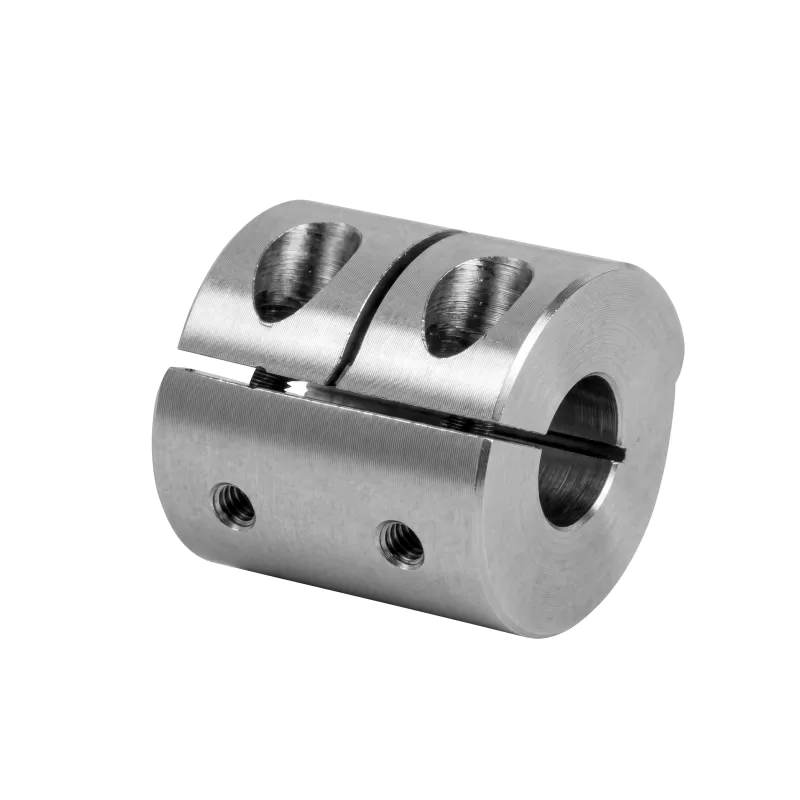
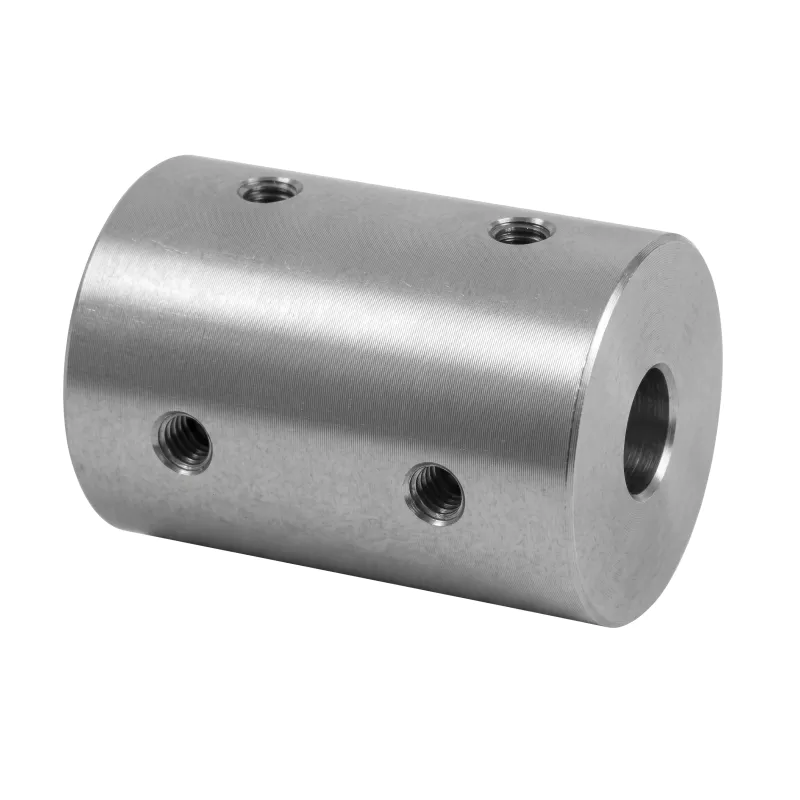
STS7-20 Stainless Steel Setscrew Rigid Coupling – 20 mm OD 316SS Corrosion-Resistant Precision Connector
The STS7-20 setscrew type rigid coupling is the 316 stainless steel version of the TS7-20 aluminum alloy model. Maintaining the same 20 mm outer diameter, 30 mm overall length, bore range of 5 to 10 mm, and 0.5 N·m nominal torque rating, the STS7-20 delivers identical mechanical performance in a material that resists corrosion in wet, chemical, and hygienically demanding environments. The decision to specify STS7-20 over TS7-20 is driven entirely by the installation environment: wherever chlorinated cleaning agents, organic solvents, salt spray, or humidity-laden atmospheres would attack and degrade an aluminum body, the 316 stainless steel STS7-20 is the correct choice.
The mass increases from 20 g (TS7-20) to 54 g (STS7-20) as a consequence of 316 stainless steel’s higher density. The moment of inertia rises to 2.2 × 10⁻⁶ kg·m² — approximately 2.6 times that of the TS7-20 at 8.5 × 10⁻⁷ kg·m². For servo axis inertia ratio calculations in high-acceleration systems, this figure should be included in the reflected inertia analysis. For the majority of standard servo applications, the added coupling inertia remains within acceptable servo stability margins.
A full comparison between TS7 aluminum and STS7 stainless coupling specifications is available on our product catalog page.
Technical Specifications
| Parameter | Value |
|---|---|
| Model | STS7-20 |
| Body Material | 316 Stainless Steel |
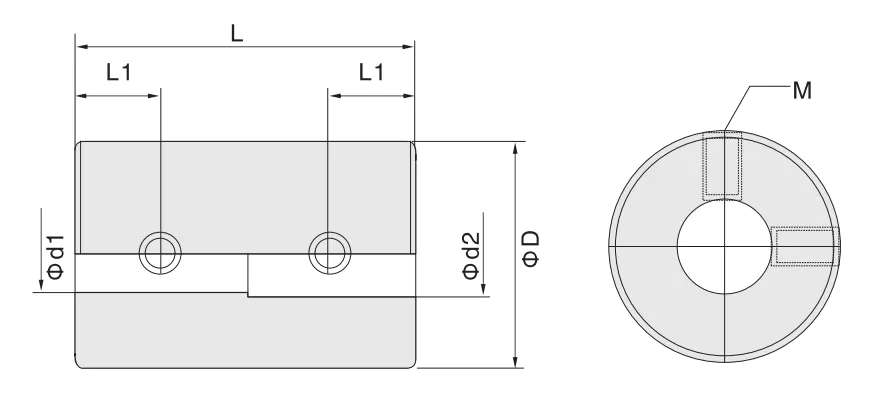
| Outer Diameter (D) | 20 mm |
| Overall Length (L) | 30 mm |
| Hub Length (L1) | 7 mm |
| Available Bore Sizes | 5, 6, 8, 10 mm |
| Setscrew Thread | M3 |
| Wrench Torque | 0.7 N·m |
| Rated Torque | 0.5 N·m |
| Maximum Torque | 1 N·m |
| Maximum Rotational Speed | 18,000 rpm |
| Moment of Inertia | 2.2 × 10⁻⁶ kg·m² |
| Mass | 54 g |
Dimension Drawing
When to Choose 316 Stainless Steel
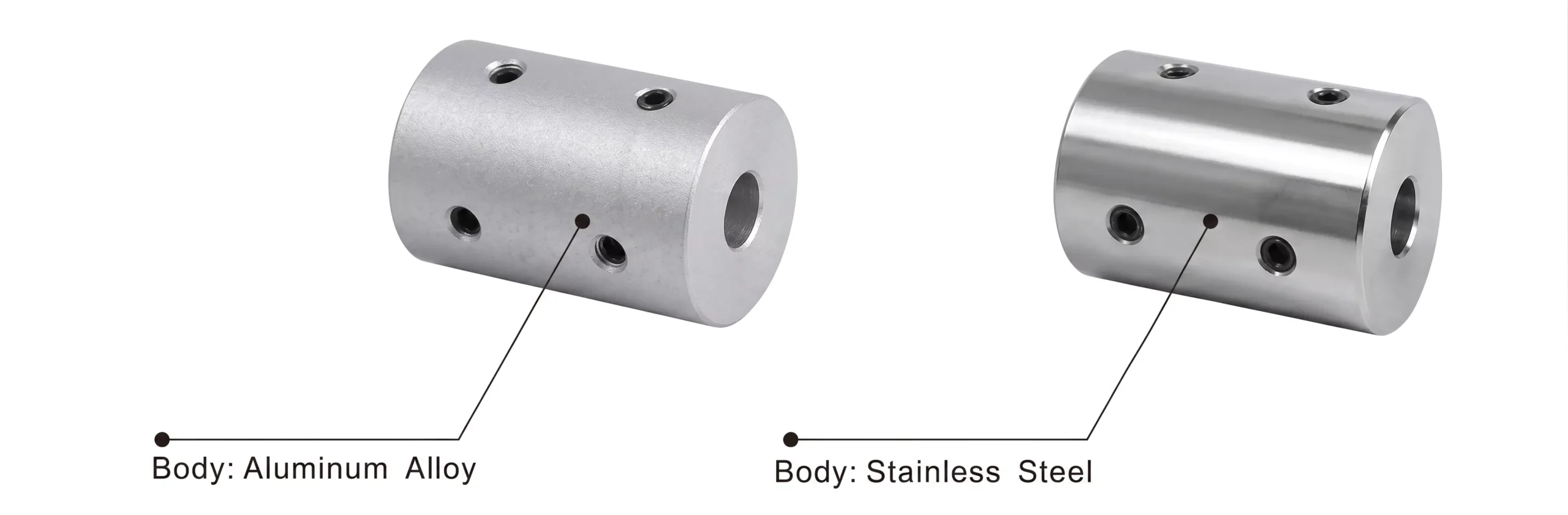
The molybdenum content of 316 stainless steel is the critical differentiator from the more common 304 grade and from aluminum alloys. Molybdenum provides improved resistance to chloride pitting — the corrosion mechanism that most commonly attacks metallic surfaces in food washdown, coastal, and chemical environments. In practical terms, the STS7-20 will resist daily CIP cycles with sodium hypochlorite or caustic soda concentrations typical in food production, whereas an aluminum coupling in the same environment would show pitting and surface degradation within weeks. This material durability directly reduces unplanned maintenance interventions and coupling replacement frequency.
Typical Applications
- Beverage filling and capping machine encoder drives — wet zone operations with routine chemical washdown
- Laboratory autosampler and chromatography axes — organic solvent and reagent exposure
- Marine deck instrument positioning drives — salt spray and coastal humidity environments
- Pharmaceutical blister pack machine encoder connections — GMP-compliant material requirement
- Coastal HVAC and industrial control systems — motorised damper and valve position feedback
Customer Reviews and Case Studies
★★★★★
Denmark — Beverage Equipment OEM
We use the STS7-20 on filler head encoder connections in our beer filling lines. The washdown environment includes NaOH and chlorine CIP chemicals that destroyed our previous aluminum couplings within months. The stainless version has been running for 22 months without any corrosion or mechanical issue.
— Mechanical Engineer, Copenhagen
★★★★★
Canada — Pharmaceutical Automation
Specified for a sterile fill-finish machine encoder axis in a GMP production environment. The 316SS body met our material qualification requirement. First article inspection confirmed all dimensions within tolerance. Repeat orders have been dimensionally consistent.
— Validation Specialist, Toronto
★★★★☆
Australia — Marine Instrumentation
Used in a meteorological positioning drive on a research vessel. Corrosion resistance in salt spray has met expectations entirely. The 8/10 mm bore combination matched our motor and encoder shafts without modification.
— Electrical Engineer, Hobart
Frequently Asked Questions
Why is the STS7-20 heavier than the TS7-20?
316 stainless steel has approximately 2.9× the density of aluminum alloy. The STS7-20 weighs 54 g versus 20 g for the TS7-20. This is the direct consequence of the material substitution. Torque, speed, and bore specifications are identical between the two models.
Can the STS7-20 be used in CIP-cleaned food machinery?
Yes. 316 stainless steel is the standard material for food zone components subject to CIP cleaning with caustic or chlorinated solutions. The coupling body will not corrode or degrade under normal CIP chemical concentrations and temperatures.
Is the STS7-20 suitable for pharmaceutical GMP environments?
Yes. 316SS is widely accepted in GMP manufacturing zones. Material certificates confirming alloy grade and composition are available on request to support supplier qualification files and design documentation.
What bore combinations are available for the STS7-20?
Bore sizes of 5, 6, 8, and 10 mm are available on each side independently. Any combination within this range can be specified, including mixed-bore configurations such as 6 mm and 10 mm.
Is the STS7-20 a direct replacement for the TS7-20?
Yes. All external and internal dimensions are identical. It is a direct material-substitution replacement requiring no modification to the installation design.
Enquire About the STS7-20 Stainless Rigid Coupling
Ever Power manufactures the STS7-20 and all STS7 stainless variants in-house, with 316SS material certificates on request. Send your bore sizes, quantity, and application for a factory-direct response.