Description
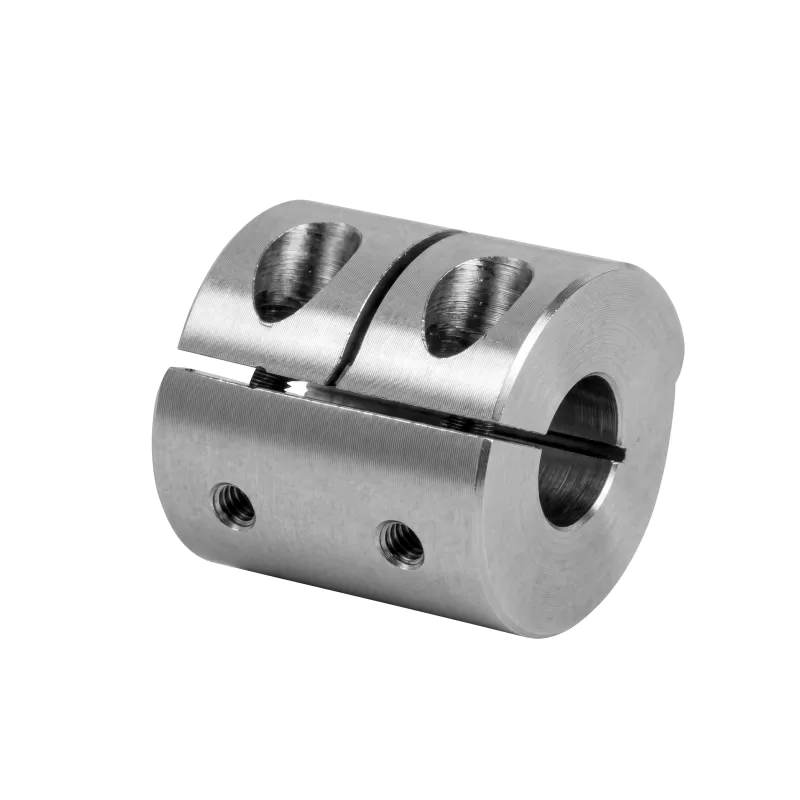
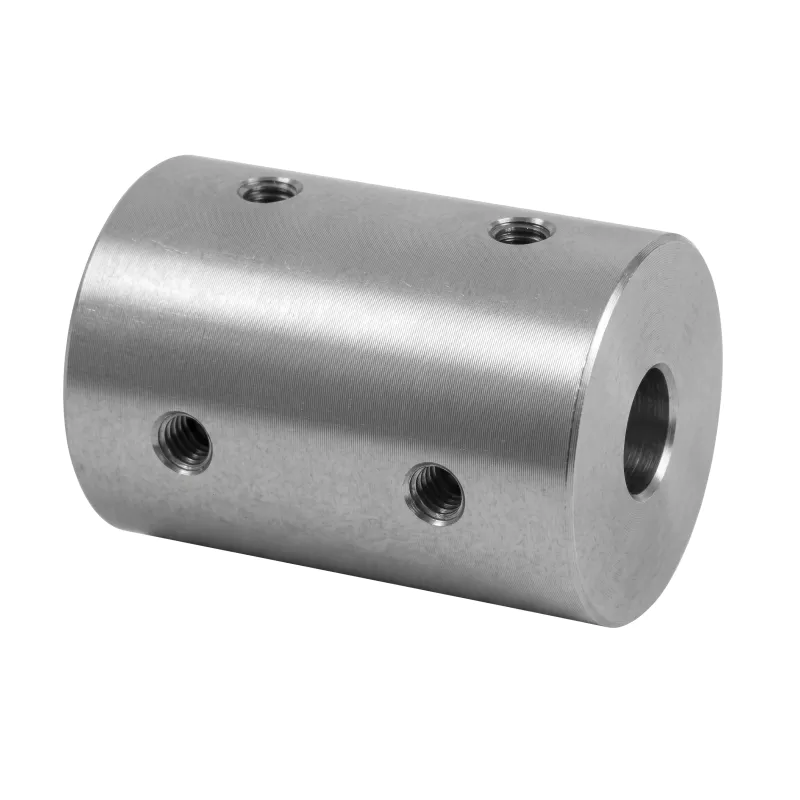
STS7-16 Stainless Steel Setscrew Rigid Coupling – Corrosion-Resistant Miniature Precision Shaft Connector
The STS7-16 stainless steel setscrew rigid coupling is the 316 stainless steel variant of the TS7-16 aluminum alloy model. Dimensionally identical to the TS7-16 in every respect — 16 mm OD, 24 mm length, 6 mm hub length, bore range of 3 to 6 mm — the STS7-16 differs solely in material: the body is machined from 316 austenitic stainless steel, providing genuine corrosion resistance in environments where the aluminum alloy TS7-16 would oxidise, pit, or suffer surface degradation. At 28 g (versus 11 g for the aluminum version), the added mass reflects the density difference between the two alloy families.
The primary application driver for the STS7-16 is environment, not mechanical performance. In food processing lines where wash-down routines involve chlorinated cleaning agents, in pharmaceutical manufacturing where ISO cleanroom protocols prohibit aluminum for outgassing concerns, in coastal or marine instrumentation where salt spray attacks unprotected aluminum surfaces, and in chemical analysis equipment where the coupling must resist laboratory reagent contact — the 316 stainless steel body is the correct material choice.
Torque and speed ratings are identical to the TS7-16: 0.3 N·m nominal, 0.6 N·m maximum, 23,000 rpm maximum speed. The M3 setscrew tightening torque of 0.7 N·m is unchanged. For a side-by-side comparison of all TS7 and STS7 models, visit our full product catalog.
Technical Specifications
| Parameter | Value |
|---|---|
| Model | STS7-16 |
| Body Material | 316 Stainless Steel |
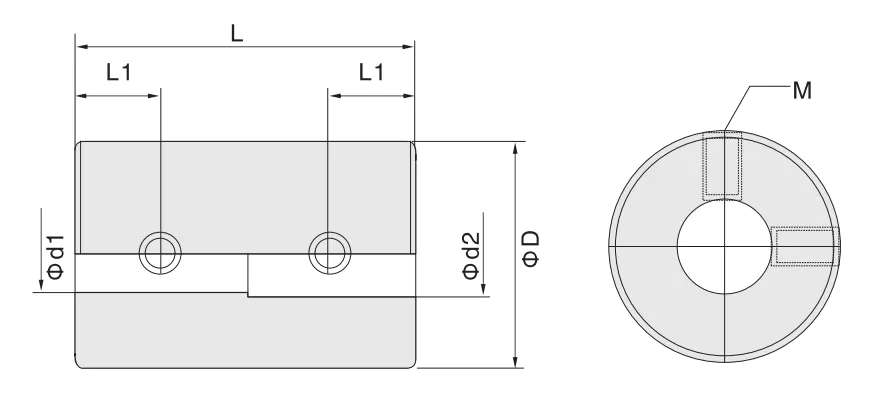
| Outer Diameter (D) | 16 mm |
| Overall Length (L) | 24 mm |
| Hub Length (L1) | 6 mm |
| Available Bore Sizes | 3, 4, 5, 6 mm |
| Setscrew Thread | M3 |
| Wrench Torque | 0.7 N·m |
| Rated Torque | 0.3 N·m |
| Maximum Torque | 0.6 N·m |
| Maximum Rotational Speed | 23,000 rpm |
| Moment of Inertia | 8.1 × 10⁻⁷ kg·m² |
| Mass | 28 g |
Dimension Drawing
Stainless Steel Material Advantages
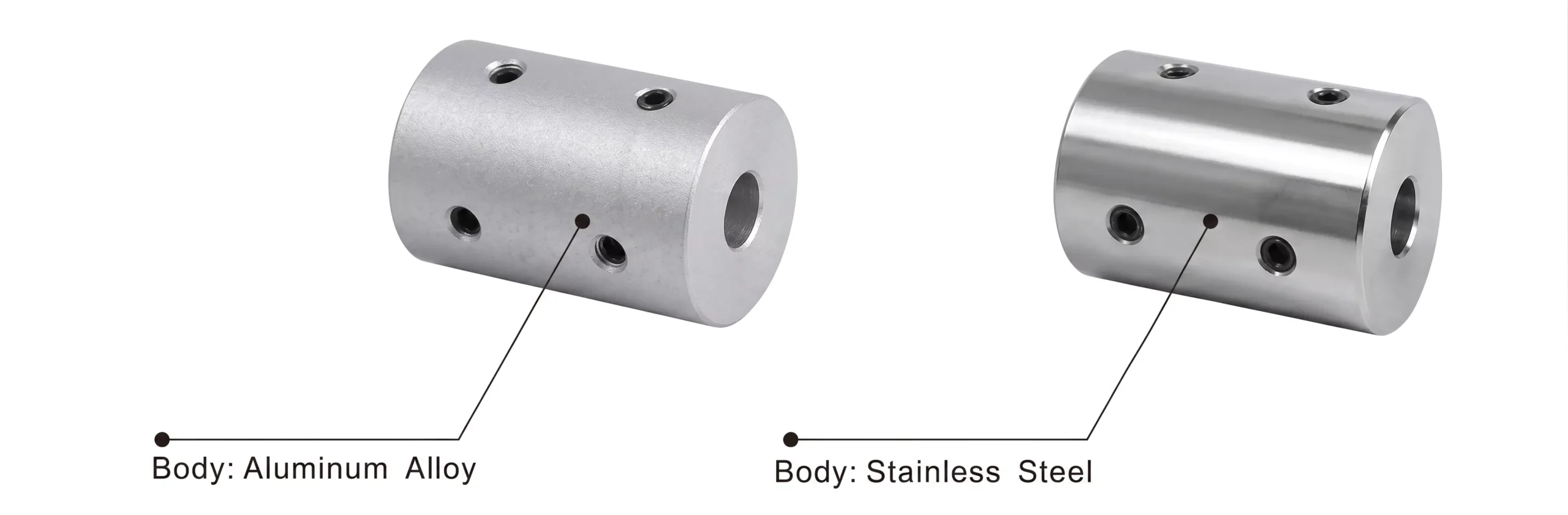
316 stainless steel (also designated as AISI 316 or 1.4401) provides genuine corrosion resistance due to its molybdenum content, which distinguishes it from the more common 304 stainless grade and significantly improves resistance to chloride pitting — the failure mode most relevant to food-grade washdown and coastal marine environments. The coupling body is machined to the same geometric tolerances as the aluminum TS7-16, ensuring that the STS7-16 is a direct material-substitution replacement in any TS7-16 installation without dimensional modification.
The higher density of stainless steel increases the moment of inertia to 8.1 × 10⁻⁷ kg·m² — approximately 2.6 times that of the aluminum TS7-16 at 3.1 × 10⁻⁷ kg·m². For servo axis inertia ratio calculations, this difference should be accounted for, particularly in high-acceleration, low-inertia drive systems where coupling inertia represents a meaningful fraction of the total reflected inertia.
Primary Applications
- Food processing equipment — portioning machines, filling lines, and inspection conveyors subject to CIP or washdown cleaning
- Pharmaceutical manufacturing — dispensing pumps, tablet presses, and blister pack machinery in ISO-classified environments
- Marine and offshore instrumentation — position feedback drives on deck equipment and subsea instrument packages
- Chemical analysis instruments — autosampler drives and chromatography column positioning systems
- Beverage bottling and canning lines — filler head drives and capper positioning encoders in wet zones
Customer Reviews and Case Studies
★★★★★
Netherlands — Food Equipment OEM
We switched from aluminum TS7-16 to STS7-16 on our cheese portioning machine encoder connections after corrosion damage from NaOH washdown cycles. The 316 stainless couplings have been installed for over 14 months with zero corrosion and no maintenance interventions between scheduled line cleans. Material certificates were provided with the first delivery.
— Technical Buyer, Rotterdam
★★★★★
Switzerland — Pharmaceutical Automation
Specified for tablet press encoder feedback drives in a GMP production environment. The stainless body meets our material specification for components in direct contact with the production zone atmosphere. Dimensions were verified against our drawing on first article inspection — all within tolerance. We have since added this model to our approved supplier list.
— Validation Engineer, Basel
★★★★☆
Norway — Marine Instrumentation
Used in a deck-mounted position feedback system for a winch control encoder. The 316 stainless body has shown no surface degradation after 18 months of North Sea exposure. The coupling’s small size fits within the housing envelope without modification. We will continue using this model on future winch control designs.
— Systems Engineer, Bergen
Frequently Asked Questions
What grade of stainless steel is the STS7-16?
316 austenitic stainless steel (AISI 316, DIN 1.4401). The molybdenum content distinguishes this grade from 304 stainless and provides meaningfully better resistance to chloride pitting — the corrosion mode most relevant to food washdown, marine, and chemical environments.
Is the STS7-16 dimensionally identical to the TS7-16?
Yes. All external and internal dimensions — OD, length, hub length, bore range, setscrew thread size and position — are identical between TS7-16 and STS7-16. The only difference is the body material. No design modification is required when substituting one for the other.
Why is the STS7-16 inertia higher than the TS7-16?
Stainless steel has approximately three times the density of aluminum alloy. The STS7-16 moment of inertia is 8.1 × 10⁻⁷ kg·m² versus 3.1 × 10⁻⁷ kg·m² for the TS7-16 — a 2.6× increase. For high-acceleration servo systems where coupling inertia is a significant fraction of the reflected total, this difference should be included in the inertia ratio calculation.
Is the STS7-16 suitable for cleanroom use?
Yes. 316 stainless steel does not outgas organic compounds and is compatible with standard cleanroom cleaning agents including IPA. The smooth machined surface is also compatible with ultrasonic cleaning processes where required for medical device or semiconductor equipment qualification.
Is material certification available?
Yes. Material mill certificates confirming 316 stainless steel grade and chemical composition are available on request at the time of order. These are standard requirements for GMP pharmaceutical procurement, food equipment qualification, and regulated industry supplier approval.
Enquire About the STS7-16 Stainless Rigid Coupling
Ever Power supplies the STS7-16 and all stainless steel STS7 variants direct from our factory, with material certification available on request. Send us your bore sizes, application, and quantity for a prompt technical and commercial response.