Description
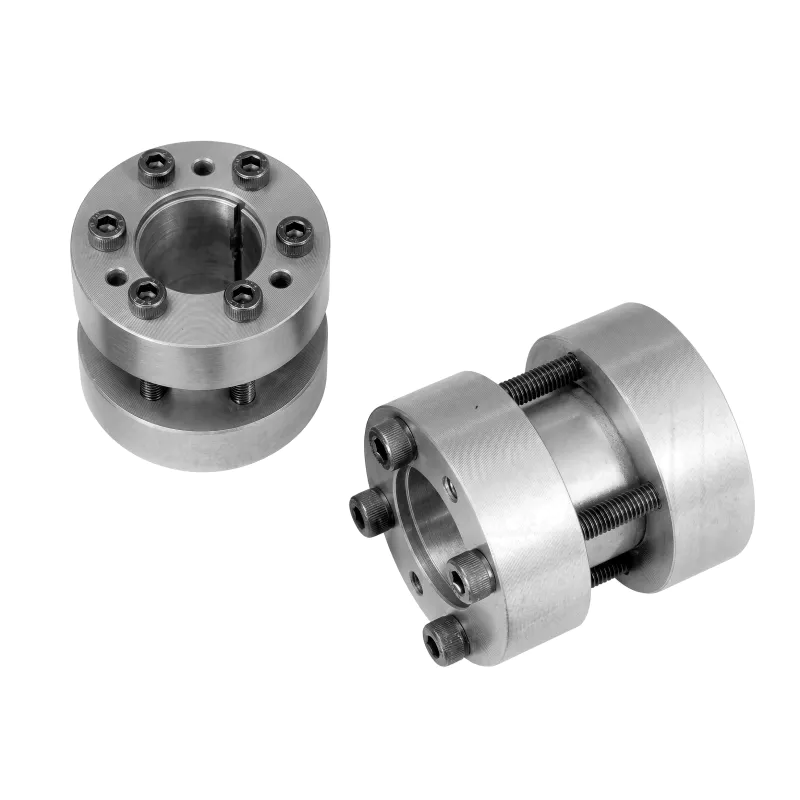
TS7Z80×125 Locking Assembly – 80mm Shaft 125mm OD Keyless Rigid Shaft-Hub Connector
At 80 mm bore and 125 mm OD, the TS7Z80×125 delivers a major step up in rated torque to 3.44 kN·m, with axial capacity reaching 98.4 kN. This model is specified for heavy mill drive connections, large pump and compressor shaft connections, and high-power gearbox output connections in the 1–2 MW power range where keyway fatigue at the shaft-hub interface is a recognised design risk. For a complete listing of all TS7Z locking assembly models, visit our product catalog.
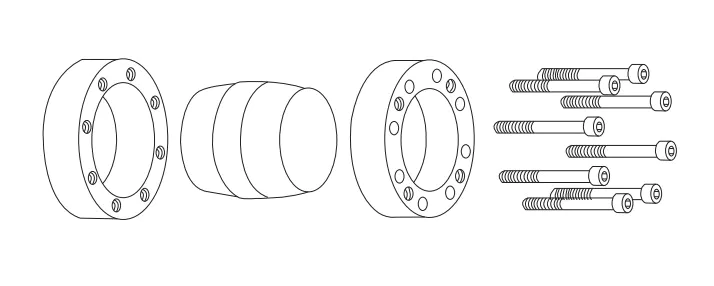
The TS7Z locking assembly operates on the principle of tapered ring compression: two tapered steel rings — inner and outer — are drawn together axially by the clamping screws. The taper geometry converts axial screw preload into a radial clamping force, expanding the inner ring against the shaft surface and contracting the outer ring against the hub bore simultaneously. The resulting surface pressure — 66 MPa for the TS7Z80×125 at the specified M_a of 84 N·m — generates a friction connection that transmits both torque (Mt = 3.44 kN·m) and axial force (Ft = 98.4 kN) without any mechanical interlock element. No keyway is required in either the shaft or the hub bore.
The elimination of the keyway is the principal engineering advantage of the TS7Z over traditional keyed hub connections. A keyway introduces a stress concentration at its corners that can initiate fatigue cracks under the cyclic torsion loading of a rotating drive — particularly at high surface hardness or in applications with frequent torque reversals. The TS7Z distributes torque loading uniformly around the full circumference of the shaft bore, eliminating this stress riser and significantly extending the fatigue life of the connected shafts. For high-cycle, high-torque drives — mills, fans, compressors, and crushers — this durability improvement is a primary selection rationale.
Technical Specifications
| Parameter | Value |
|---|---|
| Model | TS7Z80×125 |
| Type | Locking Assembly (Keyless Shaft-Hub Connection) |
| Shaft Bore (d) | 80 mm |
| Outer Diameter (D) | 125 mm |
| Rated Axial Force (Ft) | 98.4 kN |
| Rated Torque (Mt) | 3.44 kN·m |
| Surface Pressure (Ps) | 66 MPa |
| Installation Screw Torque (Ma) | 84 N·m |
| Mass (G) | 5.2 kg |
| Material | Steel |
| Standard | GB/T 5106 compatible |
Dimensional Reference
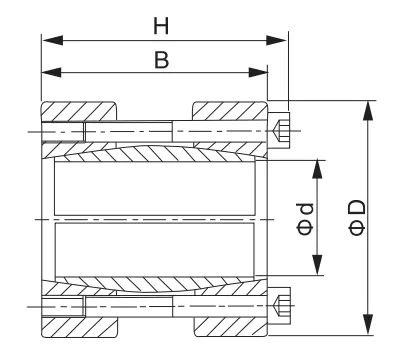
Structural Cross-Section
Installation and Design Guidance
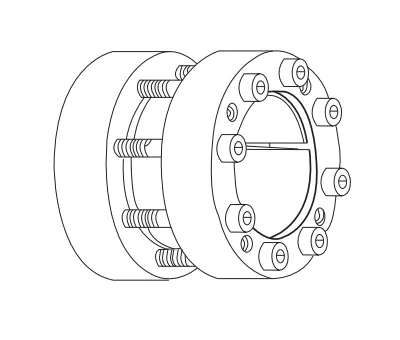
Installation of the TS7Z80×125 requires the shaft surface to be clean, dry, and within an h6 or k6 shaft tolerance, with a surface finish of Ra 0.8–1.6 μm. The hub bore should be machined to H7 tolerance. Clamping screw threads and head bearing faces must be lubricated with MoS₂ paste before installation to ensure the M_a = 84 N·m tightening torque produces the correct clamping force. Tighten all screws in a star pattern in at least three progressive passes — do not fully tighten one screw before the others.
To verify shaft material suitability, check: Ps (66 MPa) ≤ 0.9 × shaft yield strength. For C45 steel (yield ~370 MPa): 0.9 × 370 = 333 MPa > 66 MPa — acceptable. For aluminium alloy 6061-T6 (yield ~275 MPa): 0.9 × 275 = 247 MPa; compare with 66 MPa for this model. If the shaft material yield strength is insufficient, contact our contact our team for a re-rated configuration.
Keyless Design
No keyway in shaft or hub. Eliminates keyway stress concentration and fretting wear. Angular position can be set freely — no keyway angular constraint.
Self-Releasing Disassembly
Back off clamping screws in a star pattern — the taper geometry produces a self-releasing action requiring no extraction tools or heat. Shaft and hub surfaces are undamaged after removal.
Uniform Load Distribution
Torque is transmitted through friction uniformly around the full shaft circumference, distributing stress evenly and enabling the same torque to be carried at lower peak shaft stress than a keyed connection.
Bidirectional Torque
Frictional connection transmits equal torque in both rotational directions. No directional constraint — suitable for reversing drive applications without additional design consideration.
Customer Reviews and Case Studies
★★★★★
South Korea — Chemical Process Plant
Used in agitator drive shaft connections on our chemical reactor vessels. The TS7Z80×125 allows shaft removal for vessel maintenance without shaft modification — the locking assembly releases cleanly when the screws are backed off, unlike interference-fit hubs that require heating and pressing. The 98.4 kN axial load capacity covers our process torque requirements with margin.
— Senior Designer, Busan
★★★★★
South Africa — Plastics Extrusion OEM
We use the TS7Z80×125 in extruder screw drive connections on our 200 mm diameter twin-screw extrusion lines. The locking assembly allows the extruder screw to be withdrawn axially without shaft damage during barrel cleaning, unlike keyed connections which require the hub to be split and remachined after each removal.
— Maintenance Manager, Johannesburg
★★★★☆
Sweden — Rubber Processing Equipment
We use the TS7Z80×125 for open mill roll drive connections. The locking assembly’s keyless design allows roll changes without machining a new keyway each time a replacement roll is fitted — a significant time saving in our maintenance workflow.
— Project Manager, Gothenburg
Frequently Asked Questions
Is the TS7Z available in stainless steel?
The standard TS7Z locking assembly is manufactured in steel with a standard surface treatment for industrial environments. For corrosion-resistant requirements, contact Ever Power to discuss material alternatives or protective coating options for your specific application.
Does the TS7Z require periodic retightening?
In normal operating conditions with the correct installation torque applied, retightening is not required between scheduled maintenance intervals. However, installations subject to sustained vibration, thermal cycling, or repeated load reversal transients should have the clamping screw torque verified at the first scheduled maintenance after initial installation.
What clamping screw type is used in the TS7Z?
The TS7Z uses socket head cap screws (hexagon socket, DIN 912 equivalent) of appropriate size for each frame. A hex key of the correct size must be used for installation and removal. The screw size varies by TS7Z model — refer to the product drawing or contact Ever Power for the specific screw specification for your model.
What is the difference between the TS7Z inner ring and outer ring?
The inner ring contacts the shaft bore directly and expands radially outward when the clamping screws are tightened. The outer ring contacts the hub bore and contracts radially inward. The tapered interface between the two rings converts axial screw preload into radial clamping force on both surfaces simultaneously.
What is the difference between TS7Z Ma_small and Ma_large values?
Some TS7Z models list two M_a values corresponding to different screw sizes within the assembly. The smaller screws (inner ring) and larger screws (outer ring) may have different specified tightening torques. Always tighten all screws of the same size to the same specified torque and verify with the product documentation for your specific model.
Source the TS7Z80×125 Locking Assembly
Ever Power manufactures the TS7Z80×125 and the complete TS7Z locking assembly series — 31 bore sizes from 15 mm to 110 mm — direct from our factory. Provide your shaft diameter, hub bore, application torque, and quantity for a prompt technical review and factory-direct pricing.